How to Navigate Change with Confidence in Your Career
TL;DR
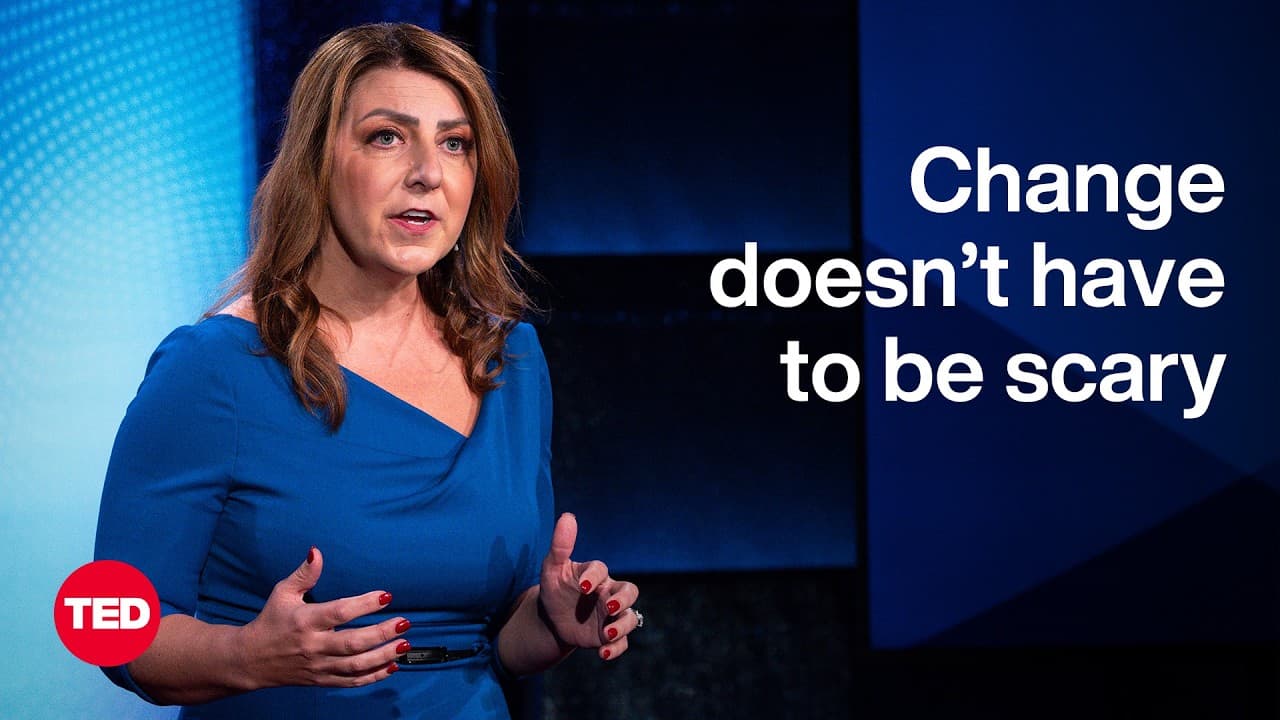
To navigate change with confidence in your career, recognize that change can lead to personal and professional growth, often unexpectedly. Understanding individual motivations and managing cognitive load are crucial for successful change management, allowing organizations to humanize the process and support employees through transitions.
Transcript
When I was 24 years old, I heard something that changed the trajectory of my career and my life. I had just started working for an airline that declared bankruptcy. This was a historic company with a rich history of giving the gift of flight to millions. But we knew that saving the company would mean making many hard choices, including layoffs. It ... Read More
Key Insights
- 🥺 Change can often lead to positive career shifts, as demonstrated by studies showing that laid-off employees frequently find better opportunities.
- 🤩 Personal stories and motivators are key to engaging employees in change processes, helping them see beyond immediate challenges.
- 👻 Humanizing change through individual narratives allows organizations to connect emotionally with employees, fostering commitment.
- 😨 Resistance to change is tied to biological instincts, making it essential for leaders to address these fears with understanding and tailored support.
- 🆘 Measuring cognitive load helps organizations understand employees' capacities and capabilities, ensuring workloads are manageable during transitions.
- 💨 Not all employees experience change in the same way; personalized communication can enhance engagement and acceptance of new initiatives.
- 😤 Organizations can draw on diverse motivations to inspire teams, ensuring that change initiatives resonate with a broader audience.
Install to Summarize YouTube Videos and Get Transcripts
Explore YouTube Video Summarizer or Get YouTube Transcript Extractor
Questions & Answers
Q: What did the speaker learn from their experience with layoffs at the airline?
The speaker learned that layoffs can sometimes serve as a blessing in disguise, pushing individuals out of career ruts and encouraging them to explore new opportunities that may lead to enhanced professional growth. They recognized the importance of being open to the possibility that change can ultimately result in positive outcomes, even if it feels negative initially.
Q: What are the five primary motivators for employees to embrace change?
The five primary motivators are personal achievement, customers, teams, community, and financial outcomes. Understanding these motivators helps leaders tailor their communication and initiatives to engage employees more effectively. Leaders should identify which motivator resonates most with individuals to inspire commitment to change efforts.
Q: Why do most people resist change, according to the speaker?
Most people resist change because human biology is wired to avoid uncertainty and perceived threats, triggering stress responses in the brain. This reaction makes it difficult for individuals to see the potential positive outcomes of change, often leading to scenarios where they focus on the negatives rather than the opportunities.
Q: How can organizations assess and manage cognitive load during change?
Organizations can assess cognitive load by surveying employees about their feelings and capacity to handle tasks. By understanding their confidence and ability to juggle responsibilities, leaders can adjust workloads and provide support. This individualized approach helps ensure that employees aren't overwhelmed and can engage more positively with change initiatives.
Q: What strategy does the speaker recommend for humanizing the change process?
The speaker recommends having individuals write their personal change stories to identify and articulate their motivations and commitments. This practice allows employees to connect with the reasons behind the change, fostering a sense of purpose and reducing resistance by aligning their personal goals with organizational objectives.
Q: How did the speaker illustrate the transformation of a mining company?
The speaker shared a story where a leader linked the company's transformation to their personal experiences of poverty, highlighting how improved profits could fund community support initiatives. This storytelling approach resonated deeply with employees and shifted the focus from financial metrics to a shared mission, thus inspiring commitment to the change.
Q: What role do communication strategies play in facilitating change?
Communication strategies are crucial for making change more relatable and motivating. By segmenting messages based on individual motivators—whether they relate to teams, personal achievement, or community impact—leaders can tailor their communication to resonate more effectively with diverse employee motivations, increasing engagement and reducing resistance to change initiatives.
Q: What does the speaker mean by "the only constant is change"?
The speaker emphasizes that change is an inevitable part of life and work, becoming increasingly frequent and profound. They stress the importance of learning to embrace and adapt to change rather than resist it, advocating for a mindset that seeks out the potential positive outcomes and opportunities that arise from changing circumstances.
Summary & Key Takeaways
-
The speaker discusses a pivotal moment in their career when they learned that layoffs can lead to positive changes and new opportunities for those affected. This realization shaped their belief in the value of change.
-
The facilitator's research revealed that employees often thrive after being laid off, using it as a catalyst for personal and professional growth, which supports the idea that change can lead to unforeseen benefits.
-
The speaker emphasizes the importance of understanding individual motivations and managing cognitive load to facilitate successful change in organizations, arguing that change management should focus on humanizing the process.
Read in Other Languages (beta)
Share This Summary 📚
Summarize YouTube Videos and Get Video Transcripts with 1-Click
Try YouTube Summary with ChatGPT & Claude or YouTube Transcript Generator
Explore More Summaries from TED 📚






Summarize YouTube Videos and Get Video Transcripts with 1-Click
Try YouTube Summary with ChatGPT & Claude or YouTube Transcript Generator