A Brief History of Bach
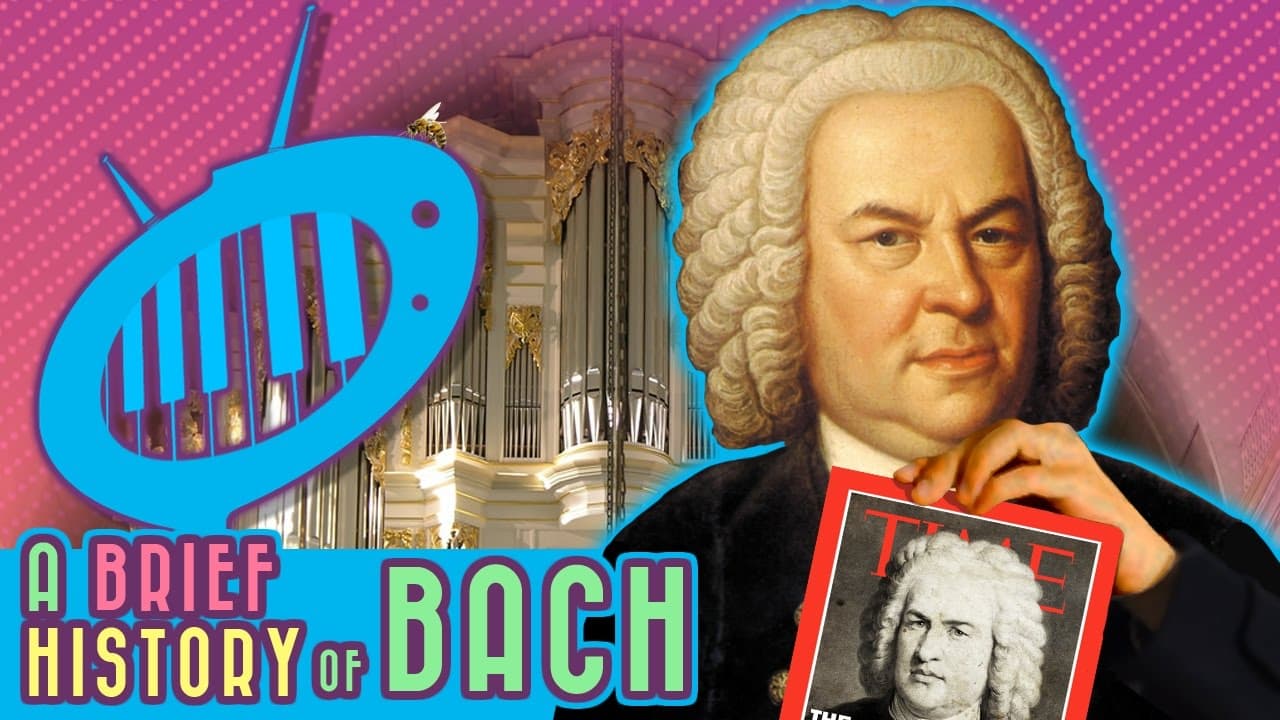
TL;DR
Explores the life and legacy of composer Johann Sebastian Bach.
Transcript
hi and welcome to another episode of piano TV so I am very excited today because we are going to be talking about the legend Bach one of the greatest composers of all time and it's actually the first time we're going to be talking about a baroque composer on this channel we've done other guys we've done Mozart and hi... Read More
Key Insights
- Bach was born into a musical family in 1685, and his early exposure to music significantly shaped his future as a composer.
- Despite his immense talent, Bach's career journey was not straightforward, involving various jobs and even a brief stint in jail due to his strong-willed personality.
- Bach's first significant period of musical development occurred in Weimar, where he was influenced by various European styles and composed notable works like the Well-Tempered Clavier.
- His second period, in Cöthen, was marked by a focus on secular music, including the famous Brandenburg Concertos, due to the non-religious environment.
- Bach's final period in Leipzig was his most productive, where he composed over 300 cantatas and became a highly respected figure in the music world.
- Despite his later success, Bach was largely forgotten in the 18th century until the Romantic era revived his works, securing his place as one of the greatest composers.
- Bach's personality was complex; he was industrious and ambitious but also known for his temper and intolerance for mistakes.
- Bach's influence extended beyond his lifetime, inspiring composers like Haydn, Mozart, and Beethoven, who admired his mastery of harmony and counterpoint.
Install to Summarize YouTube Videos and Get Transcripts
Explore YouTube Video Summarizer or Get YouTube Transcript Extractor
Questions & Answers
Q: What was Bach's early life like?
Johann Sebastian Bach was born in 1685 into a well-established musical family in Germany. His father and uncles were musicians, which provided him with an early exposure to music. After the death of his parents, he lived with his brother, who was also a musician and studied under Pachelbel, further influencing Bach's musical development.
Q: What challenges did Bach face in his career?
Bach's career journey was not without challenges. Despite his talent, he did not immediately secure his dream job and often worked in positions that involved non-musical tasks. His strong-willed personality sometimes led to conflicts with employers, resulting in him being jailed for a month when he insisted on leaving a job he was not permitted to quit.
Q: How did Bach's music evolve during his time in Weimar?
During his time in Weimar, Bach was exposed to a variety of European musical styles, which influenced his compositions. He was particularly inspired by Italian harmonies and composers like Vivaldi. This period saw the creation of significant works such as the Well-Tempered Clavier, which showcased his mastery of harmony and counterpoint.
Q: What was significant about Bach's time in Cöthen?
In Cöthen, Bach worked under Prince Leopold, who appreciated his talents and provided him with creative freedom. This environment allowed Bach to focus on secular music, leading to the composition of the Brandenburg Concertos and other orchestral works. The non-religious setting marked a shift from his previous church-focused compositions.
Q: How did Bach's career progress in Leipzig?
In Leipzig, Bach held the prestigious position of Cantor at St. Thomas Church, where he composed over 300 cantatas for church services. This period was his most productive, solidifying his reputation in the music world. Despite not being the first choice for the job, his contributions during this time were significant and enduring.
Q: How was Bach's music rediscovered in the 19th century?
Bach's music was largely forgotten in the 18th century as Baroque music fell out of fashion. However, in the Romantic era, composers like Mendelssohn and Schumann, along with music publishers, revived interest in his works. This resurgence reestablished Bach as a central figure in classical music history.
Q: What influence did Bach have on future composers?
Bach's influence on future composers was profound. Haydn, Mozart, and Beethoven were inspired by his mastery of harmony and counterpoint. Haydn owned copies of Bach's works, Mozart transcribed his music, and Beethoven admired him as the 'father of harmony,' illustrating the lasting impact of Bach's compositions.
Q: What do we know about Bach's personality?
Bach's personality was complex; he was known for his industriousness and ambition, as evidenced by his extensive body of work and career achievements. However, he also had a temper and was intolerant of mistakes, leading to conflicts with musicians and employers. Despite these flaws, his dedication to music and self-motivation were undeniable.
Summary & Key Takeaways
-
Johann Sebastian Bach, born in 1685, was a prolific composer whose work spanned various musical periods. His career began in Weimar, where he was influenced by European styles and composed significant pieces like the Well-Tempered Clavier.
-
In Cöthen, Bach's focus shifted to secular music, resulting in the creation of the Brandenburg Concertos. His final period in Leipzig was marked by immense productivity, with over 300 cantatas composed.
-
Despite being forgotten in the 18th century, Bach's music was revived in the Romantic era. His complex personality was marked by ambition and temper, yet his influence on future composers remains profound.
Read in Other Languages (beta)
Share This Summary 📚
Summarize YouTube Videos and Get Video Transcripts with 1-Click
Try YouTube Summary with ChatGPT & Claude or YouTube Transcript Generator