The Place Where Time Flows Backwards
TL;DR
Different cultures represent time spatially based on their writing direction and cultural orientations.
Transcript
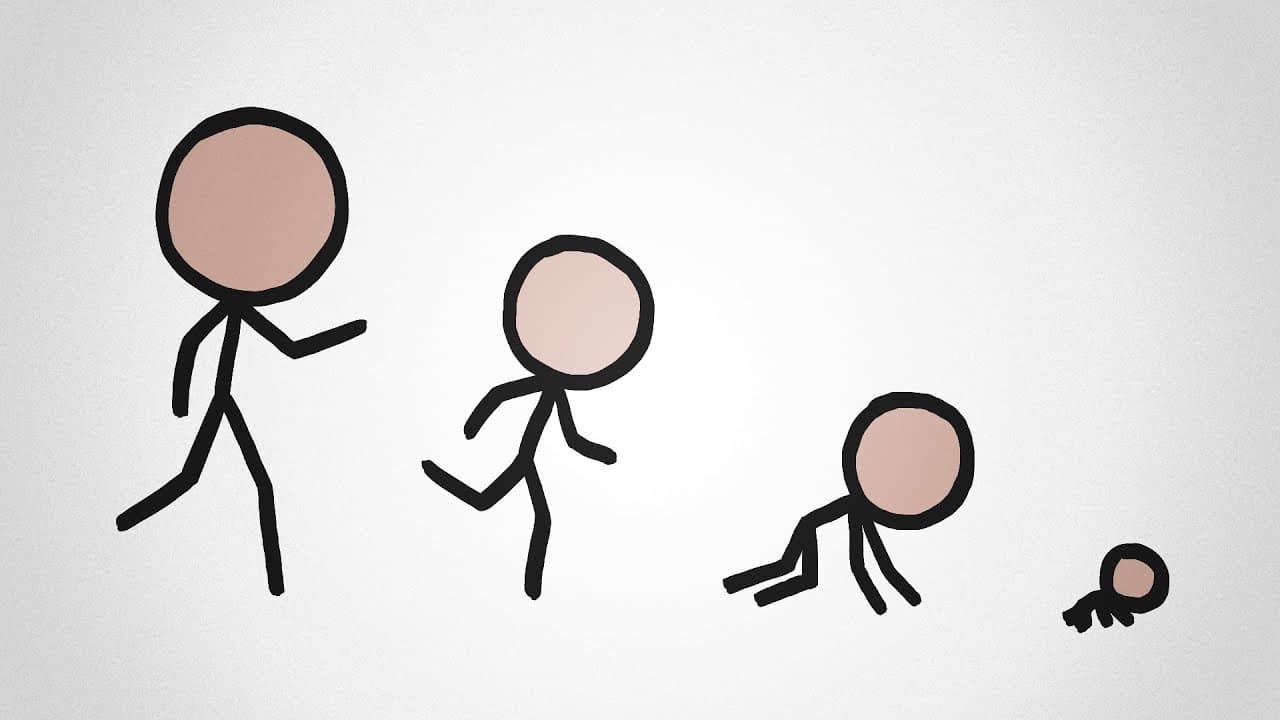
Hi, this is Kate from MinuteEarth. You may have heard someone say “the following day,” “a point in time,” and “behind schedule” - these are all phrases that represent someWHEN as if it's someWHERE. Humans all over the world use space to represent time - we tend to agree that the passage of time is like a line or curve through space But where we dis... Read More
Key Insights
- ⌛ Different languages and cultural orientations influence how time is spatially represented.
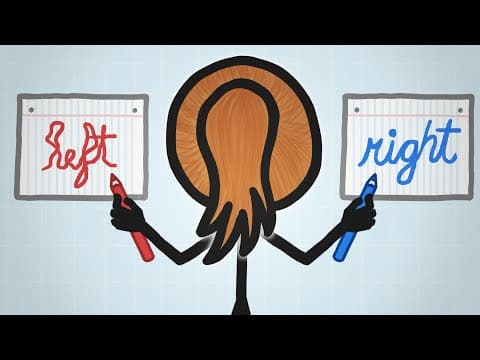
- ↔️ Spatial representations of time are closely tied to writing direction, with left-to-right languages representing time from left to right, right-to-left languages representing time from right to left, and top-to-bottom languages representing time from top to bottom.
- ⏳ Some cultures represent time based on their current orientation, with the past being downhill, uphill, or flowing from east to west.
Install to Summarize YouTube Videos and Get Transcripts
Explore YouTube Video Summarizer or Get YouTube Transcript Extractor
Questions & Answers
Q: Why do different languages and cultures represent time differently?
Different languages and cultures represent time spatially based on their writing direction. Left-to-right languages represent time from left to right, while right-to-left languages represent time from right to left. Top-to-bottom languages, like Mandarin, have a vertical representation of time.
Q: How do cultures with different writing directions arrange sequential pictures?
People who speak left-to-right languages arrange sequential pictures from left to right, with the earliest images on the left and the latest on the right. In contrast, speakers of right-to-left languages arrange pictures in the reverse order and speakers of top-to-bottom languages arrange pictures from top to bottom.
Q: Do cultures without a written language also represent time spatially?
Yes, even cultures without a written language often represent time spatially. For example, the Yupno tribe in Papua New Guinea represents the past as downhill and the future as uphill. This suggests that spatial representations of time are not solely dependent on writing direction.
Q: How does self-reference play a role in representing time?
Self-reference can influence how individuals represent time. When talking about events in the past, people often gesture backward, placing the past behind them. This concept aligns with the idea of moving forward into the future. However, the Aymara people in the Andes represent the past as being ahead and the future behind, as they can see what is in front of them but not what is behind.
Summary & Key Takeaways
-
Various languages and cultures represent time differently based on their writing direction, with left-to-right languages representing time from left to right, right-to-left languages representing time from right to left, and top-to-bottom languages representing time from top to bottom.
-
Some cultures, like the Yupno tribe in Papua New Guinea and the Kuuk Thaayorre in Australia, represent time based on their current orientation, with the past being downhill, uphill, or flowing from east to west.
-
Self-reference plays a role in representing time, with individuals gesturing backwards for the past and ahead for the future, but the Aymara people of the Andes represent the past as being ahead and the future behind.
Read in Other Languages (beta)
Share This Summary 📚
Summarize YouTube Videos and Get Video Transcripts with 1-Click
Try YouTube Summary with ChatGPT & Claude or YouTube Transcript Generator
Explore More Summaries from MinuteEarth 📚


Summarize YouTube Videos and Get Video Transcripts with 1-Click
Try YouTube Summary with ChatGPT & Claude or YouTube Transcript Generator