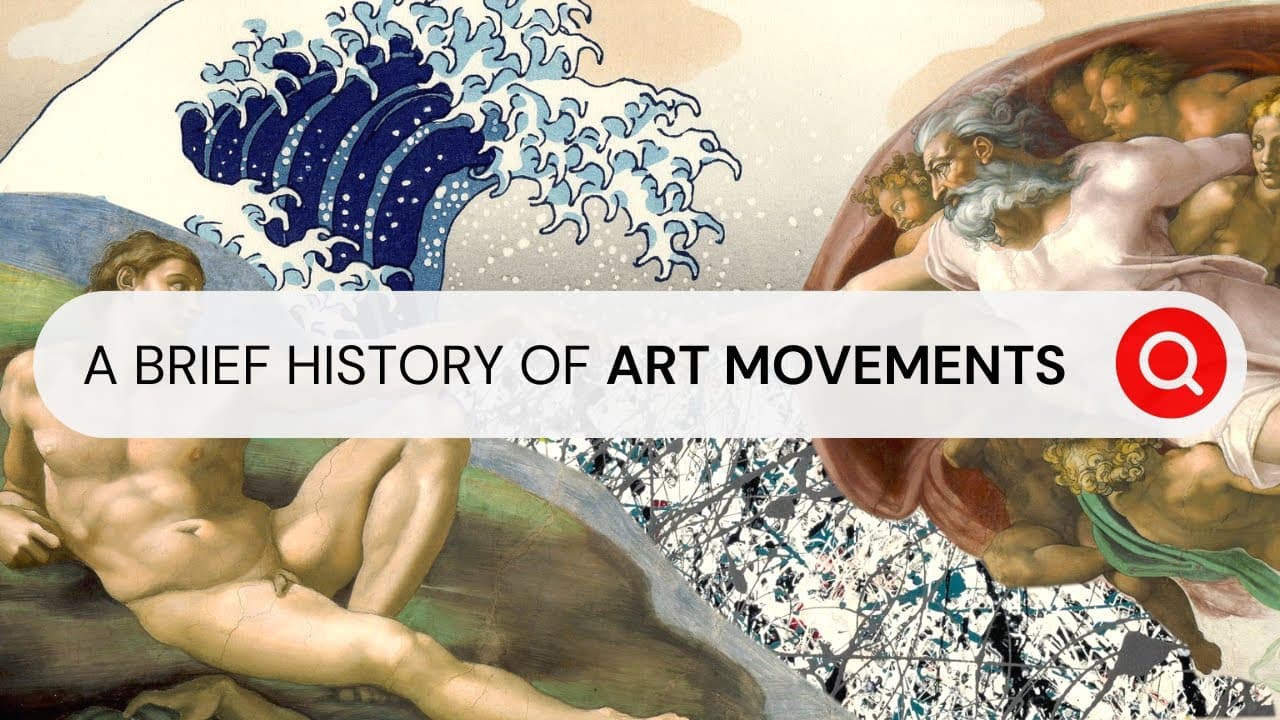
A Brief History of Art Movements | Behind the Masterpiece
TL;DR
From prehistoric cave paintings to contemporary art, explore the progression of art movements and their cultural significance.
Transcript
The first piece of visual art in history is from 40,000 years ago. Even before the existence of written language, our Neanderthal ancestors made some of the earliest images we have. The need to create is a part of being human. It’s as old as our species; as innate as any other desire, the need to eat, to seek protection, to love. Many of us think o... Read More
Key Insights
- 🎨 Art is a fundamental part of being human, dating back 40,000 years to the Neanderthal ancestors who created some of the earliest images. It is a universal and innate desire that goes beyond framed paintings in museums.
- 🌍 The evolution of art is intertwined with advancements in technology, growth of knowledge, and the development of societies over time. Looking back at art history can provide valuable insights into who we are as a society today.
- 🏛 Ancient art, including cave paintings and rock engravings, served as a way for humans to share information before written language existed. The art from this period reflected the priorities of survival, often depicting scenes of hunting and fertility.
- ⚖️ Ancient societies, such as Mesopotamia, Egypt, Greece, and Rome, used art to enforce religious and political ideologies. Art included symbolic imagery, mythological stories, and text to tell stories of gods and rulers.
- 🖼️ The Renaissance period marked a cultural explosion in Italy, where artists appreciated art, music, and theater alongside religion. Classical art from Ancient Rome and Greece served as inspiration for the artistic styles of this period.
- 🎭 The Baroque movement emphasized extravagance and emotion, showcasing dramatic lighting and intricate marble sculptures. Architects incorporated elaborate designs into their structures, such as ornate carvings and domed ceilings.
- 💐 The Rococo period, blossoming in 18th century France, embraced whimsical narratives, pastel colors, and elaborate ornamentation. It emphasized fluid asymmetrical forms and departed from the opulence of the Baroque period.
- 🌌 Post-impressionism rejected the spontaneous and naturalistic rendering of light and movement seen in Impressionism. Artists like Cézanne, Van Gogh, Gauguin, and Seurat incorporated science and imagination into their art to create more powerful scenes.
- 😵 The Surrealist movement, influenced by Sigmund Freud's ideas on the subconscious mind, challenged perceptions and reality by juxtaposing unrealistic subject matter with realistic painting styles. Surrealist artists tapped into their unconscious minds and conveyed powerful emotions through their works.
- 📐 Minimalism rejected self-referential narratives and aimed to highlight the characteristics of the artwork itself. Artists used precise geometric shapes, factory-made objects, and abstract forms to create pieces free of outside influence.
- 🌍 Contemporary art reflects the issues of our societies and goes beyond the traditional confines of galleries and museums. Artists like Basquiat, Kusama, and Hirst contribute to a larger cultural dialogue around identity, community, and nationality.
- 👀 Looking back at the history of art provides clarity and understanding of the progression of artistic movements over time. It allows us to see how art has evolved and where we, as a society, want to go in the future.
- 🌍 Western art history often overlooks the people and cultures that have influenced these movements. Indigenous art, Japanese artists, and African influences have all had a significant impact on Western art but are often unrecognized.
- 🌎 By learning about art, we can gain insights into the past, make informed decisions about the present, and strive for a more inclusive future. Art has the power to shape societies and contribute to a more diverse and understanding world.
Install to Summarize YouTube Videos and Get Transcripts
Explore YouTube Video Summarizer or Get YouTube Transcript Extractor
Questions & Answers
Q: What is the significance of prehistoric cave paintings?
Prehistoric cave paintings offer a glimpse into early humans' need for communication and survival. These artworks demonstrate the development of symbolic and abstract thought, serving as a foundation for all art movements.
Q: How did ancient art enforce religious and political ideologies?
Ancient art, particularly in civilizations like Mesopotamia, Egypt, Greece, and Rome, utilized symbolic imagery, mythological stories, and text to convey stories of gods and rulers. It played a crucial role in promoting and enforcing religious and political beliefs.
Q: What distinguishes Impressionism from Post-Impressionism?
Impressionism focused on capturing the fleeting effects of light and movement, employing visible brushstrokes and vivid colors. Post-Impressionism, on the other hand, retained bold colors but departed from naturalistic rendering, exploring subjective visions and incorporating scientific elements.
Q: How did Cubism revolutionize art?
Cubism, founded by Picasso and Braque, broke away from traditional art movements by dissecting subjects and portraying different viewpoints in abstract forms. It challenged the conventional perspective and opened the door for abstract modern art movements.
Q: What are some characteristics of contemporary art?
Contemporary art is characterized by its focus on ideas rather than aesthetics. It encompasses various mediums, including installations and performances, and reflects societal issues, such as identity, community, and nationality. It goes beyond the boundaries of galleries and museums, engaging in a broader cultural dialogue.
Summary & Key Takeaways
-
Prehistoric Art: Cave paintings and rock engravings served as a means of communication and survival for early humans.
-
Ancient Art: Depictions of gods and rulers in Mesopotamia, Egypt, Greece, and Rome played a significant role in enforcing religious and political ideologies.
-
Renaissance and Baroque Art: Inspired by classical art, artists focused on cultural subjects, religion, and dramatic representations.
-
Impressionism and Post-Impressionism: Artists captured the fleeting moments of light and movement in a more subjective and expressive manner.
-
Modern and Contemporary Art: Art movements such as Cubism, Surrealism, and Pop Art challenged traditional styles, embraced individual expression, and reflected societal issues.
Read in Other Languages (beta)
Share This Summary 📚
Summarize YouTube Videos and Get Video Transcripts with 1-Click
Try YouTube Summary with ChatGPT & Claude or YouTube Transcript Generator
Explore More Summaries from Behind the Masterpiece 📚
Summarize YouTube Videos and Get Video Transcripts with 1-Click
Try YouTube Summary with ChatGPT & Claude or YouTube Transcript Generator