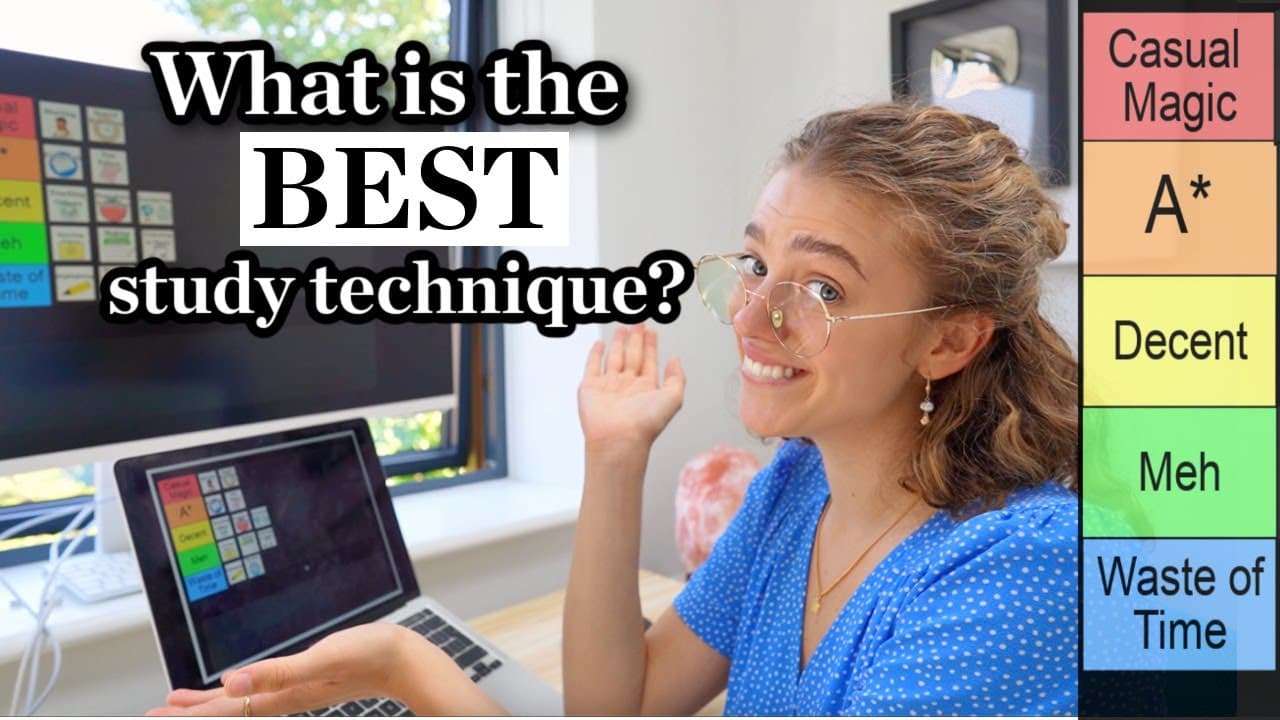
Tier Ranking Study Techniques: What is the BEST Way to Revise?
TL;DR
This video ranks common study techniques from least effective to most effective based on evidence-based papers, efficiency, and personal experience.
Transcript
literally why are we not taught how to study when you need to learn a lot of information for school or university it's so overwhelming to know where to start there are so many study techniques nowadays from highlighting your notes to using flashcards that it's really hard to know what's actually a good use of your time i want you guys to be product... Read More
Key Insights
- 📚 Key Insight 1: The "blurting" study technique, which involves jotting down everything you can remember about a topic without notes, is highly effective for active recall and identifying knowledge gaps.
- 📝 Key Insight 2: Highlighting as a study technique is considered low utility and a waste of time, according to multiple cognitive science papers.
- 🗂 Key Insight 3: Flashcards, whether physical or digital, offer the benefits of active recall and spaced repetition, but can become repetitive and time inefficient.
- 🎓 Key Insight 4: Teaching others or self-explaining concepts is a mid-tier technique that helps demonstrate understanding, but may not always align with exam requirements or application of knowledge.
- 📝 Key Insight 5: Practice testing through past papers is highly recommended by research papers, as it provides insight into examiner expectations and allows for self-correction and application of knowledge. ⏰ Key Insight 6: The principle of spaced repetition, where content review occurs at intervals to optimize memory retention, is considered "casual magic" due to its ability to enhance long-term memory.
- 📺 Key Insight 7: Watching educational videos, like lectures or informative breakdowns, is helpful for understanding new concepts and sparking curiosity, but may not be effective for long-term retention of information. ⏲ Key Insight 8: The Pomodoro Technique, involving 25 minutes of focused studying followed by a 5-minute break, is a decent productivity hack for initiating study sessions but needs complementary effective techniques for high grades.
Install to Summarize YouTube Videos and Get Transcripts
Explore YouTube Video Summarizer or Get YouTube Transcript Extractor
Questions & Answers
Q: What is the blurring technique, and why is it ranked highly in this video?
The blurring technique involves writing down everything you can remember about a topic from memory, without using any notes. It is ranked highly because it helps identify gaps in knowledge and uses active recall, making the learning process more effective and efficient. It allows for a quick assessment of one's understanding and helps in targeting areas that need further study.
Q: Why is highlighting considered a low utility revision technique?
According to multiple cognitive science papers, highlighting is considered low utility because it does not effectively promote retention of information. Simply highlighting text does not engage active recall or deeper understanding, making it a less effective study technique compared to others.
Q: How can practice testing, such as using past papers, improve exam performance?
Practice testing, like using past papers, is highly ranked because it allows students to understand what examiners expect, learn from their mistakes, and apply their knowledge. By practicing with actual exam-style questions, students can familiarize themselves with the format, identify areas of weakness, and improve their exam performance by targeting specific content or skills.
Q: Why is spaced repetition considered a "casual magic" technique?
Spaced repetition is known as "casual magic" because it harnesses the forgetting curve of human memory to ensure that knowledge is retained in the long term. By reviewing information at set intervals when memory retention is low, spaced repetition enables students to maintain a high level of understanding over time. It feels like magic because it optimizes learning efficiency and helps students remember information effortlessly.
Summary & Key Takeaways
-
Blurring: A technique where you write down everything you can remember about a topic from memory, which helps identify gaps in your knowledge and uses active recall.
-
Highlighting: Deemed as a low utility revision technique by cognitive science papers, as it is not effective in helping retention.
-
Flashcards: Integrating active recall and spaced repetition, flashcards are effective but can be repetitive and time-inefficient.
-
Teaching others: Ranked as a mid-tier revision technique, teaching others helps in understanding and summarizing content but may not always align with exam requirements.
-
Practice testing (past papers): Highly ranked, practice testing allows you to understand examiner requirements, learn from mistakes, and apply knowledge.
-
Spaced repetition: A principle that helps retain information in long-term memory through regular review at intervals.
-
Watching videos: While helpful in understanding and inspiring curiosity, videos are not effective for memory retention.
-
Pomodoro technique: A productivity hack that involves studying in 25-minute intervals followed by 5-minute breaks, useful for getting started but content matters for top grades.
-
Making notes: The quality of notes matters, with associations and active engagement making them effective, otherwise, it can be a waste of time.
-
Interleaving: Studying multiple subjects in a mixed pattern, this technique is helpful for shaping study practices.
-
Listening to music: Can hinder efficiency if it has lyrics, but can enhance fun and make studying more enjoyable, ultimately improving retention.
-
Rereading notes or textbook: Ranked as a low utility technique, it gives a false sense of understanding without effectively promoting learning through active recall.
Read in Other Languages (beta)
Share This Summary 📚
Summarize YouTube Videos and Get Video Transcripts with 1-Click
Try YouTube Summary with ChatGPT & Claude or YouTube Transcript Generator
Explore More Summaries from UnJaded Jade 📚



Summarize YouTube Videos and Get Video Transcripts with 1-Click
Try YouTube Summary with ChatGPT & Claude or YouTube Transcript Generator