What Are the Risks of AI and Why Do We Need Governance?
TL;DR
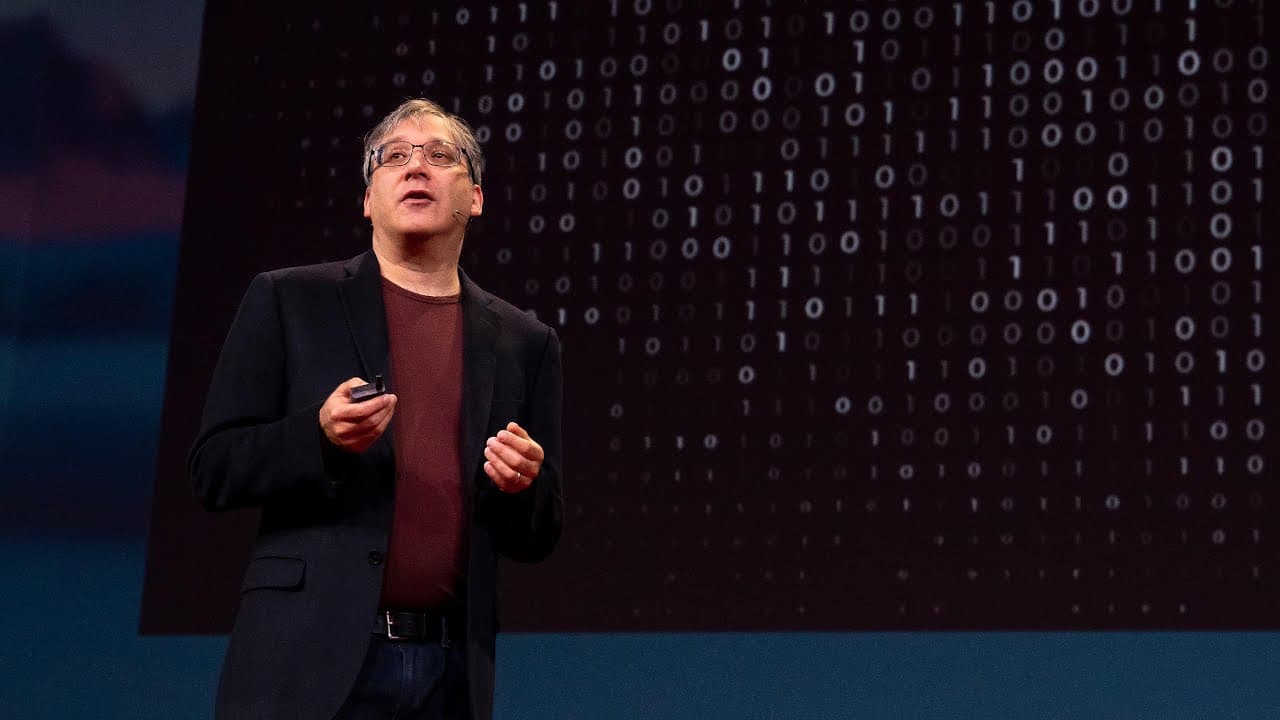
The risks of AI include the potential for misinformation and bias, which can threaten democracy and public trust. To address these challenges, Gary Marcus advocates for a global governance structure that combines technical and regulatory approaches. By integrating symbolic reasoning with machine learning, we can create AI systems that are more reliable and can mitigate the threats posed by misinformation.
Transcript
I’m here to talk about the possibility of global AI governance. I first learned to code when I was eight years old, on a paper computer, and I've been in love with AI ever since. In high school, I got myself a Commodore 64 and worked on machine translation. I built a couple of AI companies, I sold one of them to Uber. I love AI, but right now I'm w... Read More
Key Insights
- 🌐 Misinformation threat: The speaker expresses concern about the possibility of bad actors using AI to spread vast amounts of misinformation, which could have a detrimental impact on elections and democracy.
- 🖥️ AI-generated misinformation: AI systems, such as ChatGPT, have the ability to create false narratives and even provide evidence to support their claims. This poses a significant concern as it becomes increasingly difficult to distinguish between real and fake information.
- 🃏 Limitations of AI systems: AI systems like large language models are unable to understand the context and relation between factual information, leading to the generation of misleading or false information that may appear plausible but is inaccurate.
- 🌍 Need for AI governance: To mitigate the risks associated with AI, the speaker argues for the creation of a global organization or international agency dedicated to AI governance. This agency should focus on both research and governance aspects to address the emerging risks effectively.
- 🤝 Collaboration and stakeholder involvement: The speaker emphasizes the importance of bringing together various stakeholders from around the world to address the challenges of AI governance. This includes researchers, policymakers, and industry representatives.
- ⚖️ Balancing symbolic and neural approaches: There is a need to combine the strengths of symbolic systems (logic and reasoning) and neural networks (learning) to develop reliable and truthful AI systems at scale.
- 🔬 Research gaps: The current lack of fundamental research tools hinders our understanding of the scale and growth of misinformation, as well as the contribution of large language models to this problem. Research is necessary to develop new tools to tackle emerging risks.
- 🌐 Global support for AI management: A recent survey shows that 91% of people agree that AI should be carefully managed. This indicates a global recognition of the need for AI governance and regulation to ensure its responsible and ethical use.
Install to Summarize YouTube Videos and Get Transcripts
Explore YouTube Video Summarizer or Get YouTube Transcript Extractor
Questions & Answers
Q: What is the speaker worried about regarding AI?
The speaker is worried about the possibility of bad actors using AI to spread misinformation on a large scale, which could influence elections and threaten democracy.
Q: How do AI systems contribute to the spread of misinformation?
AI systems have the ability to generate narratives that are convincing and appear grammatically correct, often fooling even professional editors. They can make up false claims and provide fabricated evidence to support them, leading to the dissemination of misinformation.
Q: How do biases manifest in AI systems?
Biases in AI systems can be seen in the way they make assumptions and generate suggestions. For example, in one instance, an AI system suggested different job options based on the user's gender, implying stereotypes. This highlights the need to address biases within AI systems.
Q: What is the concern regarding AI systems controlling other AI systems?
The concern is that with one AI system controlling another, malicious actors can exploit this setup to deceive and scam millions of people at once. This raises the risk of widespread scams, posing a threat to individuals and society.
Q: How can the risks associated with AI be mitigated?
To mitigate AI risks, there is a need for both a new technical approach and a new system of governance. On the technical side, a combination of the strengths of symbolic systems (reasoning and facts) and neural networks (learning) is necessary. On the governance side, there should be regulations and safety measures in place to ensure responsible AI deployment and to address issues such as misinformation and biases.
Q: What does the speaker propose as a solution to address AI risks?
The speaker suggests the establishment of a global organization, similar to an international agency for AI, focused on governance and research. This organization would bring together stakeholders from around the world to study and address AI risks, develop tools to measure and combat misinformation, and ensure the safe and ethical use of AI technologies.
Q: What are the challenges in achieving global AI governance?
The challenges involve bridging the gap between different AI theories and approaches, incentivizing the development of AI systems that prioritize reliability and societal benefits, and fostering collaboration among various stakeholders. The specifics of how global AI governance will be achieved and structured are still uncertain, but the speaker emphasizes the importance of having both governance and research components within such an organization.
Summary & Key Takeaways
-
The speaker is concerned about the possibility of bad actors using AI to create and spread misinformation, which can threaten elections and democracy.
-
They highlight the limitations of current AI systems, such as the inability to understand the context and relation between facts, leading to the creation of plausible but false information.
-
The speaker calls for a new technical approach that combines the strengths of symbolic AI and neural networks, as well as a new system of governance, such as an international agency for AI, to mitigate AI risks and ensure trustworthy and beneficial AI.
Read in Other Languages (beta)
Share This Summary 📚
Summarize YouTube Videos and Get Video Transcripts with 1-Click
Try YouTube Summary with ChatGPT & Claude or YouTube Transcript Generator
Explore More Summaries from TED 📚



Summarize YouTube Videos and Get Video Transcripts with 1-Click
Try YouTube Summary with ChatGPT & Claude or YouTube Transcript Generator