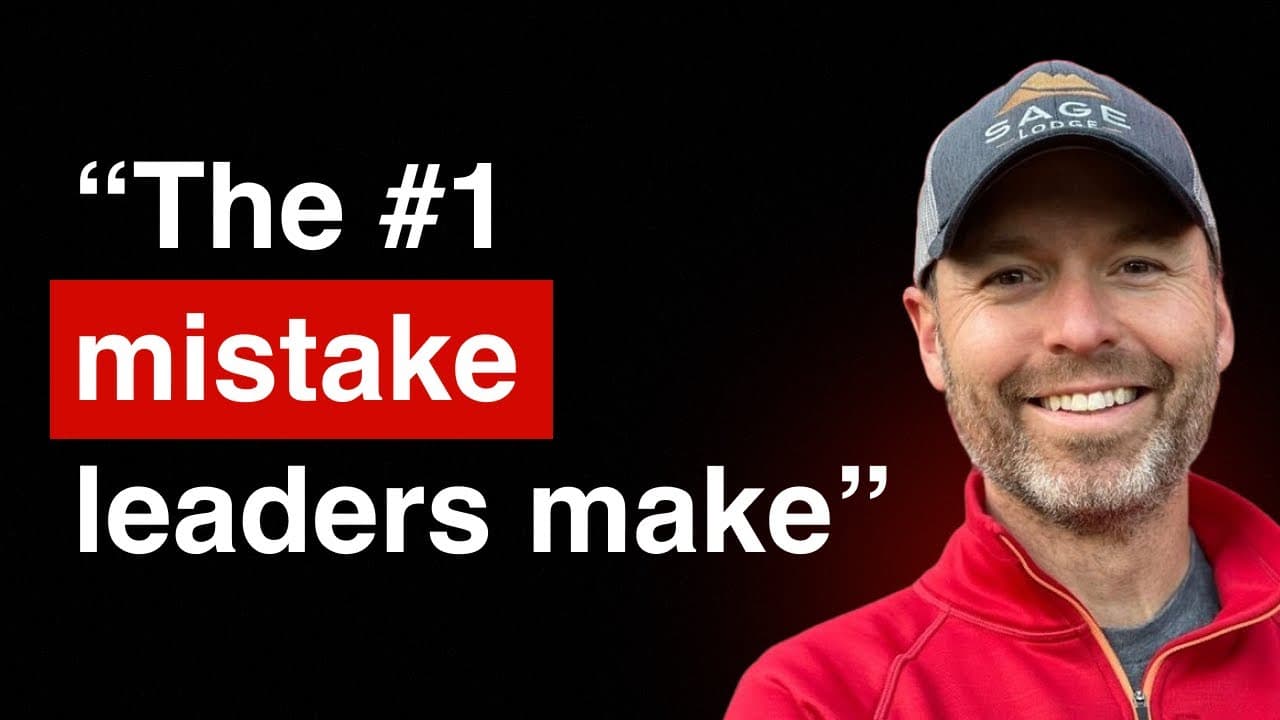
Proven Tactics to 10x Your Impact as a Leader | David Kline (ex-Bridgewater)
TL;DR
Learn valuable insights on effective management from an experienced leader who shares his journey, tips for managing up, and strategies for delegating and empowering teams.
Transcript
my experienced leaders who don't delegate that usually starts from like they're afraid of something like they're afid of losing their position and their craft and so there so sometimes people won't delegate because of the fear of being less cented to the craft or making themselves obsolete some people won't delegate because they're afraid the peopl... Read More
Key Insights
- 😨 Overcoming fears of delegating is essential for growth as a manager.
- 🎟️ Effective management involves empowering and inspiring employees towards a common mission.
- 😘 Identifying low-risk tasks and focusing on the strengths of team members can lead to successful delegation.
- 🤩 Building relationships with decision-makers and understanding the promotion process are key to career advancement.
- 🖐️ Coaches can play a crucial role in helping managers develop their skills and overcome challenges.
- 🤳 Effective management requires continuous growth, a willingness to change, and self-awareness of personal weaknesses.
- 😤 Balancing time between high-performing and underperforming team members requires prioritizing and addressing performance gaps.
Install to Summarize YouTube Videos and Get Transcripts
Explore YouTube Video Summarizer or Get YouTube Transcript Extractor
Questions & Answers
Q: How can leaders effectively manage up and build a strong relationship with their superiors?
Building a strong relationship with superiors involves having open and transparent communication, setting clear goals, and proactively seeking feedback and guidance.
Q: How can managers delegate effectively without fear of subordinates not performing as well?
Managers can start by delegating low-risk tasks and gradually move towards critical tasks. Building trust and empowering employees through clear communication and providing the necessary resources and support is key.
Q: How can managers balance their time between high-performing and underperforming team members?
It's important to prioritize investing time in high-performing team members to further enhance their skills and provide opportunities for growth. For underperforming team members, start by ensuring they have the necessary tools and support to succeed, and then focus on addressing any will or skill gaps.
Q: How can managers navigate promotions and build relationships with decision-making committees?
Understanding the promotion process and decision-makers' inputs is crucial. Building strong relationships with decision-makers by actively engaging with them, showcasing value-added contributions, and creating a personal brand within the organization can greatly increase the chances of promotion.
Summary & Key Takeaways
-
Experienced leaders often struggle with delegating tasks due to fears of losing their position or the fear of their subordinates not performing as well. However, overcoming these fears is essential for growth and becoming an effective manager.
-
The key to effective management is shifting from a focus on control to empowering and inspiring employees towards a common mission.
-
Transitioning from a full-time role to working as a solopreneur requires careful planning and identifying profitable, low-employee businesses.
Read in Other Languages (beta)
Share This Summary 📚
Summarize YouTube Videos and Get Video Transcripts with 1-Click
Try YouTube Summary with ChatGPT & Claude or YouTube Transcript Generator
Explore More Summaries from Behind the Craft 📚





Summarize YouTube Videos and Get Video Transcripts with 1-Click
Try YouTube Summary with ChatGPT & Claude or YouTube Transcript Generator