Could Humanity Survive a Nuclear Winter Event?
TL;DR
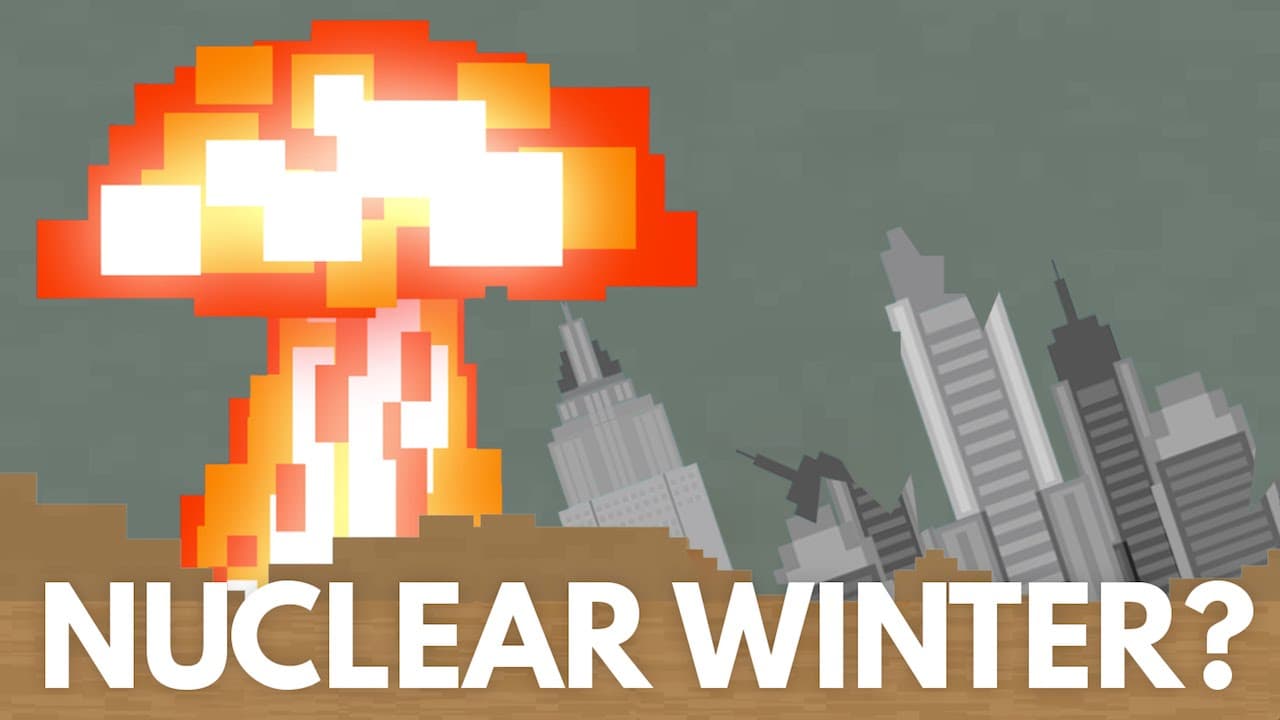
Humanity could face global famine and environmental devastation following a nuclear winter caused by nuclear war. Research indicates that even a small-scale nuclear conflict could lead to significant cooling, ozone layer damage, and crop failures lasting for years. The potential consequences of a larger nuclear war would be even more catastrophic.
Transcript
Hey there and welcome to Life Noggin! In 1983, a team of scientists, including astrophysicist Carl Sagan, made an ominous and What terrifying prediction: that in the event of a nuclear war, on top of all the damage from the bombs themselves, our world may enter what’s known as a nuclear winter. And this might be /so bad/ that those /same scientists... Read More
Key Insights
- ⚠️ Nuclear winter scenario post-nuclear war warned by scientists since 1983.
- 🛀 Simulation study shows adverse effects of 100 nuclear bombs on temperature, ozone layer, and crops.
- 🌸 Persisting consequences of nuclear winter include global cooling and ozone layer loss.
- 🥺 Larger nuclear wars could lead to more devastating nuclear winter scenarios.
- 🤩 Global famine, reduced crop growth, and UV radiation exposure are key concerns.
- ❄️ Impact of nuclear winter effects could last for years.
- 🫱 Scientists urge prevention of nuclear wars to avoid catastrophic consequences.
Install to Summarize YouTube Videos and Get Transcripts
Explore YouTube Video Summarizer or Get YouTube Transcript Extractor
Questions & Answers
Q: What is a nuclear winter and how does it occur?
A nuclear winter is a scenario where nuclear explosions cause environmental devastation leading to widespread famine. The bombs produce smoke, soot, and dust that rise to the stratosphere, affecting global temperatures and the ozone layer.
Q: What were the findings of the recent simulation study on the effects of a nuclear war?
In the simulation study, 100 nuclear bombs equivalent to those dropped on Hiroshima led to significant temperature decrease, ozone layer loss, and potential global famine due to reduced crop growth and UV radiation exposure.
Q: How long-lasting are the effects of a nuclear winter?
The effects of a nuclear winter can persist for years, with predictions of Earth being several degrees cooler within five years and significant ozone layer losses lasting for a decade.
Q: What are the potential consequences of a larger nuclear war involving more than 100 nuclear bombs?
A larger nuclear war with more than 100 bombs could result in even more devastating nuclear winter effects, including widespread famine and severe environmental damage.
Summary & Key Takeaways
-
Scientists warned in 1983 that a nuclear winter post-nuclear war could lead to environmental devastation.
-
100 nuclear bombs dropped in a simulation study showed dire consequences of stratospheric black carbon affecting temperature and ozone layer.
-
Predictions include global famine, temperature decrease, and lasting ozone layer damage.
Read in Other Languages (beta)
Share This Summary 📚
Summarize YouTube Videos and Get Video Transcripts with 1-Click
Try YouTube Summary with ChatGPT & Claude or YouTube Transcript Generator
Explore More Summaries from Life Noggin 📚




Summarize YouTube Videos and Get Video Transcripts with 1-Click
Try YouTube Summary with ChatGPT & Claude or YouTube Transcript Generator