What Determines Demand Elasticity?
TL;DR
Elasticity of demand measures how responsive quantity demanded is to price changes. Key factors include availability of substitutes, time horizon, product classification, necessity versus luxury, and purchase size relative to budget. Understanding these determinants helps predict consumer behavior and market dynamics.
Transcript
♪ [music] ♪ - [Alex] Today, we begin to discuss elasticity and its applications. This is going to take us a few lectures because the material is a little bit involved and also, I'm going to be honest, the material can be a little bit tedious. There's some formulas that we're going to have to learn how to use and memorize and so forth. However, the ... Read More
Key Insights
- Elasticity of demand measures the responsiveness of quantity demanded to price changes.
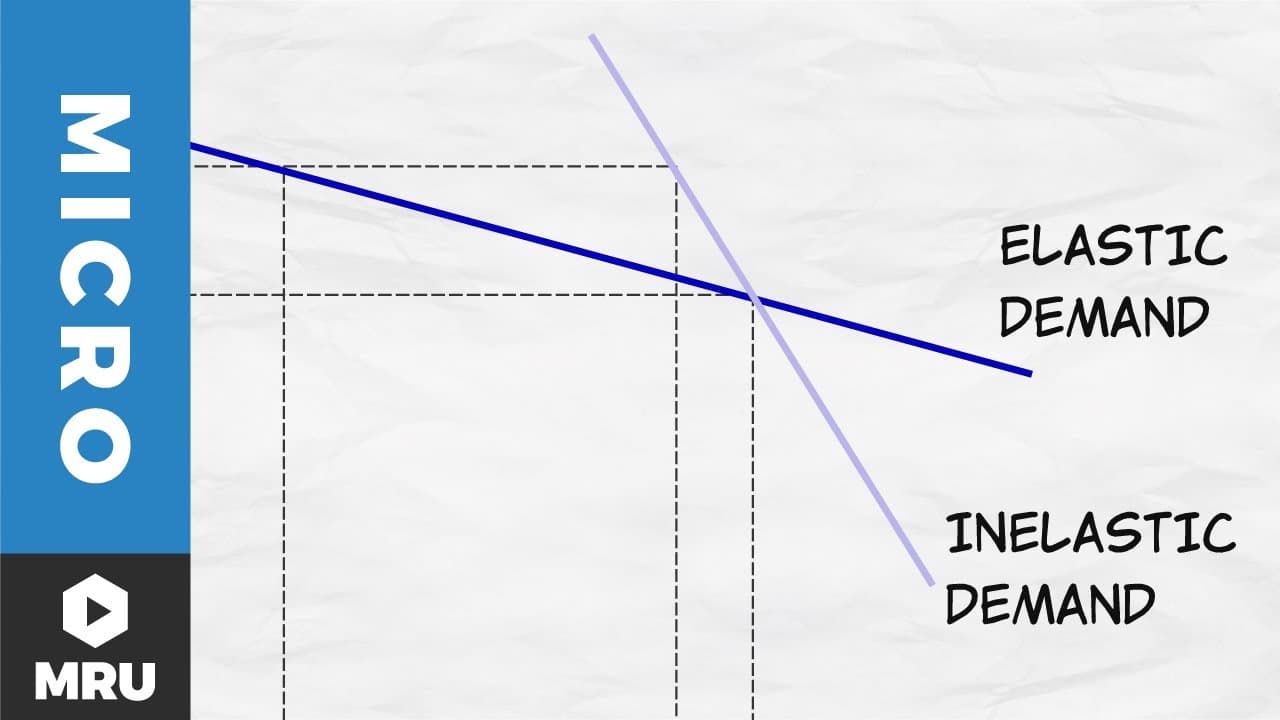
- A demand curve is elastic if a price change results in a large change in quantity demanded.
- A demand curve is inelastic if a price change results in a small change in quantity demanded.
- Availability of substitutes is the key determinant of demand elasticity.
- Time horizon affects elasticity; demand is more elastic over longer periods.
- Broad product categories tend to have less elastic demand than narrow categories.
- Necessities typically have inelastic demand, while luxuries have elastic demand.
- The size of a purchase relative to a consumer's budget influences elasticity; larger purchases are more elastic.
Install to Summarize YouTube Videos and Get Transcripts
Explore YouTube Video Summarizer or Get YouTube Transcript Extractor
Questions & Answers
Q: What is elasticity of demand?
Elasticity of demand is a measure of how much the quantity demanded of a good responds to a change in its price. If the quantity demanded changes significantly with a small price change, the demand is considered elastic. Conversely, if the quantity demanded changes little with a price change, the demand is inelastic.
Q: How does the availability of substitutes affect demand elasticity?
The availability of substitutes greatly affects demand elasticity. When there are many substitutes for a good, consumers can easily switch to an alternative if the price rises, making demand more elastic. Conversely, if few substitutes exist, consumers have fewer alternatives, resulting in inelastic demand.
Q: Why is the time horizon important for demand elasticity?
The time horizon is important because demand elasticity tends to increase over time. In the short term, consumers may not be able to quickly change their habits or find substitutes, resulting in inelastic demand. Over the long term, consumers can adjust their behavior and find alternatives, making demand more elastic.
Q: How does product classification impact demand elasticity?
Product classification impacts demand elasticity by determining the range of substitutes available. Broad categories, like food, have fewer substitutes and thus less elastic demand. Narrow categories, like a specific brand of coffee, have more substitutes and therefore more elastic demand.
Q: What is the difference between necessities and luxuries in terms of demand elasticity?
Necessities and luxuries differ in demand elasticity, as necessities tend to have inelastic demand. Consumers need these goods regardless of price changes. Luxuries, on the other hand, have elastic demand, as consumers can forego them or switch to alternatives if prices rise.
Q: How does the size of a purchase relative to a budget affect elasticity?
The size of a purchase relative to a consumer's budget affects elasticity by determining sensitivity to price changes. Large purchases, like cars, are more elastic because price changes significantly impact budgets. Small purchases, like toothpicks, are less elastic as they have minimal budget impact.
Q: What are some examples of goods with elastic demand?
Goods with elastic demand include items with many substitutes, such as Brazilian coffee or Bayer Aspirin. If the price of these goods rises, consumers can easily switch to alternatives like Ethiopian coffee or generic aspirin, leading to a significant decrease in quantity demanded.
Q: What are some examples of goods with inelastic demand?
Goods with inelastic demand include those with few substitutes, such as insulin or oil. Price changes for these goods do not significantly impact quantity demanded because consumers have limited alternatives, and the goods may be necessities, like insulin for diabetics.
Summary & Key Takeaways
-
Elasticity of demand refers to how much the quantity demanded changes in response to price changes. Key determinants include the availability of substitutes, time horizon, and whether the good is a necessity or luxury. Understanding these factors helps predict how consumers will react to price changes.
-
The availability of substitutes is crucial for determining elasticity. More substitutes lead to more elastic demand, as consumers can easily switch products. Conversely, fewer substitutes result in inelastic demand, as consumers have limited alternatives.
-
Time horizon also affects elasticity. In the short term, demand is generally less elastic as consumers cannot quickly change their behavior. Over the long term, demand becomes more elastic as consumers find substitutes and adjust their consumption habits.
Read in Other Languages (beta)
Share This Summary 📚
Summarize YouTube Videos and Get Video Transcripts with 1-Click
Try YouTube Summary with ChatGPT & Claude or YouTube Transcript Generator
Explore More Summaries from Marginal Revolution University 📚


Summarize YouTube Videos and Get Video Transcripts with 1-Click
Try YouTube Summary with ChatGPT & Claude or YouTube Transcript Generator