How Does Innovative Kindergarten Design Promote Learning?
TL;DR
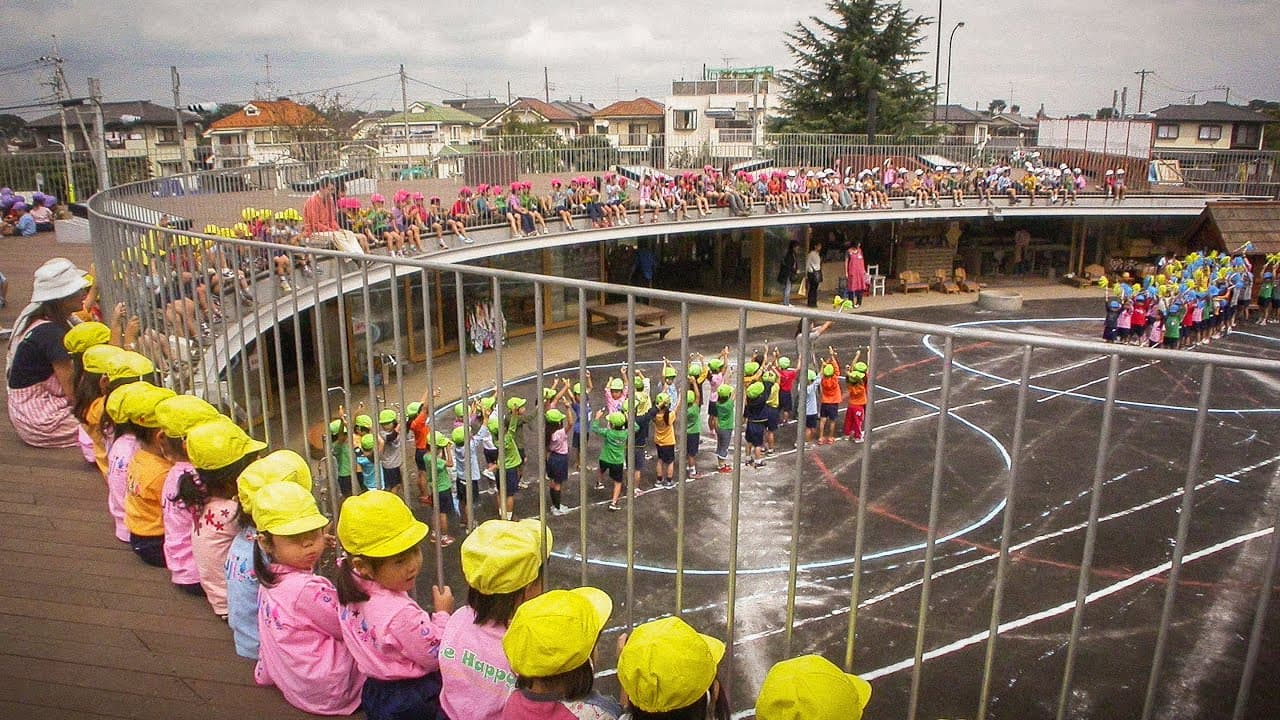
Innovative kindergarten design fosters learning by promoting exploration and independence, featuring an open layout without boundaries between indoor and outdoor spaces. Children are encouraged to experience some risk, enhancing their athletic abilities and social skills, while being immersed in a naturally noisy environment that supports concentration and well-being.
Transcript
This is a kindergarten we designed in 2007. We made this kindergarten to be a circle. It's a kind of endless circulation on top of the roof. If you are a parent, you know that kids love to keep making circles. This is how the rooftop looks. And why did we design this? The principal of this kindergarten said, "No, I don't want a handrail." I said, ... Read More
Key Insights
- 🏢 The kindergarten was designed to be a circle with an open rooftop. The principal wanted to eliminate handrails, but a compromise was made by incorporating a net around the trees as a handrail.
- 🌳 The open design of the kindergarten allows for a seamless connection between inside and outside spaces. There are no boundaries between classrooms, creating a natural and free-flowing environment for the children.
- 👂 Noise is considered important in the kindergarten, as children sleep better in noise and it helps with their concentration. The open design and lack of acoustic barriers promote a calm and comfortable learning environment.
- 🌦️ Children are encouraged to spend time outdoors, regardless of the weather conditions. This approach aims to treat children as capable beings who can withstand various environmental elements.
- 👥 The design of the classrooms promotes interaction and collaboration among children. Trees and skylights are incorporated into the classrooms, creating a unique and lively atmosphere for learning.
- 🚗 The low-ceilinged annex building includes safety considerations, such as low ceilings to prevent accidents. The children are given opportunities to experience small doses of danger and learn important life skills.
- ♂️ The children in this kindergarten have high athletic abilities, as they are encouraged to move freely on the rooftop and engage in physical activities. Running and exploration are seen as essential parts of their development.
- 💡 The principal believes that children should not be overly controlled or coddled, but rather allowed to experience challenges and learn from them. Architecture has the power to shape lives and create positive change.
Install to Summarize YouTube Videos and Get Transcripts
Explore YouTube Video Summarizer or Get YouTube Transcript Extractor
Questions & Answers
Q: Why did the principal of the kindergarten not want a handrail on the rooftop?
The principal of the kindergarten did not want a handrail on the rooftop because he wanted to allow the children to freely circulate and move around without any physical barriers. He proposed the idea of having a net sticking out from the edge of the roof to catch any children who might fall off.
Q: How did the architects incorporate the idea of a handrail without compromising the safety of the children?
The architects were not allowed to completely eliminate the need for a handrail, but they were able to keep the idea of an open and free rooftop by using ropes around the trees as a form of handrail. These ropes had no practical function in terms of safety, but they created a visually appealing and playful boundary for the children.
Q: How did the architects ensure that there was no boundary between inside and outside in the kindergarten?
The architects designed the kindergarten to be completely open, with no physical boundaries separating the indoors from the outdoors. This meant that there were no walls or doors between classrooms, and children could freely move around and interact with nature. The architecture itself acted as the roof, providing shelter while still maintaining a sense of openness.
Q: How did the architects address the issue of noise in the kindergarten?
The architects recognized the importance of noise for children's development and concentration. The open design of the kindergarten allowed for natural noise to permeate the space, creating a stimulating environment for learning. By removing acoustic barriers and embracing noise, the architects ensured that the children could thrive and focus in class.
Q: How did the architects emphasize the importance of outdoor play for children?
The architects designed the kindergarten to encourage outdoor play and exploration. They made the roof as low as possible so that the children could be on top of it and interact with the space above, rather than just being underneath it. The lack of boundaries between inside and outside further highlighted the idea that children are meant to be outside and engage with their surroundings.
Summary & Key Takeaways
-
The kindergarten was designed in 2007 as a circle with a rooftop playground. The principal insisted on no handrail, so a net was added instead.
-
The kindergarten is completely open most of the year, with no boundaries between inside and outside or between classrooms. Noise is considered important for better sleep and concentration.
-
The design encourages independence and exploration, with children allowed to leave and come back naturally. The emphasis is on treating children as capable and allowing them to experience some risk.
Read in Other Languages (beta)
Share This Summary 📚
Summarize YouTube Videos and Get Video Transcripts with 1-Click
Try YouTube Summary with ChatGPT & Claude or YouTube Transcript Generator
Explore More Summaries from TED 📚





Summarize YouTube Videos and Get Video Transcripts with 1-Click
Try YouTube Summary with ChatGPT & Claude or YouTube Transcript Generator