Cutting Fluid Types - Temperatures in Metal Cutting and Cutting Fluids
TL;DR
This video provides an overview of cutting fluid types, their purposes, desirable properties, and their uses in different cutting conditions.
Transcript
my name is santosh kumar and i am the course instructor for machining sciences and 2 design we are discussing model number 2 that is temperatures in metal cutting and cutting fluids so in this video we will discuss about cutting fluid types okay so as we know the cutting fluids are used basically for for a lubricant as a lubricant or a coolant whic... Read More
Key Insights
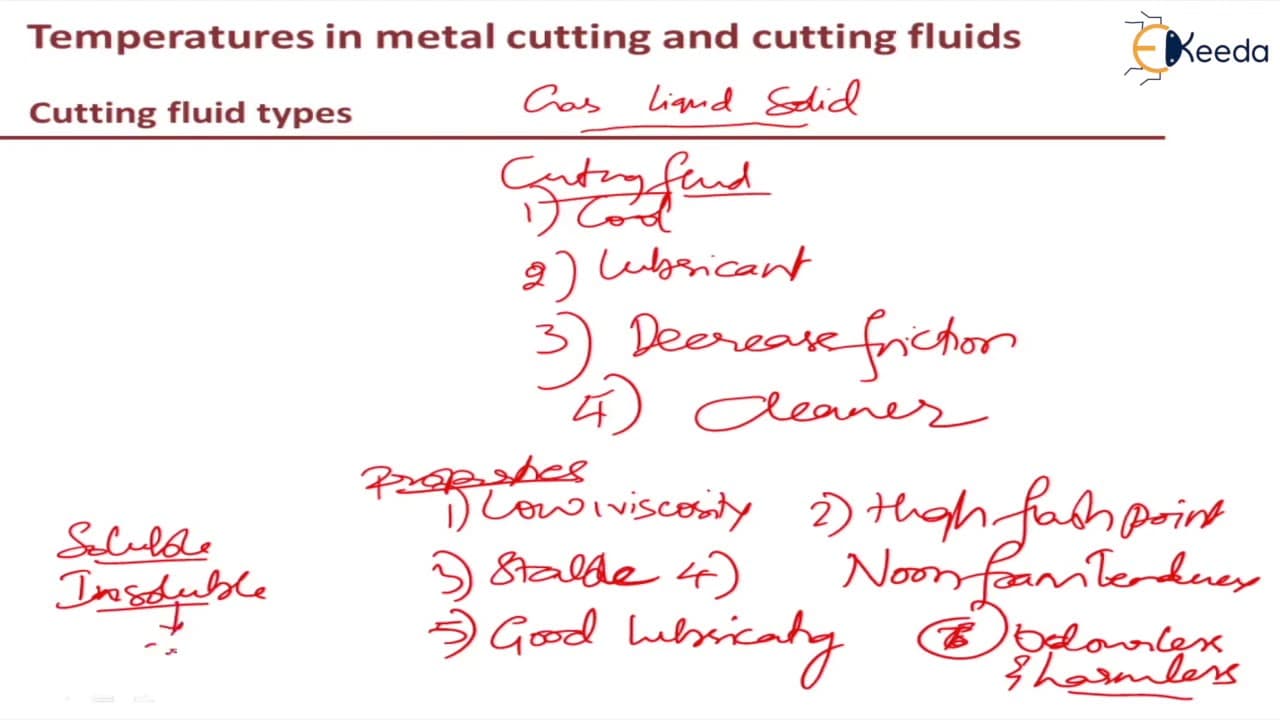
- 😎 Cutting fluids serve multiple purposes in metal cutting, including cooling, lubrication, friction reduction, and cleaning.
- 😘 Desirable properties of cutting fluids include low viscosity, high flash point, stability, non-foaming tendency, good lubricating properties, chemical inertness, odorlessness, and harmlessness.
- 💇 Insoluble oils and water-based fluids are the main types of cutting fluids, chosen based on the cutting conditions.
- 🚄 Neat oils are used for lubrication in slow-speed cutting operations, while water emulsions are used for high-speed cooling.
Install to Summarize YouTube Videos and Get Transcripts
Explore YouTube Video Summarizer or Get YouTube Transcript Extractor
Questions & Answers
Q: Why are cutting fluids used in metal cutting?
Cutting fluids are used in metal cutting to improve cutting conditions, increase tool life, and enhance the overall machining process by cooling the tool, lubricating the cutting surface, reducing friction, and acting as a cleaner.
Q: What are the desirable properties of cutting fluids?
Desirable properties of cutting fluids include low viscosity for effective lubrication, high flash point to prevent ignition at low temperatures, chemical stability to avoid adverse reactions, non-foaming tendency to maintain effectiveness, good lubricating properties, chemical inertness, and being odorless and harmless to ensure operator safety.
Q: What are the types of cutting fluids?
Cutting fluids can be divided into two main types: insoluble oils and water-based fluids. Insoluble oils, such as mineral or vegetable oils, are used for lubrication in slow-speed cutting conditions. Water-based fluids, with water as the main liquid and additives, are used for high-speed cooling.
Q: How are cutting fluids used in different cutting conditions?
Neat oils, such as carbon tetrachloride, are used for lubrication in slow-speed cutting operations like screw cutting and gear cutting. Water emulsions, where oils are mixed with water, are used when cooling is the primary requirement. Different cutting fluids are chosen based on the specific cutting conditions and work materials.
Summary & Key Takeaways
-
Cutting fluids are used as lubricants and coolants in metal cutting to improve cutting conditions and tool life.
-
They can be in gaseous, liquid, or solid form.
-
The purposes of cutting fluids include cooling, lubricating, reducing friction, and cleaning.
Read in Other Languages (beta)
Share This Summary 📚
Summarize YouTube Videos and Get Video Transcripts with 1-Click
Try YouTube Summary with ChatGPT & Claude or YouTube Transcript Generator
Explore More Summaries from Ekeeda 📚





Summarize YouTube Videos and Get Video Transcripts with 1-Click
Try YouTube Summary with ChatGPT & Claude or YouTube Transcript Generator