Do Our Senses Reveal the World—Or Do They Obscure It? | Beau Lotto | Big Think
TL;DR
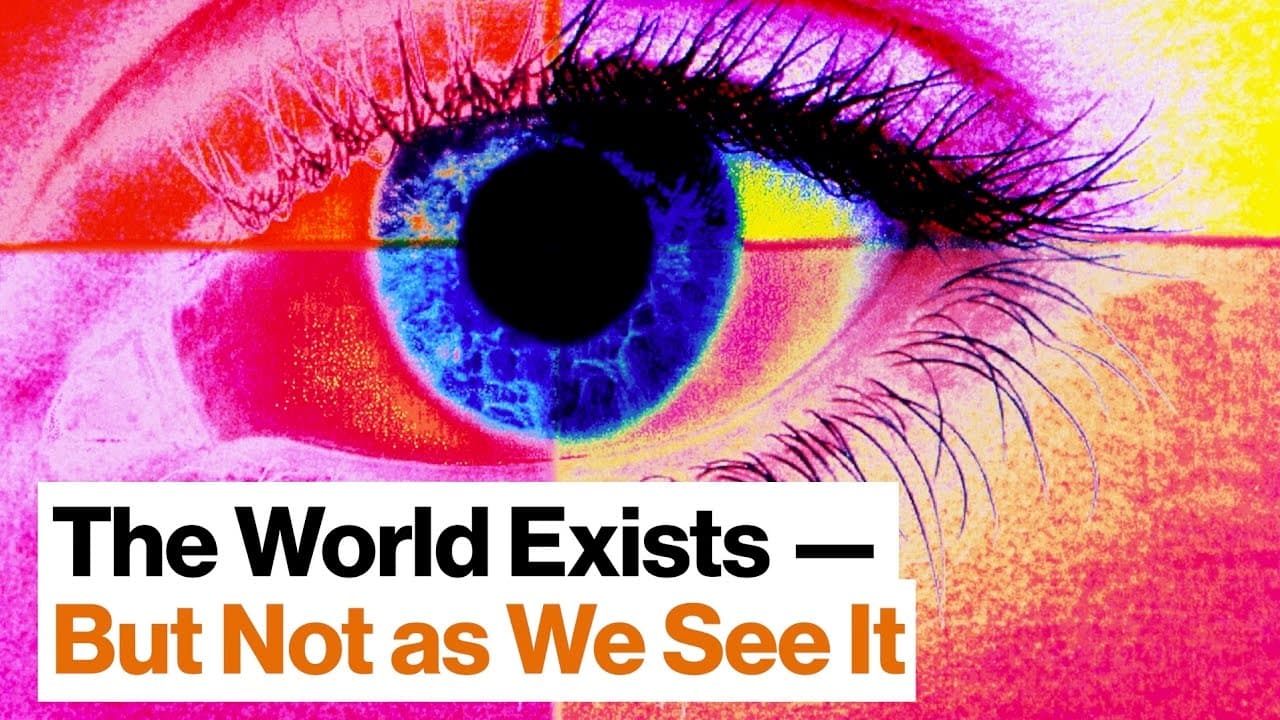
Our brain interprets sensory data to create a useful, but not necessarily accurate, perception of reality.
Transcript
Is there an external reality? Of course there’s an external reality. The world exists. It’s just that we don’t see it. At least, we don’t see it as it is. In fact, we can never it as it is! In fact it’s even useful to not see it as it is. And the reason is because it goes back to really Berkeley, who tells us we have no direct access to that physic... Read More
Key Insights
- 🧠 Our perception of reality is constructed by our brains based on sensory data, not an exact representation.
- ❓ Color perception is a complex, categorical, and culturally influenced concept.
- ❓ Illusions challenge our understanding of reality by demonstrating subjective differences in perception.
- 🧠 Our brains interpret sensory information to create a useful, rather than accurate, perception of reality.
- 🧠 The brain's functional structure is a result of past interactions with the world, shaping our perception of reality.
- 👷 Color perception is a three-dimensional construct influenced by brightness, saturation, and hue.
- 🧠 The brain categorizes colors into unique hues, creating a categorical perception of reality.
Install to Summarize YouTube Videos and Get Transcripts
Explore YouTube Video Summarizer or Get YouTube Transcript Extractor
Questions & Answers
Q: Why can't we see the external world as it truly is?
Our senses combine multiple aspects of reality, leading to an inaccurate perception of the external world.
Q: How does our brain create a perception of reality?
The brain's functional structure is shaped by past interactions with the world, leading to a subjective and useful perception.
Q: Why is color perception a complex concept?
Color perception is subjective, influenced by cultural factors and unique to each individual's sensory experience.
Q: How do illusions like "Dressgate" challenge our perception of reality?
Illusions demonstrate that different individuals can perceive color differently, raising questions about the accuracy of our reality perception.
Summary & Key Takeaways
-
Our senses conflate aspects of the external world, making it impossible to perceive reality accurately.
-
The brain's functional structure is a physical manifestation of past interactions with the world.
-
Color perception is a complex, categorical, and subjective construct influenced by cultural and individual factors.
Read in Other Languages (beta)
Share This Summary 📚
Summarize YouTube Videos and Get Video Transcripts with 1-Click
Try YouTube Summary with ChatGPT & Claude or YouTube Transcript Generator
Explore More Summaries from Big Think 📚




Summarize YouTube Videos and Get Video Transcripts with 1-Click
Try YouTube Summary with ChatGPT & Claude or YouTube Transcript Generator