What Are the Key Limitations of Current AI Technology?
TL;DR
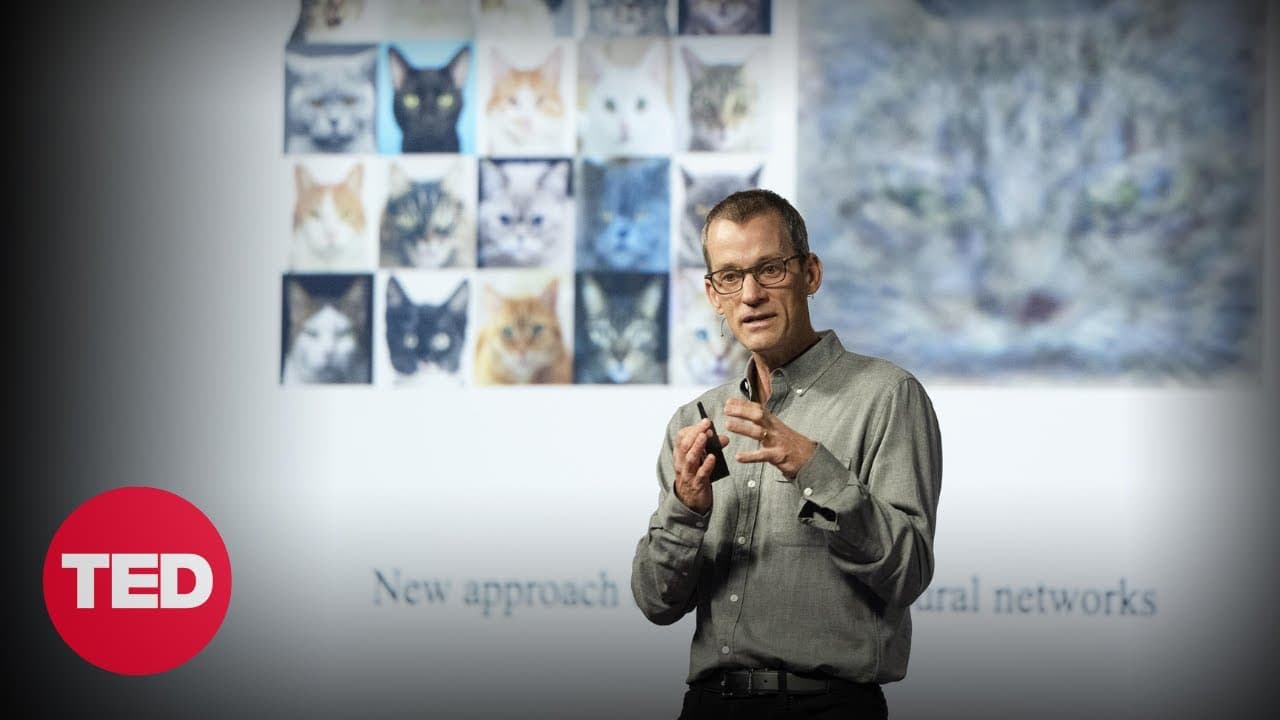
Current AI technology is limited by three main issues: the training of separate models for each task, handling only one data modality at a time, and reliance on dense models that waste computational resources. To improve, we should create multitask models that can learn from diverse data types and employ sparse activation, using only relevant parts of the model as needed.
Transcript
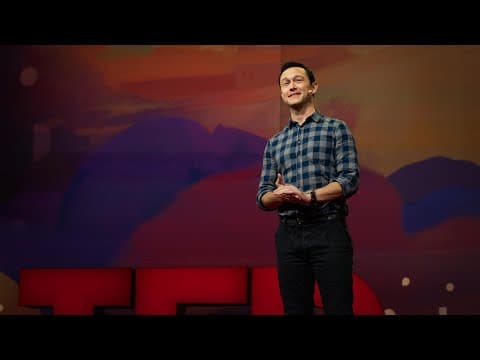
Hi, I'm Jeff. I lead AI Research and Health at Google. I joined Google more than 20 years ago, when we were all wedged into a tiny office space, above what's now a T-Mobile store in downtown Palo Alto. I've seen a lot of computing transformations in that time, and in the last decade, we've seen AI be able to do tremendous things. But we're still do... Read More
Key Insights
- 🔍 AI has made tremendous progress in the last decade, with computers now able to see, understand language, and understand speech better than ever before.
- 📊 The progress in AI systems today is driven by two key components: neural networks and computational power.
- 🧠 Neural networks, although not a new idea, have made significant advancements in solving difficult problems by mimicking the properties of real neurons.
- 💪 Computational power is essential to make neural networks effective, with a million times more computational power needed to achieve impressive results compared to 1990.
- 🔁 Most neural networks today are trained for a specific task, but training general-purpose models that can perform thousands or millions of tasks simultaneously would be more efficient and powerful.
- 🌐 AI models that can handle multiple modalities of data, such as images, text, and speech, and fuse them together would lead to a deeper understanding of the world.
- 🤖 Dense AI models can be replaced with sparsely activated models, where different parts of the model are called upon for different tasks, mimicking how our own brains work.
- 🌍 Responsible AI development is crucial, considering fairness, interpretability, privacy, and security for all users. Google follows a set of AI principles, continuously updated and guiding their research and product development.
- 🎙️ More videos with Jeff Dean:
Install to Summarize YouTube Videos and Get Transcripts
Explore YouTube Video Summarizer or Get YouTube Transcript Extractor
Questions & Answers
Q: What are some of the advancements in AI that have been made in the last decade?
In the last decade, there have been significant advancements in AI in terms of computer vision, language understanding, and speech recognition. Computers can now see and understand language in ways that were not possible before.
Q: How have these advancements in AI been applied to real-world problems?
The progress in AI has led to the development of applications that can predict and prevent flooding, facilitate communication through language translation, and improve disease diagnosis and treatment. These advancements have had a transformative effect on what can be achieved with computers.
Q: What are the two key components that have contributed to the progress in AI systems?
The two key components that have contributed to the progress in AI systems are neural networks and computational power. Neural networks, which have been around since the 1960s and 70s, have been able to solve complex problems in the last 15 years. Furthermore, the increase in computational power has enabled this progress.
Q: What are some of the things that are currently being done wrong in AI?
According to Jeff Dean, there are three main things that are currently being done wrong in AI. Firstly, most neural networks are trained to do one specific task, leading to the creation of separate models for different tasks. Secondly, AI models often deal with only a single modality of data instead of fusing different modalities together. Lastly, models are dense and fully activated, whereas they should be sparsely activated based on the task at hand.
Q: How can these problems in AI be addressed?
To address these problems, Jeff Dean suggests training multitask models that can do thousands or millions of different tasks, dealing with all modalities of data and fusing them together, and using sparse, high-capacity models that only activate the relevant parts for each task. Implementing these changes can lead to more powerful and efficient AI systems.
Q: What are some of the concerns related to the development of AI systems?
There are important concerns related to responsible AI development, including fairness, interpretability, privacy, and security. Fairness in data collection is crucial, ensuring representation from different communities and situations. Google has established AI principles that guide their research and product development, continuously updated as more is learned about responsible AI.
Q: How does Jeff Dean envision the future of AI in the next five or 10 years?
Jeff Dean envisions AI systems that can easily generalize from known tasks to new tasks with minimal examples. By building systems that are capable of performing thousands or millions of tasks, new tasks can be learned more quickly. This will lead to more powerful AI systems capable of tackling significant global issues such as disease diagnosis, educational advancements, and climate change solutions.
Summary & Key Takeaways
-
Jeff Dean, leader of AI Research and Health at Google, discusses the progress of AI in the last decade and the potential it holds.
-
He emphasizes that AI is still being approached in the wrong way and talks about the key components of the progress in AI systems: neural networks and computational power.
-
Jeff Dean also highlights three key things that are currently being done wrong in AI, including training separate models for different tasks, dealing with only one modality of data, and using dense models, and he proposes solutions to fix these issues.
Read in Other Languages (beta)
Share This Summary 📚
Summarize YouTube Videos and Get Video Transcripts with 1-Click
Try YouTube Summary with ChatGPT & Claude or YouTube Transcript Generator
Explore More Summaries from TED 📚


Summarize YouTube Videos and Get Video Transcripts with 1-Click
Try YouTube Summary with ChatGPT & Claude or YouTube Transcript Generator