What Is the Potential of Recycling Nuclear Waste?
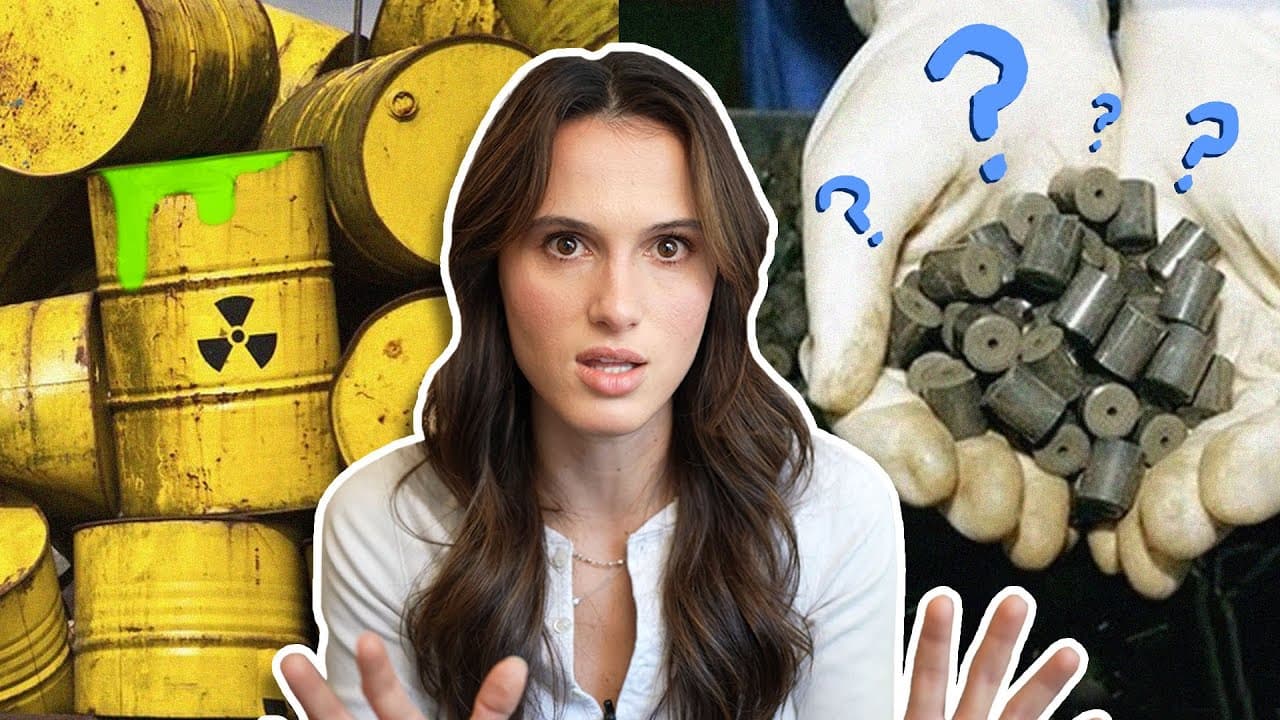
TL;DR
Recycling nuclear waste can turn it into a valuable energy source, capable of powering the U.S. for the next 150 years. Despite existing technology developed in the 1960s, the main obstacles to implementing it are cost and political factors, not technological limitations. Other countries, like Japan, have already adopted nuclear waste recycling successfully.
Transcript
"Nuclear power!" "Nuclear power..." "NUCLEAR POWER" "Nuclear waste..." "Nuclear waste?" "Nuclear waste" Ok. I need to show you something: This is a nuclear reactor built in 1962... "The atomic power plant of the future..." "being developed by Argonne National Laboratory..." But it's not just any old nuclear reactor. "This reactor is different in m... Read More
Key Insights
- 🌍 The technology to generate electricity from nuclear waste exists and was developed in the 1960s, but is not widely implemented today.
- 🔋 Reusing nuclear waste as fuel can provide an abundant source of clean energy for centuries to come.
- 😱 Concerns about nuclear energy include the disposal of radioactive waste and the potential for nuclear proliferation.
- 💰 The main obstacles to nuclear waste recycling are cost and global politics, rather than fundamental technological limitations.
- 🌐 Other countries, such as Japan, are already successfully implementing nuclear fuel recycling.
- 🔋 By recycling nuclear waste, the time that waste remains radioactive can be significantly reduced.
- 💡 Nuclear fuel recycling can contribute to a closed fuel cycle, reducing waste and conserving uranium.
- 👀 The United States discontinued nuclear waste recycling in the 1970s due to concerns about nuclear proliferation, while other countries continued to pursue the technology.
Install to Summarize YouTube Videos and Get Transcripts
Explore YouTube Video Summarizer or Get YouTube Transcript Extractor
Questions & Answers
Q: How does recycling nuclear waste reduce the radioactivity of the waste?
When nuclear waste is recycled, especially if it is reused multiple times, the radioactive materials with long half-lives are used up, reducing the overall radioactivity and the need for long-term storage.
Q: Why did President Carter halt nuclear recycling in 1977?
President Carter was concerned about nuclear proliferation, as one of the byproducts of recycling, plutonium, can be used to develop nuclear weapons. He believed that a viable nuclear power program could be sustained without recycling.
Q: What are the main incentives for recycling nuclear waste today?
The concerns about potential fuel supply interruptions and the urgent need for clean energy have sparked new interest in recycling nuclear waste. By recycling, countries can reduce their dependence on imported fuel and extend their energy resources.
Q: Why is the cost of nuclear waste recycling considered a barrier?
Currently, using new uranium is cheaper and more abundant than recycling nuclear waste. However, as the demand for clean energy increases and the availability of new uranium declines, the economic viability of recycling may improve.
Q: Why did the US invest in light water reactors instead of fast reactors?
The US shifted towards light water reactors because of the ban on nuclear recycling and the belief that these reactors were safer and more cost-effective. However, other countries continued to develop fast reactors that could handle nuclear waste.
Q: What needs to be done to commercialize the recycling of nuclear waste?
There are still many challenges to overcome before nuclear waste recycling can be commercialized, including the development of efficient recycling technologies and addressing regulatory and political concerns. However, the technology has already been proven and demonstrated.
Summary & Key Takeaways
-
The video discusses a nuclear reactor built in the 1960s that had the capability to generate electricity from nuclear waste.
-
The current approach to nuclear waste management involves storing it indefinitely, but recycling could turn it into a valuable energy resource.
-
The main obstacles to nuclear waste recycling are cost and political factors, rather than technological limitations.
Read in Other Languages (beta)
Share This Summary 📚
Summarize YouTube Videos and Get Video Transcripts with 1-Click
Try YouTube Summary with ChatGPT & Claude or YouTube Transcript Generator
Explore More Summaries from Cleo Abram 📚






Summarize YouTube Videos and Get Video Transcripts with 1-Click
Try YouTube Summary with ChatGPT & Claude or YouTube Transcript Generator