The biggest chess game ever
Transcript
Read and summarize the transcript of this video on Glasp Reader (beta).
Install to Summarize YouTube Videos and Get Transcripts
Explore YouTube Video Summarizer or Get YouTube Transcript Extractor
Summary
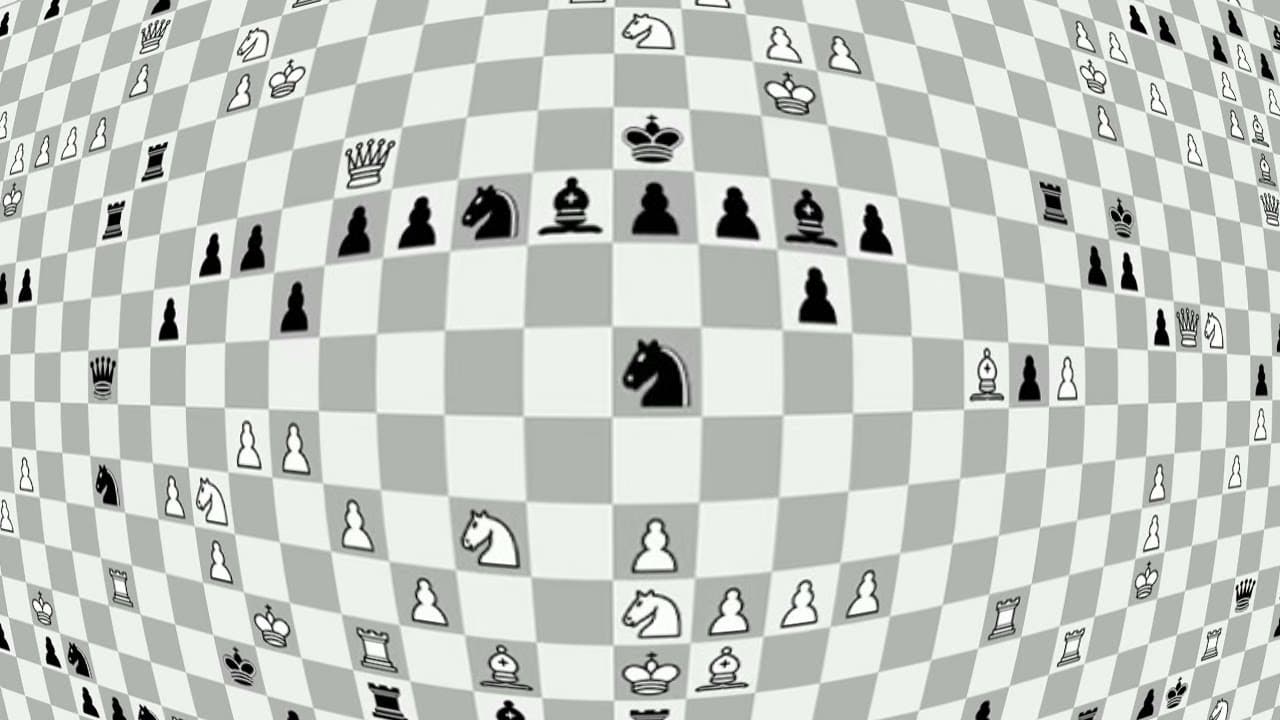
In this video, two AI engines play a game of chess on an infinite chessboard with infinite pieces. Each move is calculated and performed on an 8x8 subset, creating a legal position with two kings. However, this subset is just a small part of a much larger game where checkmate leads to the destruction of kings and the remaining pieces move on. The game is played with the initialization of famous grandmaster game positions and the selection of which subset to use for computing the next move is done randomly. This concept raises questions about the generalizability of AI engines beyond the constraints of the games they were trained on.
Questions & Answers
Q: What happens when two AI engines play a game of chess on an infinite chessboard?
When two AI engines play on an infinite chessboard, the game becomes a meta-game where each move is calculated and performed on an 8x8 subset. This subset is a legal position with two kings, but in the larger picture, it is just a small part of a much bigger game.
Q: How many kings and checkmate victories are displayed on the counter?
The counter shows the number of kings and checkmate victories. It is not specified how many kings and checkmate victories are initially displayed, but this counter keeps track of the progress of the game.
Q: How are the boards initialized?
The boards are initialized with the middle game position from one of 30,000 famous grandmaster games. These games include players like Magnus Carlsen, Bobby Fischer, Kasparov, Spassky, Karpov, and more. By using these established game positions, the AI engines begin the game with a strategic starting point.
Q: How is the next move computed in this game?
The selection of which 8x8 subset to use for computing the next move is made randomly among all the boards that have legal chess positions. This random selection process optimizes the game's selection mechanism, potentially formulating it as a reinforcement learning problem.
Q: What are the implications of the selection process for computing the next move?
The selection process for computing the next move in this game of chess on an infinite chessboard raises fascinating questions about the generalizability of AI engines. It pushes the boundaries beyond the scale and constraints of the specific game they were initially trained on. This presents an opportunity to explore the adaptability and problem-solving capabilities of AI engines in more extensive and complex scenarios.
Q: How does the game of chess change when removing constraints and increasing the scale?
Chess, as a game, takes on a new dimension when the constraints are removed, and the scale is increased. It evolves into something more akin to the game of life played on an infinite chessboard. With the removal of boundaries, the dynamics of the game change as pieces get captured and sacrificed, and the remaining ones continue their quest for new victims. This expansion of the game introduces new strategic possibilities and challenges for the AI engines.
Takeaways
The concept of playing chess on an infinite chessboard with infinite pieces raises interesting questions about AI engine generalizability and the scalability of game constraints. By removing constraints and increasing the scale, the game of chess evolves and introduces new dynamics. This concept challenges AI engines to adapt and solve problems in larger and more complex scenarios. Additionally, the random selection process for computing the next move highlights the potential for reinforcement learning applications.
Read in Other Languages (beta)
Share This Summary 📚
Summarize YouTube Videos and Get Video Transcripts with 1-Click
Try YouTube Summary with ChatGPT & Claude or YouTube Transcript Generator
Explore More Summaries from Lex Fridman 📚


Summarize YouTube Videos and Get Video Transcripts with 1-Click
Try YouTube Summary with ChatGPT & Claude or YouTube Transcript Generator