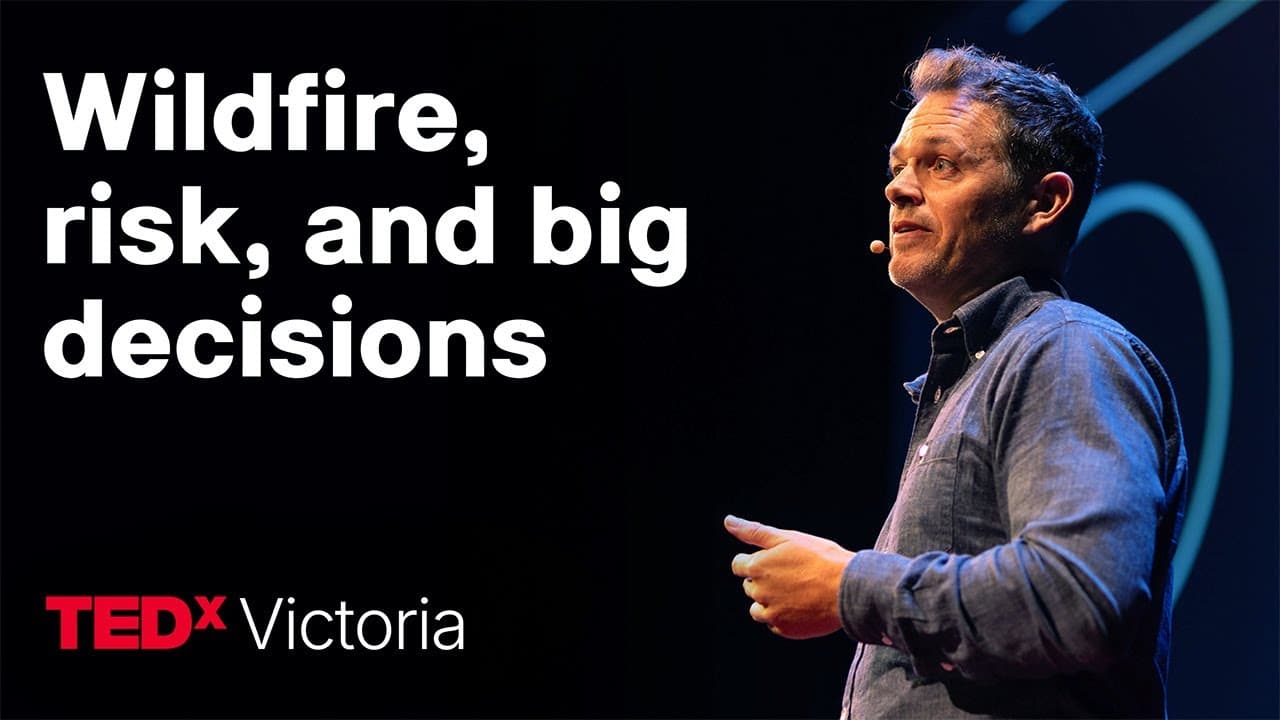
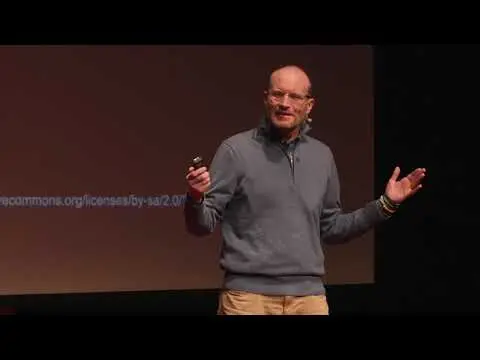
How to make big decisions | Jonathan Reimer | TEDxVictoria
TL;DR
Effective decision-making relies on both intuition and systematic assessment.
Transcript
[Applause] so I'd like to start with two wildfires in 2016 I was the director of the Wildland Urban interface for the foric Murray fire I had arrived days after the fire had jumped the athabaska river and entered the community as a torrent of flame and Ember starting hundreds of Fire simultaneously throughout the community and in many neighborhoods... Read More
Key Insights
- 🚨 Balancing intuition with systematic assessment can significantly enhance decision-making, especially in emergencies where lives are at stake.
- 🙈 Preemptive actions, such as evacuations, can drastically alter the outcomes during disasters, as seen in the Waterton fire.
- 🥺 Overloading decision-makers with data can often lead to confusion and diminished performance, rather than clarity.
- ✊ Understanding and recognizing the power of gut feelings can aid in quick judgment but must be tempered with critical analysis.
- 👻 The concept of "size up" is fundamental in emergency management, allowing responders to prioritize critical information early on.
- ❓ Decision-making processes can benefit from acknowledging the biases inherent in intuitive judgments, promoting more rational evaluations.
- 🦻 Intuition can be honed over time through experience, gathering valuable insights that aid in quick analysis of complex scenarios.
Install to Summarize YouTube Videos and Get Transcripts
Explore YouTube Video Summarizer or Get YouTube Transcript Extractor
Questions & Answers
Q: What were the main differences in the responses to the Murray and Waterton fires?
The primary difference in the Murray and Waterton fire responses was the anticipation of the threat and the evacuation protocols. In the Murray incident, evacuations were delayed, with residents fleeing as fires approached. Conversely, in Waterton, preemptive evacuations allowed firefighters to focus on effective strategies without loss of life or property.
Q: How did too much information impact decision-making for incident commanders?
Research indicated that increased information for incident commanders often degraded performance instead of improving it. As they attempted to process vast amounts of data, their ability to focus on critical elements of firefighting diminished, leading to poorer decisions under urgent conditions.
Q: What role does intuition play in decision-making during emergencies?
Intuition is described as a valuable tool in decision-making, facilitating rapid assessments based on accumulated experience. In emergencies, like wildfire management, skilled individuals can often predict outcomes based on subtle cues, drawing from a wealth of past patterns without needing exhaustive data analysis.
Q: What is the concept of "size up" as explained in the content?
"Size up" refers to the initial assessment phase when responders arrive on the scene of an incident. It involves gathering crucial information about the fire's behavior, hazards, and potential threats. This systematic analysis ensures responders have a clear overview before developing strategies, enhancing overall decision-making effectiveness.
Q: Can you explain the bat and ball analogy regarding decision-making?
The bat and ball analogy illustrates how intuitive responses can lead to incorrect conclusions. When posed with a simple math problem, many instinctively reply that the ball costs $10, overlooking the logical contradiction. This showcases how our gut reactions can mislead us, emphasizing the need to reflect and analyze before concluding.
Q: What was Wag Dodge's unique decision during the wildfire incident in 1949?
Wag Dodge made the audacious choice to ignite a controlled burn around his position to consume fuel before the main fire reached him. While this decision proved successful for him, his crew failed to grasp its logic due to their overwhelming flight instinct, highlighting the challenges of convincing others to follow unorthodox strategies.
Summary & Key Takeaways
-
The speaker recounts experiences from significant wildfires, highlighting a critical difference in evacuation and firefighting strategies that determined community safety.
-
They emphasize the limitations of excessive information in decision-making, which can obscure important aspects and hinder performance, particularly during emergencies.
-
The speaker advocates for a balanced approach, starting with thorough assessment ("size up") before relying on intuition to guide complex decisions.
Read in Other Languages (beta)
Share This Summary 📚
Summarize YouTube Videos and Get Video Transcripts with 1-Click
Try YouTube Summary with ChatGPT & Claude or YouTube Transcript Generator
Explore More Summaries from TEDx Talks 📚


Summarize YouTube Videos and Get Video Transcripts with 1-Click
Try YouTube Summary with ChatGPT & Claude or YouTube Transcript Generator