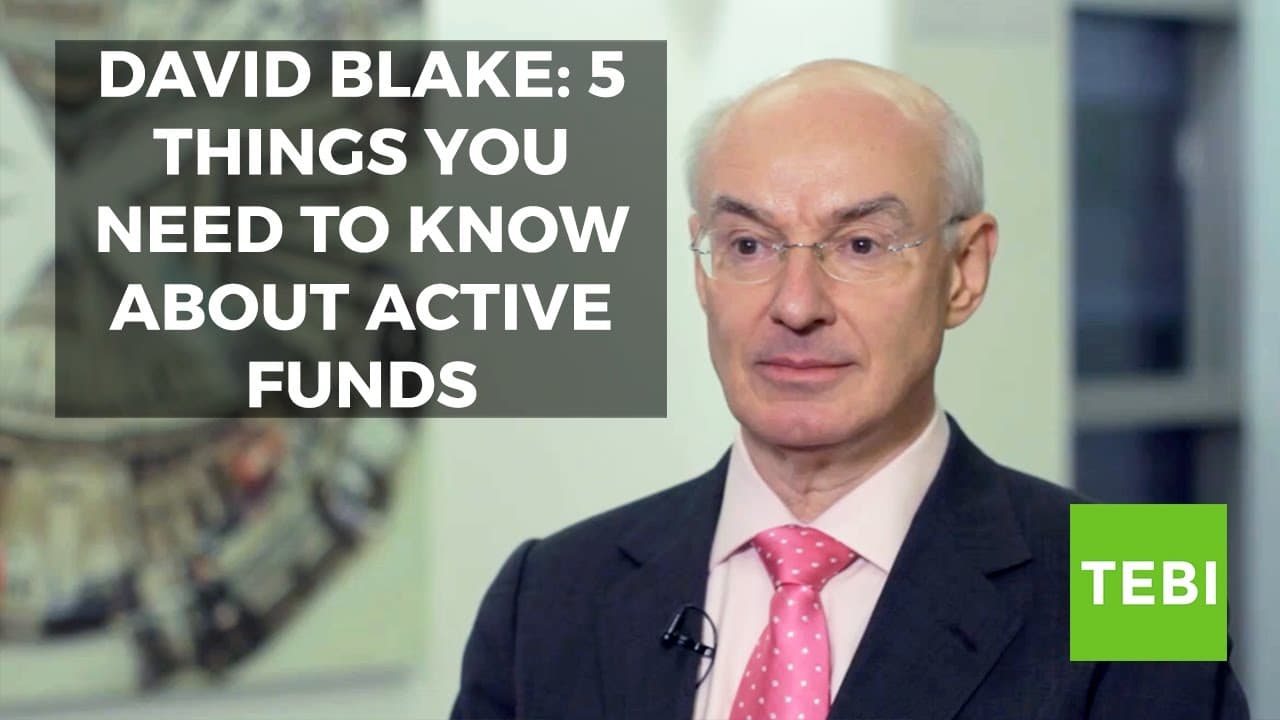
David Blake: 5 things you need to know about active funds
TL;DR
Most actively managed mutual funds do not outperform their benchmarks in the long term, and skilled fund managers are difficult to identify consistently.
Transcript
foreign Blake is Professor of pension economics at Cass business school in London he's LED one of the world's most detailed studies of mutual fund performance it's called new evidence on mutual fund performance a comparison of alternative bootstrap methods and you can find it on the tebi website if you don't have time watch this short video which s... Read More
Key Insights
- 🍉 Only around 1% of actively managed mutual funds deliver positive risk and cost-adjusted returns in the long term.
- ❓ Identifying genuinely skilled fund managers requires at least a decade of consistent performance.
- ✋ Fund managers often take a large portion of the excess returns through high fees, leaving investors with little benefit.
- 😉 Investing in outperforming funds marketed by fund managers may result in missed opportunities as the winning streaks end before investors can reap the benefits.
- 🌱 Transaction costs, often overlooked by investors, can significantly erode the value of their investments over a long-term savings plan.
- ✋ Skilled fund managers may generate higher gross performance but fail to provide net value to investors after subtracting fees.
- 🤱 Investors need to carefully consider the impact of fees and transaction costs on their overall investment returns.
Install to Summarize YouTube Videos and Get Transcripts
Explore YouTube Video Summarizer or Get YouTube Transcript Extractor
Questions & Answers
Q: What percentage of mutual funds outperform their benchmarks in the long term?
According to Professor Blake's study, only around 1% of mutual funds outperform their benchmarks after considering both risk and costs.
Q: How long does it take to identify skilled fund managers?
Professor Blake suggests that a minimum of 10 to 15 years of consistent performance is needed to confidently identify genuinely skilled fund managers.
Q: What is the issue with fund managers marketing their outperforming funds?
By the time investors start investing in these funds, the winning streak has often ended, and fund managers have accumulated so much cash that it drives up prices and reduces returns.
Q: Do skilled fund managers still benefit investors?
While skilled fund managers may outperform on a gross basis, their fees often eat up the excess returns, leaving the typical investor with no additional gains.
Summary & Key Takeaways
-
Only around 1% of mutual funds outperform their benchmarks on a risk and cost-adjusted basis.
-
It takes at least 10 to 15 years of consistent performance to identify genuinely skilled fund managers.
-
Even successful fund managers often charge high fees that eat into investor returns.
Read in Other Languages (beta)
Share This Summary 📚
Summarize YouTube Videos and Get Video Transcripts with 1-Click
Try YouTube Summary with ChatGPT & Claude or YouTube Transcript Generator
Explore More Summaries from The Evidence-Based Investor 📚

Summarize YouTube Videos and Get Video Transcripts with 1-Click
Try YouTube Summary with ChatGPT & Claude or YouTube Transcript Generator