What Should Women Know About Exercise and Nutrition on Their Periods?
TL;DR
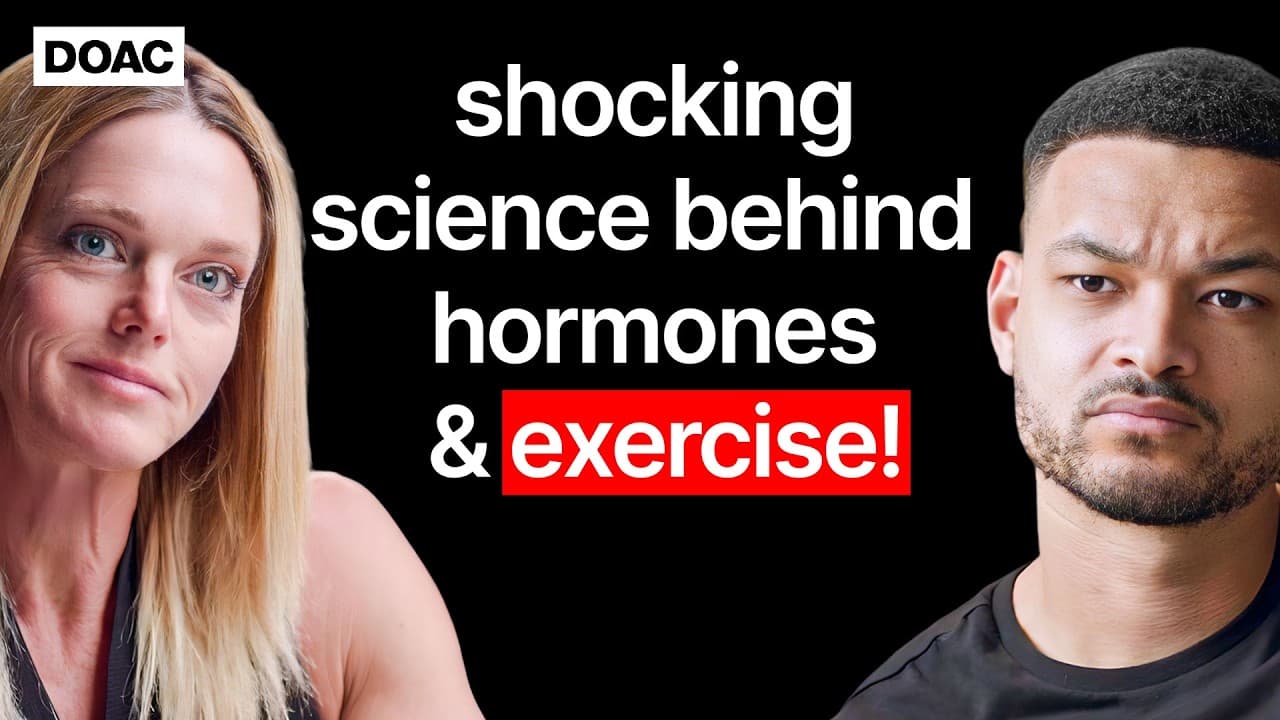
Women need to tailor their exercise and nutrition to their unique physiology, especially during their menstrual cycle. Key factors include hormonal fluctuations that affect exercise performance and nutritional needs, as well as heightened risks for injuries like ACL tears due to anatomical differences. Understanding these aspects can enhance women's health, fitness, and overall wellbeing.
Transcript
a lot of women come with their Partners to see me and say I don't understand we're both doing the same training he's leaning up and getting fitter I'm putting weight on getting slower and that is because we have puberty we have our reproductive years we have pregnancy in there we have per menopause we have post-menopause we have menstrual cycle eac... Read More
Key Insights
- 🧔♀️ Women experience more complex hormonal fluctuations than men, affecting their fitness and nutritional needs.
- 👩🔬 Scientific research on exercise and nutrition has historically centered on male data, leading to gaps in understanding women's unique physiology.
- 💪 Resistance training and high-intensity workouts are essential to combat muscle loss and maintain health during menopause.
- 🏃 The menstrual cycle's phases significantly influence energy levels and training capabilities, underscoring the need for tailored exercise plans.
- 😂 Understanding anatomy, such as the Q-angle, is critical for preventing sport-related injuries like ACL tears in women.
- 👩⚕️ The societal perception of aging and menopause is shifting, with growing awareness and dialogue around women's health issues.
- 🧔♀️ Creatine supplementation can offer cognitive and physical performance benefits for women when taken responsibly.
Install to Summarize YouTube Videos and Get Transcripts
Explore YouTube Video Summarizer or Get YouTube Transcript Extractor
Questions & Answers
Q: What misconceptions do women often have about training compared to men?
Many women believe they can follow the same training protocols as men without considering their own physiological differences. For example, calorie restriction often benefits men more, while women may respond poorly to fasting, risking muscle loss instead. Tailored approaches are needed to optimize female athletes' performance and recovery.
Q: Why do women experience different levels of endurance compared to men?
Women typically have more endurant muscle fibers, which makes them capable of longer-duration activities. However, differences in muscle morphology and hormonal fluctuations can influence their performance, requiring specialized training regimens that account for these unique traits.
Q: How does the menstrual cycle affect a woman's ability to exercise?
Different phases of the menstrual cycle can impact performance. In the follicular phase, when estrogen is rising, women often feel stronger and more capable, whereas during the luteal phase, heightened progesterone can lead to fatigue and reduced performance. Understanding these changes can help women plan their training effectively.
Q: What role does nutrition play in women's hormone health throughout the life stages?
Adequate nutrition, particularly higher protein intake, is crucial, especially as women age and experience hormonal changes. Proper nutrient timing can help manage insulin sensitivity and overall energy levels, promoting optimal health during menstruation, pregnancy, and menopause.
Q: How can women reduce their risk of ACL injuries during sports?
Focusing on improving strength in the posterior chain (hamstrings and glutes) and mastering proper landing mechanics are vital for women to mitigate the risk of ACL injuries, particularly due to anatomical factors like a wider Q-angle.
Q: What are the benefits of creatine for women's health and performance?
Creatine can be advantageous for women by enhancing muscle strength and supporting gut health and cognitive function without leading to excessive weight gain. The recommended dosage for women is lower than for men, making it a beneficial addition to their supplementation routine.
Q: What strategies can women implement to optimize their health during perimenopause?
Engaging in strength training, focusing on a higher protein diet, and possibly incorporating menopausal hormone therapy can help manage symptoms and maintain metabolic health during perimenopause. Self-awareness and adaptation to changing body signals are also essential.
Summary & Key Takeaways
-
Dr. Stacy Sims emphasizes that women's health and fitness have not been fully incorporated into sports science, leading to misunderstandings regarding training and nutrition.
-
Key hormonal changes throughout a woman’s life, such as during the menstrual cycle, pregnancy, and menopause, significantly impact exercise performance and nutritional needs.
-
Women face unique physiological challenges, such as a higher risk of ACL injuries, which stem from anatomical differences and should be addressed through tailored training and education.
Read in Other Languages (beta)
Share This Summary 📚
Summarize YouTube Videos and Get Video Transcripts with 1-Click
Try YouTube Summary with ChatGPT & Claude or YouTube Transcript Generator
Explore More Summaries from The Diary Of A CEO 📚





Summarize YouTube Videos and Get Video Transcripts with 1-Click
Try YouTube Summary with ChatGPT & Claude or YouTube Transcript Generator