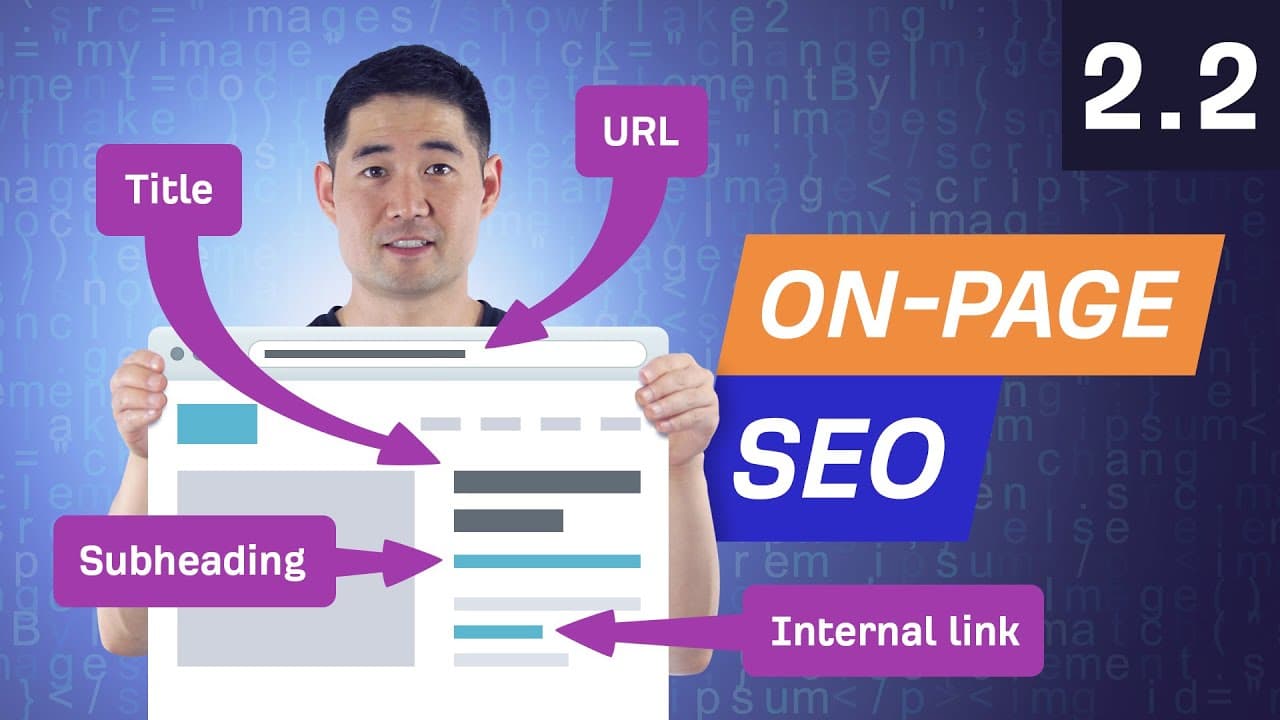
On-Page SEO Pt 2: How to Optimize a Page for a Keyword - 2.2. SEO Course by Ahrefs
TL;DR
Learn to optimize a webpage for search engine rankings.
Transcript
Hey, it's Sam Oh and welcome to the second lesson in the on-page SEO module. Today, I'm going to show you how to create a page that's optimized for search. Let's get started. So as I showed you in the last lesson, on average, the top ranking page ranks for nearly 1,000 keywords. For example, Healthline's page is clearly targeting the query, "how to... Read More
Key Insights
- Top-ranking pages often rank for thousands of keywords, not just the primary target keyword, resulting in significant traffic.
- Creating a page that satisfies searcher intent is crucial for achieving high rankings on search engines.
- Analyzing competitors' top-ranking pages can provide valuable insights into content structure, format, and subtopics.
- Using a content gap analysis helps identify common keywords that top pages rank for, which can enhance content relevance.
- Technical on-page optimizations include using target keywords in titles, crafting descriptive URL slugs, and writing meta descriptions.
- Internal linking within a website boosts link authority and helps search engines understand page content better.
- Optimizing images involves appropriate file naming, using descriptive alt text, and compressing images for faster load times.
- Improving content readability involves short sentences, descriptive subheadings, and avoiding complex language to enhance user experience.
Install to Summarize YouTube Videos and Get Transcripts
Explore YouTube Video Summarizer or Get YouTube Transcript Extractor
Questions & Answers
Q: How can a page rank for multiple keywords?
A page can rank for multiple keywords by creating content that satisfies searcher intent and targets a broad range of related queries. This involves analyzing top-ranking pages to understand their content structure and subtopics, ensuring the content is comprehensive and relevant to various searches.
Q: Why is searcher intent important in SEO?
Searcher intent is crucial in SEO because it determines the content's relevance to the user's query. Pages that effectively satisfy searcher intent are more likely to rank higher on search engines, as they provide the information users are looking for, leading to better user engagement and higher traffic.
Q: What role do internal links play in SEO?
Internal links are important in SEO as they help distribute link authority across a website, making it easier for search engines to understand the content hierarchy. They also improve user navigation by directing visitors to related content, enhancing the overall user experience and potentially increasing page views.
Q: How can images be optimized for SEO?
Images can be optimized for SEO by naming files appropriately, using descriptive alt text, and compressing them to reduce file size. These practices improve page load times, enhance accessibility for users with screen readers, and provide search engines with context about the image content, contributing to better search visibility.
Q: What is the significance of a content gap analysis?
A content gap analysis identifies keywords that top-ranking pages are targeting but your content is not. By understanding these gaps, you can enhance your content's relevance and competitiveness, ensuring it covers topics and keywords that are important to your target audience and improving its chances of ranking higher.
Q: How can readability be improved in web content?
Readability can be improved by writing in short sentences and paragraphs, using descriptive subheadings, and avoiding complex vocabulary. These practices make content more accessible and engaging for readers, encouraging them to spend more time on the page and improving user satisfaction and conversion rates.
Q: What are the benefits of using a descriptive URL slug?
A descriptive URL slug helps users and search engines understand the page's content before visiting it. It can improve click-through rates by clearly indicating the page's topic, and it also contributes to better search engine rankings by including relevant keywords in the URL structure.
Q: How does meta description affect SEO?
While meta descriptions are not direct ranking factors, they influence click-through rates by providing a concise summary of the page's content in search results. Well-crafted meta descriptions can attract more clicks from users, potentially boosting the page's visibility and traffic over time.
Summary & Key Takeaways
-
The lesson focuses on optimizing a webpage for search engines by ensuring it satisfies searcher intent and analyzing competitors' content. It emphasizes the importance of targeting multiple keywords and implementing technical on-page optimizations.
-
Key technical optimizations include using descriptive URLs, adding meta descriptions, and optimizing images. The lesson also highlights the significance of internal links and improving readability for better user engagement.
-
The video provides a comprehensive guide on utilizing tools like Ahrefs for content gap analysis and competitor research, offering actionable insights for creating content that ranks well on search engines.
Read in Other Languages (beta)
Share This Summary 📚
Summarize YouTube Videos and Get Video Transcripts with 1-Click
Try YouTube Summary with ChatGPT & Claude or YouTube Transcript Generator
Explore More Summaries from Ahrefs 📚

![Three Customer Acquisition Channels That Actually Work [1.2] thumbnail](/_next/image?url=https%3A%2F%2Fi.ytimg.com%2Fvi%2F1HhE_ewaOxQ%2Fhqdefault.jpg&w=750&q=75)

![Why Your Blog Content Has to be Great [6.1] thumbnail](/_next/image?url=https%3A%2F%2Fi.ytimg.com%2Fvi%2F4qPaHyOQA9c%2Fhqdefault.jpg&w=750&q=75)
Summarize YouTube Videos and Get Video Transcripts with 1-Click
Try YouTube Summary with ChatGPT & Claude or YouTube Transcript Generator