What Are Kant's Key Ideas on Ethics and Morality?
TL;DR
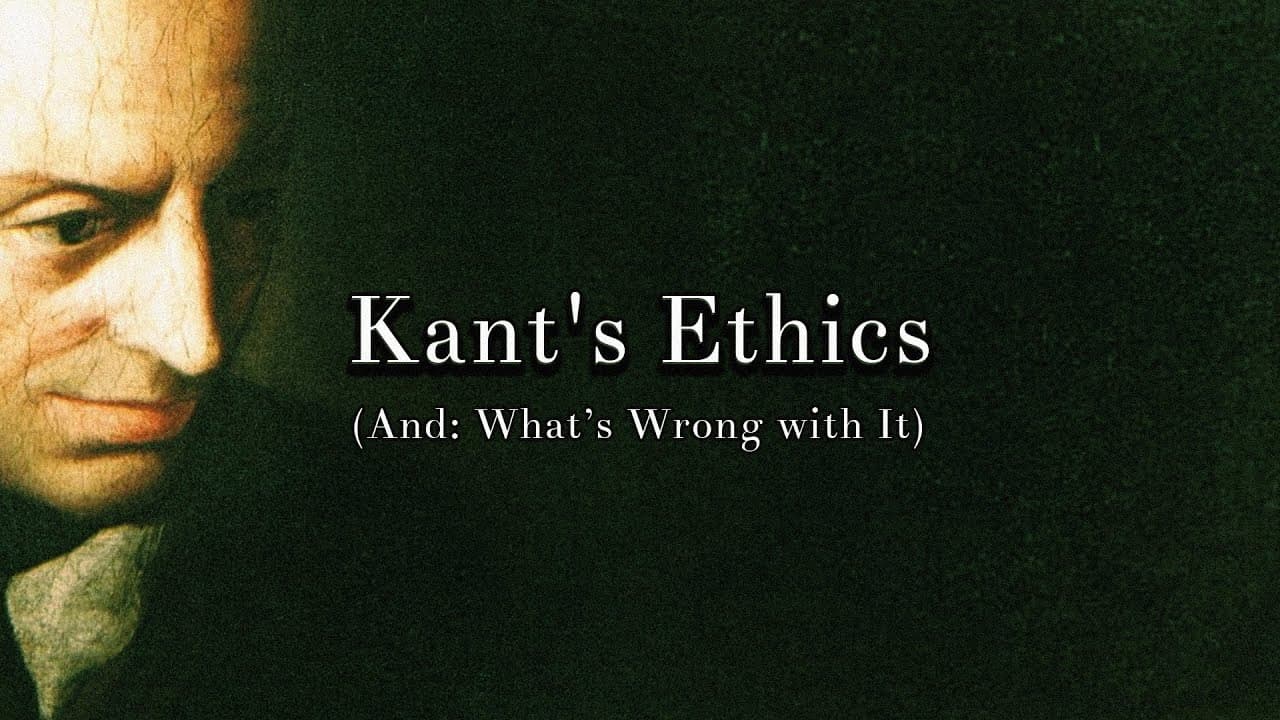
Kant's ethics teaches that morality is grounded in pure reason and defined by the categorical imperative, which dictates that actions must be universalizable and respect the dignity of individuals. He argues that ethical behavior should not be influenced by emotions or utilitarian considerations, focusing instead on duty as the essence of moral obligation. Furthermore, he critiques various moral pathologies, emphasizing a need for rational maturity and self-control in ethical decision-making.
Transcript
thank you very much for your continued support of this channel and today we're talking again about kant about ken's ethics because kent's philosophy really consists of those two parts the one the analysis of pure reason where he basically just gives an account of reason investigating itself and then second part of his philosophy is a critique of pr... Read More
Key Insights
- 🛝 Kant's moral philosophy aims to establish a moral science that is grounded in pure reason.
- 🫡 The categorical imperative serves as the highest moral law, guiding actions based on universal principles and respecting the dignity of others.
- 🎮 Kant's moral philosophy excludes empirical, emotional, and non-rational considerations, emphasizing duty as the sole basis for morality.
- 🥺 There are three pathologies in moral philosophy: philosophical, social, and psychological, which can lead to reductionism, dogmatism, and an obsession with punishment.
Install to Summarize YouTube Videos and Get Transcripts
Explore YouTube Video Summarizer or Get YouTube Transcript Extractor
Questions & Answers
Q: What is the difference between the Analysis of Pure Reason and the Critique of Practical Reason?
The Analysis of Pure Reason focuses on reason investigating itself, while the Critique of Practical Reason explores how reason guides our practical actions and provides moral guidance.
Q: What is the categorical imperative and how does it relate to moral action?
The categorical imperative is an unconditional commandment that serves as the highest moral law. It requires acting based on principles that can be universally applied and treating others as ends in themselves, not just means to an end.
Q: Why does Kant emphasize the importance of duty in ethics?
Kant believes that morality is based on duty, which is derived from understanding the moral law through pure reason. Acting out of duty means following the moral law because it is right, not because of personal desires or emotions.
Q: How does Kant's moral philosophy relate to moral science and metaphysics?
Kant aims to establish a moral science or metaphysics by grounding ethics in pure reason. He seeks to identify universally valid moral laws akin to natural laws and believes that philosophy should serve as the foundation for social science.
Summary & Key Takeaways
-
Kant's philosophy consists of the Analysis of Pure Reason, where he examines reason itself, and the Critique of Practical Reason, where he explores how reason guides our actions.
-
Kant's goal is to develop a moral philosophy that serves as a moral science or metaphysics.
-
He identifies the categorical imperative, an unconditional commandment, as the highest moral law that should guide our actions.
Read in Other Languages (beta)
Share This Summary 📚
Summarize YouTube Videos and Get Video Transcripts with 1-Click
Try YouTube Summary with ChatGPT & Claude or YouTube Transcript Generator
Explore More Summaries from Carefree Wandering 📚



Summarize YouTube Videos and Get Video Transcripts with 1-Click
Try YouTube Summary with ChatGPT & Claude or YouTube Transcript Generator