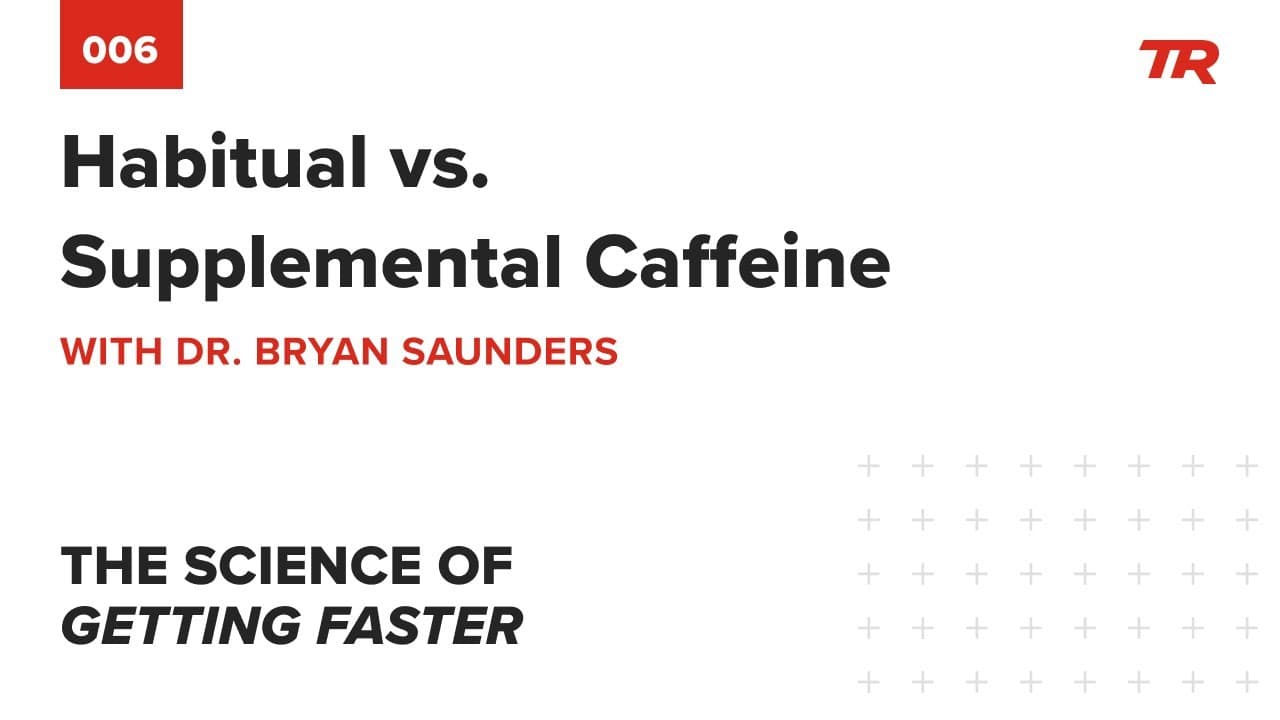
Habitual vs. Supplemental Caffeine with Dr Bryan Saunders - Science of Getting Faster Podcast Ep 6
TL;DR
Habitual caffeine consumption does not significantly impact the ergogenic effects of caffeine on exercise performance.
Transcript
Does habitual caffeine consumption impact the orogenic effects of caffeine. Welcome to the science of getting faster podcasts, where we cut through the headlines and talk directly to the researchers to find out what their studies suggest, what they don't and where their research is heading. My name is state laity and on the podcast with us today, w... Read More
Key Insights
- 🏃 Caffeine has a small but significant performance-enhancing effect on exercise performance.
- ❓ Habitual caffeine consumption does not diminish the performance benefits of caffeine.
- ❓ Caffeine's effects are not influenced by sex or training status.
- 🏃 The optimal timing and dosage of caffeine supplementation may vary depending on the individual and exercise type.
- 👨🔬 Individual differences in caffeine metabolism and genetics may contribute to variations in caffeine's effects, but further research is needed for definitive conclusions.
Install to Summarize YouTube Videos and Get Transcripts
Explore YouTube Video Summarizer or Get YouTube Transcript Extractor
Questions & Answers
Q: Does habitual caffeine consumption affect the performance-enhancing effects of caffeine?
According to a meta-analysis, habitual caffeine consumption does not impact the ergogenic effects of caffeine on exercise performance. People who consume high, moderate, or low amounts of caffeine all experience performance benefits from caffeine supplementation.
Q: How does caffeine improve exercise performance?
Caffeine works by antagonizing adenosine receptors in the central nervous system, leading to increased alertness, focus, and motor drive. It may also enhance fat oxidation and reduce the perception of effort and pain during exercise.
Q: How much caffeine should I consume before exercise?
The recommended dose is around 3-6 milligrams per kilogram of body weight. It is best to consume caffeine in capsule or tablet form to ensure accurate dosing.
Q: Does coffee have the same performance-enhancing effects as other forms of caffeine?
While coffee is a common source of caffeine, its variability in caffeine content makes it difficult to know the exact dose. Other forms like capsules or powders provide more precise dosing. However, if you know the caffeine content of your coffee and it falls within the recommended dose, it can still provide performance benefits.
Summary & Key Takeaways
-
Caffeine has been used as a performance-enhancing agent in sports for a long time.
-
The threshold amount for caffeine to be considered a doping substance in competition was later removed, leading to its increased use in training and competition.
-
The physiological mechanisms of caffeine's performance-enhancing effects are still being studied, but they may include increased fat burning, improved central nervous system function, and reduced perception of effort and pain during exercise.
Read in Other Languages (beta)
Share This Summary 📚
Summarize YouTube Videos and Get Video Transcripts with 1-Click
Try YouTube Summary with ChatGPT & Claude or YouTube Transcript Generator
Explore More Summaries from Science of Getting Faster Podcast 📚



Summarize YouTube Videos and Get Video Transcripts with 1-Click
Try YouTube Summary with ChatGPT & Claude or YouTube Transcript Generator