How Apple Flies Changed the Way We Think of Evolution
TL;DR
Every living thing on Earth is descended from a single-celled ancestor, and the process of speciation, or splitting into multiple species, can occur through allopatric speciation (physical separation) or sympatric speciation (non-physical separation).
Transcript
Every living thing on Earth, from fungus to flying foxes, is descended from one single-celled ancestor that showed up in the primordial ooze billions of years ago. You probably knew that already. But did you ever wonder how a single ancestor split into the 9 million or so species that populate the world today? It’s a subject that evolutionary biolo... Read More
Key Insights
- ❓ Speciation is the process by which one species splits into multiple species through allopatric or sympatric speciation.
- 🥺 Allopatric speciation occurs when a physical barrier separates populations, leading to genetic and physical differences.
- ✋ Sympatric speciation occurs when disruptive selection and assortative mating cause different groups within a population to stop interbreeding.
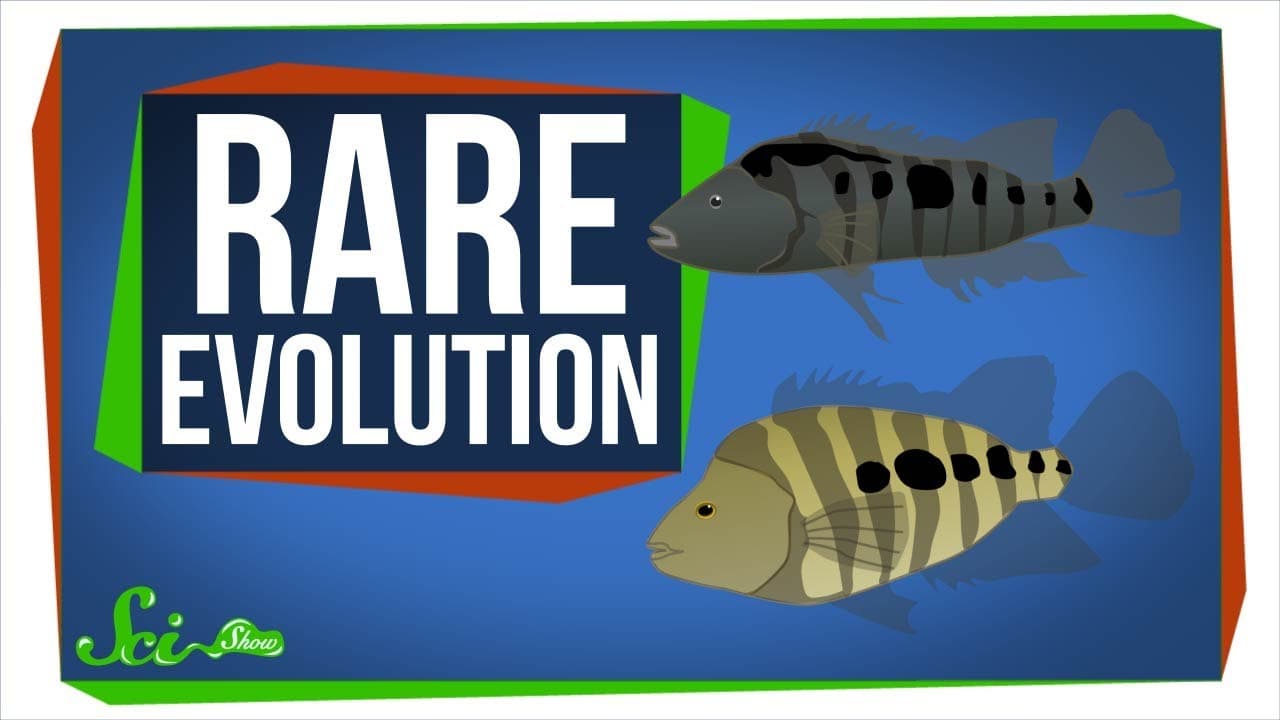
- 🪽 Examples of sympatric speciation include the apple maggot fly and cichlid fish in Lake Apoyo.
- 💇 Sympatric speciation is still controversial among biologists due to the specific conditions required and the rarity of clear-cut examples.
Install to Summarize YouTube Videos and Get Transcripts
Explore YouTube Video Summarizer or Get YouTube Transcript Extractor
Questions & Answers
Q: What is speciation?
Speciation is the process of one species splitting into two or more species.
Q: How does allopatric speciation occur?
Allopatric speciation occurs when a physical barrier, like glaciers or volcanic eruptions, separates a single species into isolated populations that evolve separately.
Q: What is sympatric speciation?
Sympatric speciation happens when disruptive selection and assortative mating cause different groups within a population to no longer interbreed, even though they share the same habitat.
Q: What are some examples of sympatric speciation?
Examples of sympatric speciation include the apple maggot fly, which split into hawthorn-eating and apple-eating flies, and the cichlid fish in Lake Apoyo, which developed different body shapes and diets.
Summary & Key Takeaways
-
Speciation is the process of one species splitting into two or more, and it can occur through allopatric or sympatric speciation.
-
Allopatric speciation happens when a physical barrier separates populations, while sympatric speciation occurs when disruptive selection and assortative mating cause populations in the same habitat to no longer interbreed.
-
Examples of sympatric speciation include the apple maggot fly and cichlid fish in Lake Apoyo.
Read in Other Languages (beta)
Share This Summary 📚
Summarize YouTube Videos and Get Video Transcripts with 1-Click
Try YouTube Summary with ChatGPT & Claude or YouTube Transcript Generator
Explore More Summaries from SciShow 📚


Summarize YouTube Videos and Get Video Transcripts with 1-Click
Try YouTube Summary with ChatGPT & Claude or YouTube Transcript Generator