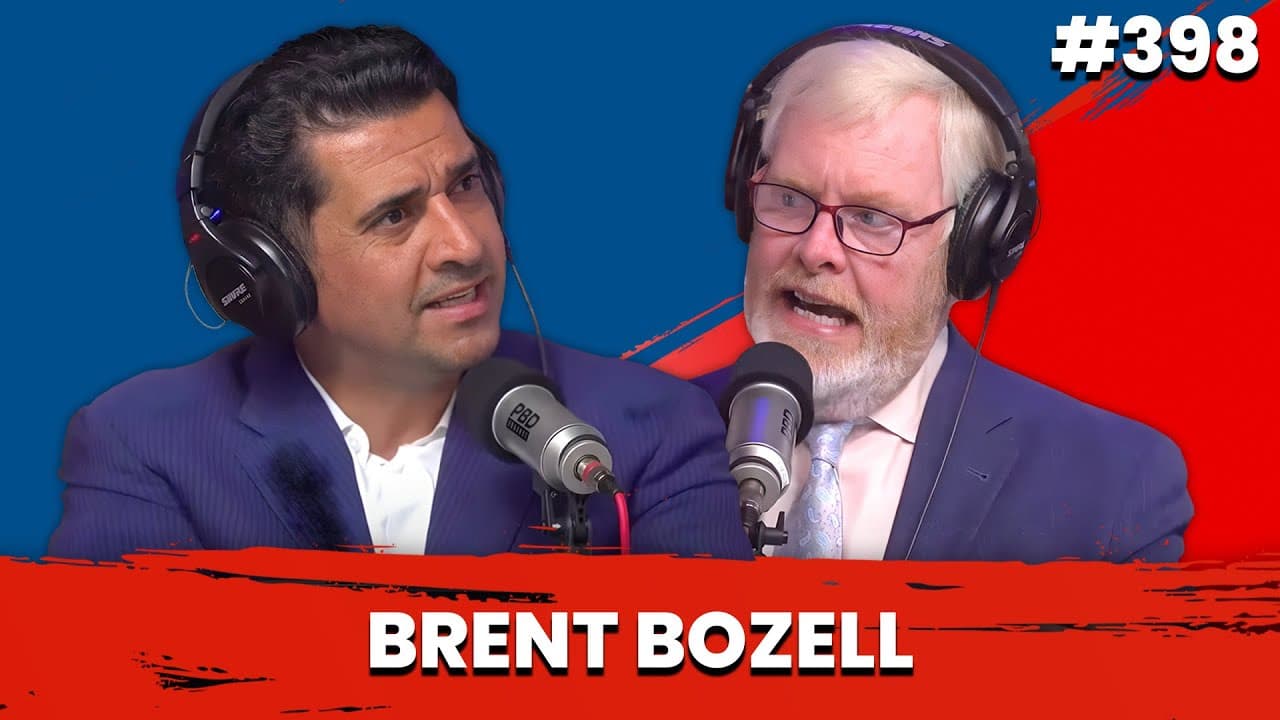
Big Tech’s Effect on Elections w/ Media Research Center’s Brent Bozell | PBD Podcast | Ep. 398
TL;DR
Research claims Google has interfered with elections favoring leftist candidates over the last 16 years.
Transcript
know me why would you bet on Goliath when we got bet David value giv values contes this world are entrepreneurs we get no value to hater run homie look what I become I'm I'm the one so our guest today is the founder of Media Research Center which recently found a report that came out saying Google has interfered with elections 41 times over the las... Read More
Key Insights
- 🤨 The Media Research Center's study highlights an alleged systematic bias in Google's search results that disadvantages Republican candidates, raising alarms about tech's role in elections.
- 👻 The distinction between being a platform and a publisher is critiqued, showing how it allows tech companies to evade accountability for the content they amplify or suppress.
- 🇨🇫 Censorship practices are under scrutiny, especially regarding how they undermine public discussions on crucial issues such as public health and election integrity.
- 😀 The dominance of Google in the tech industry showcases the challenges alternative platforms face in gaining visibility and user engagement.
- 🧑💻 Historical references to past elections illustrate how tech has increasingly shaped political narratives and voter influence over the last two decades.
- 🧑💻 Predictions for the upcoming elections indicate a potential escalation in tech-driven interference, impacting the fairness of the electoral process.
- 🔉 The role of media in shaping public perception is critiqued, with evidence suggesting that conservative perspectives are often underrepresented or misrepresented in mainstream narratives.
Install to Summarize YouTube Videos and Get Transcripts
Explore YouTube Video Summarizer or Get YouTube Transcript Extractor
Questions & Answers
Q: What evidence does the Media Research Center provide regarding Google's interference in elections?
The Media Research Center cites a study indicating that Google allegedly influenced election outcomes by positioning Republican candidates lower in search results, resulting in limited public exposure. For example, during the most contested races, 87% of Republicans were pushed to the bottom of the first search page, hindering voter access to balanced political information.
Q: Why do the hosts claim that big tech companies are not held accountable like traditional media outlets?
The hosts argue that big tech companies, such as Google, label themselves as platforms, which legally protects them from repercussions for the content they host, unlike traditional media, which can be held liable for defamatory statements. This creates an imbalance in accountability that poses a threat to democracy and public information flow.
Q: How does the conversation frame the significance of Google in the global tech landscape?
Google’s dominance, controlling around 92% of the market, raises concerns about monopolistic practices that prevent competition. Alternative search engines like Bing and DuckDuckGo struggle to gain traction, making it challenging for users to access unbiased political content, which further exacerbates the issue of information manipulation.
Q: What historical context is provided regarding past elections and tech influence?
The discussion references past elections, particularly Barack Obama's successful use of Facebook in 2008 and Donald Trump's mastery of Twitter in 2016. It suggests that the 2020 election saw increased censorship by platforms as a response to concerns over Trump's influence, which may continue into future elections.
Q: What does Brent Bozell suggest will take place in the 2024 elections regarding big tech's role?
Bozell predicts that Google and other tech companies will significantly amplify their influence in the 2024 elections compared to previous elections. He expresses concerns about how this interference may evolve, potentially undermining the democratic process further by suppressing conservative voices.
Q: How does the episode highlight the challenges faced by Republican candidates regarding media coverage?
The discussion emphasizes that Republican candidates often receive negative media coverage, with statistical claims suggesting Trump faced 90.5% negative reporting during his presidency. The imbalance in favorable media coverage for Democrats is pointed out, showcasing how narratives are constructed in favor of one side.
Q: Why is there concern over censorship in relation to public discussions about controversial topics like COVID-19?
The hosts express frustration over the censorship of conversations regarding COVID-19 and related public health policies, particularly when dissenting viewpoints from professionals and experts are stifled. This kind of censorship limits healthy discourse and undermines public trust in information sources.
Q: What argument do the hosts make about the relationship between corporate contributions and election outcomes?
The hosts discuss how corporate contributions tend to favor Democratic candidates, believing that corporate interests align better with the Democratic agenda for larger subsidies and government support, which they claim influences corporate political action and the broader electoral landscape.
Summary & Key Takeaways
-
The Media Research Center has reported that Google has allegedly interfered in U.S. elections 41 times in 16 years, favoring Democrats and suppressing Republican candidates. This selective visibility raises concerns over the influence of tech companies on election outcomes.
-
The discussion highlights the discrepancy in accountability between traditional media and big tech platforms like Google, which label themselves as neutral platforms to avoid legal repercussions despite exerting significant control over political narratives.
-
Potential strategies for the upcoming 2024 elections are explored, with predictions that tech companies will enhance their influence using sophisticated means similar to past elections while discussing the broader implications of censorship on political discourse.
Read in Other Languages (beta)
Share This Summary 📚
Summarize YouTube Videos and Get Video Transcripts with 1-Click
Try YouTube Summary with ChatGPT & Claude or YouTube Transcript Generator