Davos 2019 - Training Grandmothers to Treat Depression
TL;DR
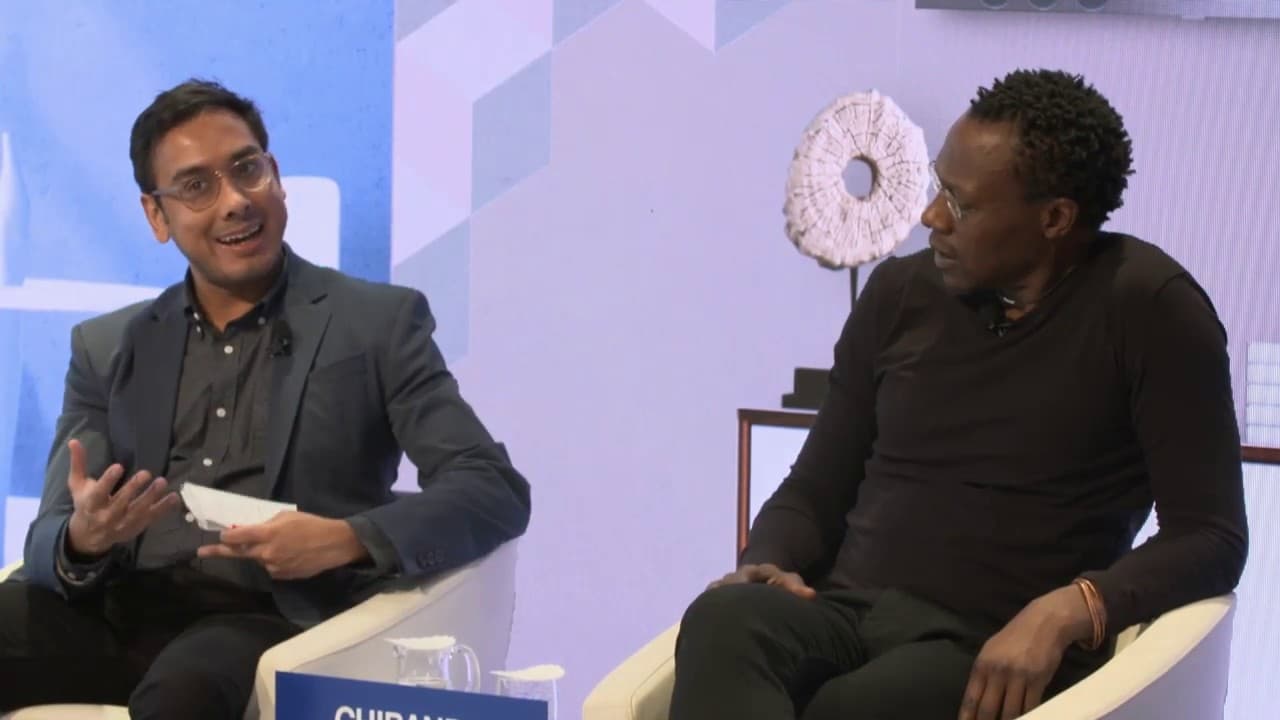
Dr. Dixon Shahbandar's Friendship Bench program offers mental health solutions through grandmother-led therapy sessions in Zimbabwe, addressing global mental health crises.
Transcript
well thank you all thank y'all for being here on our last morning in Davos my name is Shonda Rohr I'm a foreign affairs reporter at the Washington Post and I'm delighted to be here in conversation with dr. Dixon Shahbandar who here has sat on the bench outside the friendship bench well we'll be talking about that it's a program that dr. Samantha st... Read More
Key Insights
- 👍 The Friendship Bench program utilizes grandmothers for community-based mental health therapy, proving effective and beneficial for both clients and grandmothers.
- 🧑⚕️ Dr. Shahbandar's initiative emphasizes the importance of culturally relevant mental health support, integrating indigenous knowledge and local terminology.
- 😑 The scalable and evidence-based nature of the program allows for global expansion, addressing the pressing issue of mental health crises worldwide.
- 🧑⚕️ Strategic naming and location of the benches contribute to reducing stigma and promoting accessibility to mental health services.
Install to Summarize YouTube Videos and Get Transcripts
Explore YouTube Video Summarizer or Get YouTube Transcript Extractor
Questions & Answers
Q: How did the idea of the Friendship Bench program originate?
The idea stemmed from a lack of mental health resources in Zimbabwe, prompting Dr. Shahbandar to create a community-based therapy approach with grandmothers due to limited resources and infrastructure.
Q: What impact does the initiative have on the mental health of both clients and grandmothers?
The program benefits both clients and grandmothers, offering purpose and improved well-being to the grandmothers while providing accessible mental health support to clients, ultimately addressing common mental disorders.
Q: How does the Friendship Bench program utilize indigenous knowledge in therapy sessions?
The grandmothers involved in the program developed their own mental health lexicon and terms, aligning with local communities' understanding and integrating these culturally relevant concepts into therapy sessions.
Q: How does the initiative address stigma and confidentiality concerns related to mental health?
By strategically naming the program "Friendship Bench" and placing benches in open, community settings, the initiative aims to reduce stigma and offer a welcoming space for therapy, promoting accessibility and acceptance.
Summary & Key Takeaways
-
Dr. Shahbandar initiated the Friendship Bench program in Zimbabwe, utilizing grandmothers for community therapy.
-
The program is evidence-based, scalable, and proves beneficial for both clients and grandmothers.
-
The initiative aims to address the global mental health crisis by providing accessible and culturally relevant support.
Read in Other Languages (beta)
Share This Summary 📚
Summarize YouTube Videos and Get Video Transcripts with 1-Click
Try YouTube Summary with ChatGPT & Claude or YouTube Transcript Generator
Explore More Summaries from World Economic Forum 📚
Summarize YouTube Videos and Get Video Transcripts with 1-Click
Try YouTube Summary with ChatGPT & Claude or YouTube Transcript Generator