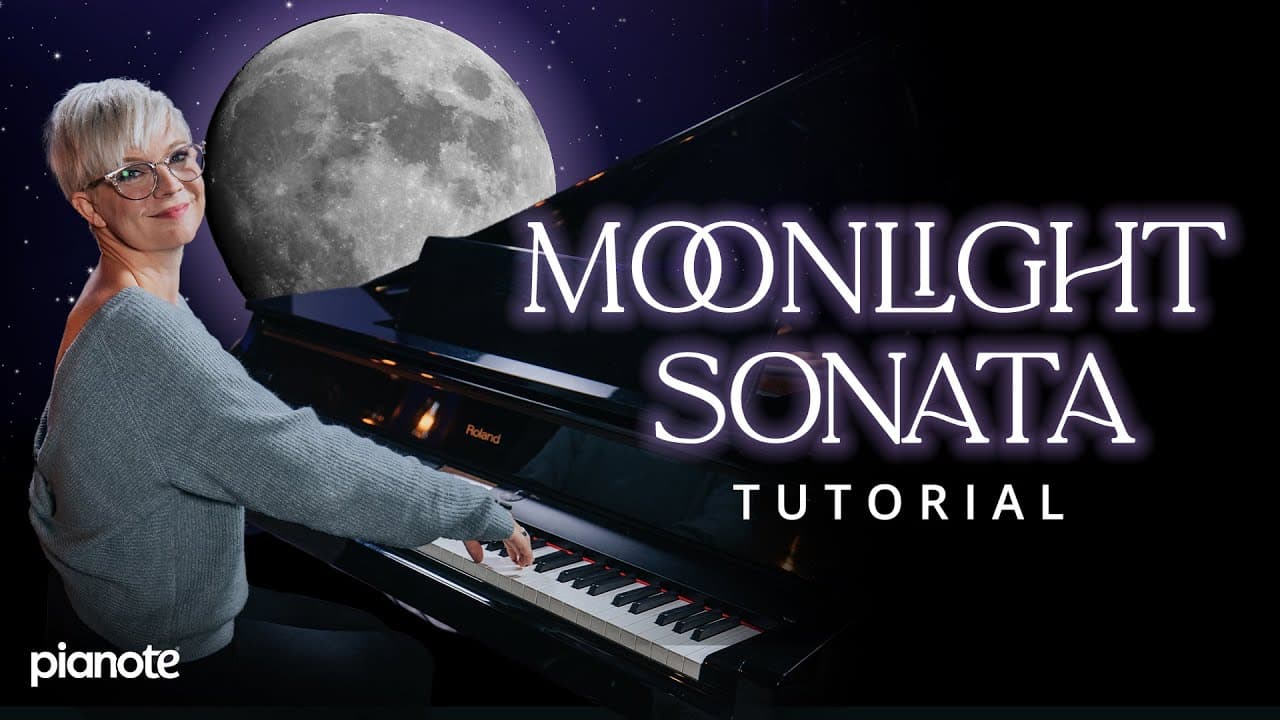
Learn To Play Moonlight Sonata on Piano 🎹🌙 (With Sheet Music)
TL;DR
This tutorial provides step-by-step instructions for playing the iconic and emotive piano piece Moonlight Sonata.
Transcript
hello and welcome to your tutorial of the song it's Moody emotional and it might be one of the most beautiful pieces of piano music ever written and I'm gonna walk you through how to play it step by step we're gonna work on right hand left hand we're gonna put it together and we're gonna work in sections so you can find all the sections in the chap... Read More
Key Insights
- 🎹 The tutorial provides step-by-step guidance on how to play a moody and emotional piano piece known as "Moonlight Sonata".
- 👍 The tutorial is divided into different sections, which allows for easier learning and practice.
- 🤔 The right hand starts with a simple melody on three notes and gradually introduces more complex movements and chords.
- 🖐️ The left hand plays a repetitive and iconic part of the song, adding depth and richness to the overall sound.
- 🎶 The tutorial emphasizes the importance of relaxation and wrist movement to maintain a fluid and relaxed playing style.
- 📝 The piano piece has various sections with different chord inversions and octave shapes, requiring practice and coordination.
- 😅 Some sections, especially with big stretches, can be challenging, but the tutorial encourages perseverance and provides tips and alternatives.
- 💡 The tutorial recommends using dynamics and rubato (flexibility in tempo) to convey the emotional depth of the composition.
Install to Summarize YouTube Videos and Get Transcripts
Explore YouTube Video Summarizer or Get YouTube Transcript Extractor
Questions & Answers
Q: What are the specific notes and chords used in the right hand part of Moonlight Sonata?
In the right hand, the tutorial breaks down the notes and chords into specific sequences, such as G#-C#-E, C#-E, D-F#, G#-B#-F#, and more. These sequences create the distinct sound of the piece.
Q: How does the left hand contribute to the iconic sound of Moonlight Sonata?
The left hand plays the bass notes and chords, providing a foundation and adding depth to the music. In Moonlight Sonata, the left hand plays octave notes and chord inversions, creating a moody and recognizable sound.
Q: What tips does the tutorial provide for playing the challenging octaves in the piece?
The tutorial emphasizes the importance of maintaining a relaxed wrist and posture while playing the octaves. It encourages players not to tense up and to allow a sense of relaxation and fluidity in their wrist movements.
Q: Why is it important to practice the different sections of Moonlight Sonata separately?
By practicing sections separately, players can focus on specific techniques and movements, gradually improving their skills. It also helps in memorizing and mastering the individual elements before putting them together for a seamless performance.
Q: How does the tutorial suggest adding dynamics and expression to the performance of Moonlight Sonata?
The tutorial suggests using dynamics markings on the sheet music as a guide. It also encourages players to use rubato, a technique of manipulating the timing and tempo, to add expression and convey the emotions of the piece.
Q: How does the tutorial recommend players approach recording themselves playing the piece?
The tutorial encourages players to record themselves while practicing Moonlight Sonata. By reviewing their recordings, players can identify areas for improvement, observe their progress, and analyze their dynamics and expression.
Q: What is the significance of the fermata at the end of the piece?
The fermata at the end of the piece indicates a pause and extended hold on the final chord, allowing players to create a dramatic moment and express their own interpretation of the music.
Q: How does the tutorial suggest conveying the emotion and mood of Moonlight Sonata while playing?
The tutorial suggests feeling the emotions and story behind the music, allowing it to guide the dynamics, expression, and interpretation of the piece. It encourages players to connect with the mood of the music and bring out the drama and beauty of Moonlight Sonata in their performance.
Summary & Key Takeaways
-
The tutorial breaks down the right hand and left hand parts of Moonlight Sonata, focusing on specific notes and chord progressions.
-
The tutorial emphasizes the importance of maintaining a relaxed posture and wrist movement while playing the challenging octaves in the piece.
-
The tutorial encourages practicing the different sections of Moonlight Sonata separately before putting them together, and offers guidance on dynamics and expression while playing.
Questions:
-
What are the specific notes and chords used in the right hand part of Moonlight Sonata?
-
How does the left hand contribute to the iconic sound of Moonlight Sonata?
-
What tips does the tutorial provide for playing the challenging octaves in the piece?
-
Why is it important to practice the different sections of Moonlight Sonata separately?
-
How does the tutorial suggest adding dynamics and expression to the performance of Moonlight Sonata?
-
How does the tutorial recommend players approach recording themselves playing the piece?
-
What is the significance of the fermata at the end of the piece?
-
How does the tutorial suggest conveying the emotion and mood of Moonlight Sonata while playing?
Answers:
Q: What are the specific notes and chords used in the right hand part of Moonlight Sonata?
In the right hand, the tutorial breaks down the notes and chords into specific sequences, such as G#-C#-E, C#-E, D-F#, G#-B#-F#, and more. These sequences create the distinct sound of the piece.
Read in Other Languages (beta)
Share This Summary 📚
Summarize YouTube Videos and Get Video Transcripts with 1-Click
Try YouTube Summary with ChatGPT & Claude or YouTube Transcript Generator
Explore More Summaries from Pianote 📚





Summarize YouTube Videos and Get Video Transcripts with 1-Click
Try YouTube Summary with ChatGPT & Claude or YouTube Transcript Generator