Why China's Rail Debt Overshadows Evergrande Crisis
TL;DR
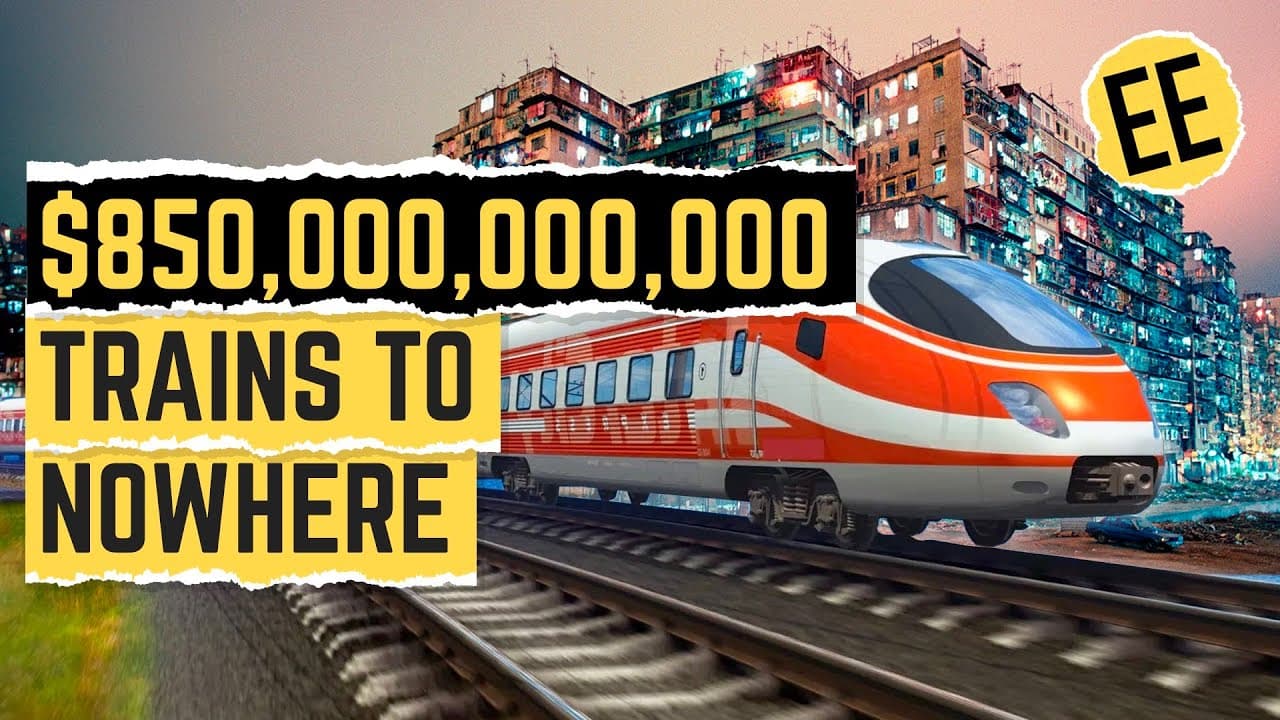
China's rapid development of its high-speed rail network has led to a debt crisis that could surpass the Evergrande situation. Initially built to stimulate the economy during the global financial crisis, the network now faces financial challenges due to unprofitable routes and aging infrastructure. The government must decide between costly bailouts or maintaining unsustainable operations.
Transcript
We often criticize our governments for their inability to get things done, especially when it comes to large infrastructure projects. The US has been in the news for the federal infrastructure plan which is promising to put more than a trillion dollars towards upgrading and repairing infrastructure all across the country. Already the project is... Read More
Key Insights
- China's high-speed rail network was developed quickly as a form of economic stimulus during the global financial crisis.
- The network was initially profitable, with major routes generating sufficient revenue to offset less profitable ones.
- Corruption and management failures have marred the rail program, impacting public confidence and safety.
- The rail network's expansion into less populated areas has led to financial strain, with many routes unable to cover operating costs.
- China Railway, the state-owned corporation managing the network, has accumulated over $850 billion in debt.
- The network's financial issues are exacerbated by maintenance costs, competition from other transport modes, and reduced demand due to COVID-19.
- Potential solutions include privatization, bailout, or renationalization, each with significant economic and political implications.
- China's infrastructure challenges highlight the complexities and risks of rapid development without adequate planning.
Install to Summarize YouTube Videos and Get Transcripts
Explore YouTube Video Summarizer or Get YouTube Transcript Extractor
Questions & Answers
Q: How did China's high-speed rail network contribute to its economy?
China's high-speed rail network was initially developed as a form of economic stimulus during the global financial crisis. It created millions of jobs, boosted industrial capacity, and improved mobility across the country. The network allowed workers to travel more efficiently, enhancing living standards and supporting economic growth. However, the rapid expansion has led to significant financial challenges.
Q: What financial challenges does China's rail network face?
China's high-speed rail network faces financial challenges due to unprofitable routes, aging infrastructure, and massive debt. Many lines, especially those in less populated areas, fail to generate enough revenue to cover operating costs. The network has accumulated over $850 billion in debt, with interest payments now outpacing operating profits, leading to a potential financial crisis.
Q: Why is China's rail network compared to the Evergrande crisis?
China's rail network is compared to the Evergrande crisis due to its massive debt and potential financial instability. Like Evergrande, the rail network's rapid expansion was initially seen as a success but has since revealed underlying financial vulnerabilities. The network's debt exceeds $850 billion, and its financial sustainability is uncertain, posing significant economic risks.
Q: What are the potential solutions to China's rail debt crisis?
China's government faces several options to address the rail debt crisis, each with significant implications. Privatization could attract investment but may lead to service cuts on unprofitable routes. A bailout would require substantial public funds, while renationalization could increase government control but limit financial flexibility. Each option carries economic and political challenges.
Q: How has corruption affected China's rail network?
Corruption has significantly impacted China's rail network, leading to safety concerns, financial inefficiencies, and public distrust. Management failures have resulted in accidents and inflated costs, undermining confidence in the rail system. These issues have compounded the network's financial challenges, contributing to its current debt crisis and complicating potential solutions.
Q: How did COVID-19 impact China's rail network?
COVID-19 significantly reduced demand for rail travel in China, exacerbating the financial difficulties of the high-speed rail network. With fewer passengers, revenue from ticket sales declined, further straining the network's ability to cover operating costs and service its massive debt. The pandemic highlighted the vulnerability of the rail system to external economic shocks.
Q: Why was the high-speed rail network initially successful?
China's high-speed rail network was initially successful due to its role in economic stimulus and its ability to improve mobility across the country. The network created jobs, boosted industrial capacity, and allowed efficient travel between major cities. Profitable routes generated sufficient revenue to offset losses from less traveled lines, supporting the network's financial sustainability in its early years.
Q: What are the risks of rapid infrastructure development?
Rapid infrastructure development, as seen in China's high-speed rail network, carries risks such as financial instability, corruption, and inadequate planning. While initially beneficial, such projects may lead to unsustainable debt, safety issues, and inefficiencies. The situation underscores the importance of thorough planning, oversight, and financial management to ensure long-term success and stability.
Summary & Key Takeaways
-
China's high-speed rail network was built rapidly to stimulate the economy during the global financial crisis. Initially successful, the network now faces financial difficulties due to unprofitable routes and massive debt. The government must decide between privatization, bailouts, or maintaining unsustainable operations, each with significant implications.
-
Corruption and management failures have plagued China's rail program, leading to safety concerns and public distrust. The expansion into less populated areas has further strained finances, with many routes unable to cover operating costs. The network's financial issues are compounded by maintenance needs and reduced demand due to COVID-19.
-
China Railway has accumulated over $850 billion in debt, with interest payments outpacing operating profits. The government's options to address this crisis include privatization, bailouts, or renationalization, each presenting economic and political challenges. The situation underscores the risks of rapid infrastructure development without thorough planning.
Read in Other Languages (beta)
Share This Summary 📚
Summarize YouTube Videos and Get Video Transcripts with 1-Click
Try YouTube Summary with ChatGPT & Claude or YouTube Transcript Generator
Explore More Summaries from Economics Explained 📚






Summarize YouTube Videos and Get Video Transcripts with 1-Click
Try YouTube Summary with ChatGPT & Claude or YouTube Transcript Generator