Himalayas, Gobi Desert, And Open Water Swimming - Amazing Adventure Experiences
TL;DR
Exploring the unpredictability of weather and the sea during outdoor adventures.
Transcript
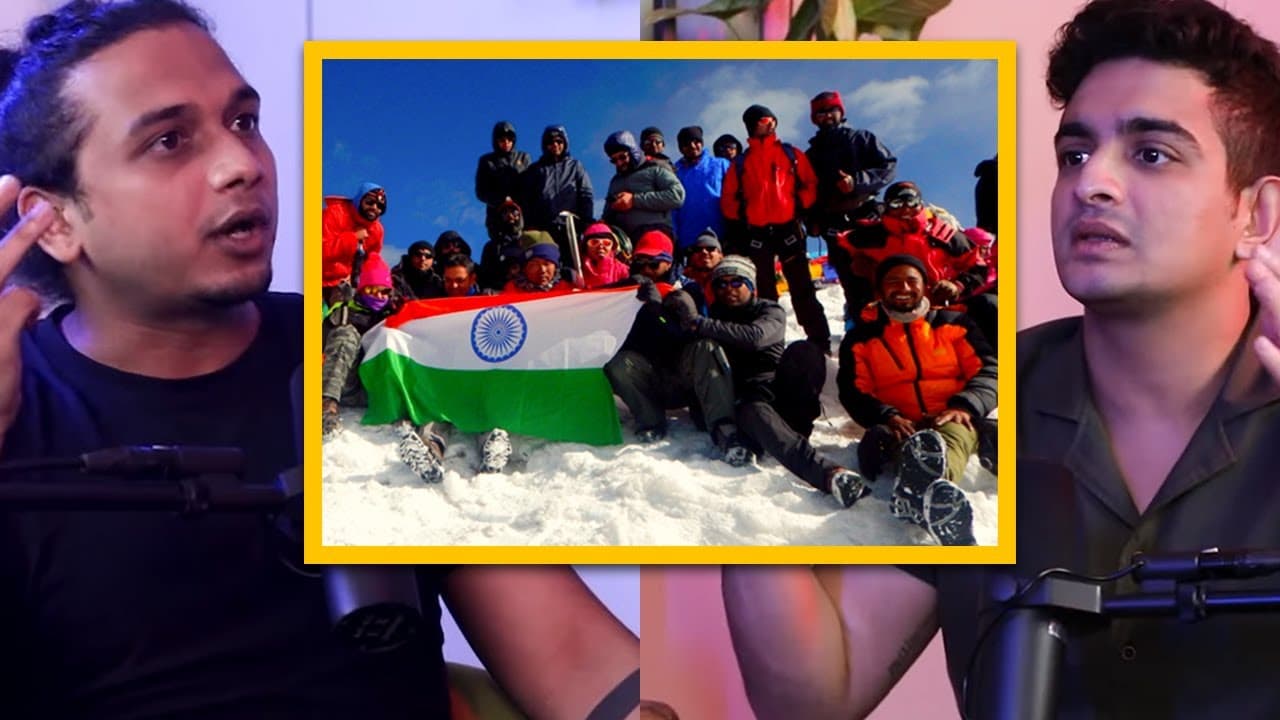
subscribe hit that bell icon and share this clip if you enjoy it this is trs clips i mean i've had very little trekking experience i've gone for a few hikes but that's about it i brought up this mountain and jb we had climbed on jaby's a place in himachal finish incredibly beautiful incredibly spiritual great energy in that mountain man but i remem... Read More
Key Insights
- 🧗 Climbing mountains exposes adventurers to sudden and extreme weather changes, highlighting the importance of understanding nature’s unpredictability.
- 🤗 In sailing, the reliance on wind and currents requires a level of expertise that can make experiences in open water feel fraught with danger.
- 🤗 Open sea environments present a stark contrast to pools, where lack of control and the threat of nature can elevate stress levels.
- 🔬 The Gobi Desert trek requires not only physical endurance but also mental fortitude to cope with isolation and environmental repetitiveness.
- 🐪 Mirages can significantly impact mental states, illustrating how perceptions can be skewed by environmental conditions, particularly in deserts.
- 🤢 Sailors' claims of mermaid sightings suggest deeper psychological and emotional needs rather than actual encounters, emphasizing the implications of isolation at sea.
- 👾 There is a greater mystery surrounding oceans compared to space, suggesting that we still have much to learn about our world’s less explored realms.
Install to Summarize YouTube Videos and Get Transcripts
Explore YouTube Video Summarizer or Get YouTube Transcript Extractor
Questions & Answers
Q: What lesson did the speaker learn about weather conditions while climbing the mountain?
The speaker learned that weather on mountains can change rapidly and unexpectedly. Their guide's urgency in urging them to descend due to incoming clouds highlighted the climbers' vulnerability to nature's whims. This experience instilled a deeper respect for what it means to be at the mercy of the elements and how preparation is crucial in outdoor adventures.
Q: How does sailing differ from swimming in a pool, according to the conversation?
Sailing differs from swimming in a pool primarily due to the lack of control. In sailing, one must navigate based on unpredictable winds and tides, leading to a greater sense of vulnerability. The speaker mentions how managing a sailboat requires trust and experience, emphasizing that open water poses significant challenges unlike the controlled environment of a swimming pool.
Q: What challenges are presented by open sea swimming, as discussed in the content?
Open sea swimming introduces unique challenges such as unpredictability of waves, depth perception, and lack of immediate rescue options. The speaker notes that swimming in the ocean can induce panic due to feelings of helplessness when compared to the overly controlled environment of a swimming pool. Additionally, potential encounters with marine life contribute to this sense of uncertainty and fear.
Q: What insights are shared about walking in the Gobi Desert?
The discussion highlights the extreme conditions one faces while traversing the Gobi Desert, such as intense heat, dryness, and monotony. Walking over hot sand with no variation in scenery presents a mental challenge. The physical strain of navigating such terrain for extended periods leads to reflections on the human mind's capacity to cope with such isolation and repetitiveness.
Q: How do mirages relate to the experiences of desert trekkers?
Mirages, often associated with desert landscapes, exemplify how the environment can play tricks on the mind. Travelers walking the Gobi Desert may experience hallucinations born from a combination of heat, lack of hydration, and monotony, leading them to see things that aren't real. This aspect of trekking speaks to the psychological endurance required during such long, arduous journeys.
Q: What is the connection between prolonged sea exposure and hallucinations?
The content suggests that long periods at sea can lead to hallucinations, where sailors might see mythical creatures or other illusions due to the unchanging horizon and sensory deprivation. Just as with desert travelers, prolonged exposure to a singular environment can distort reality, indicating how the mind responds to extreme conditions.
Summary & Key Takeaways
-
The speaker recounts an experience climbing a mountain where sudden weather changes highlighted the unpredictability of nature, emphasizing how dependent climbers are on weather conditions.
-
A discussion about sailing reveals the dangers of open water, such as unpredictable tides and the need for experience and control, contrasting it with the security of swimming pools.
-
The conversation shifts to the challenge of trekking the Gobi Desert, exploring the physical and mental endurance required, along with the strangeness of seeing the same landscape for days.
Read in Other Languages (beta)
Share This Summary 📚
Summarize YouTube Videos and Get Video Transcripts with 1-Click
Try YouTube Summary with ChatGPT & Claude or YouTube Transcript Generator
Explore More Summaries from TRS Clips 📚





Summarize YouTube Videos and Get Video Transcripts with 1-Click
Try YouTube Summary with ChatGPT & Claude or YouTube Transcript Generator