Omaze’s Matthew Pohlson on the near-death moment that built a better business | Masters of Scale
TL;DR
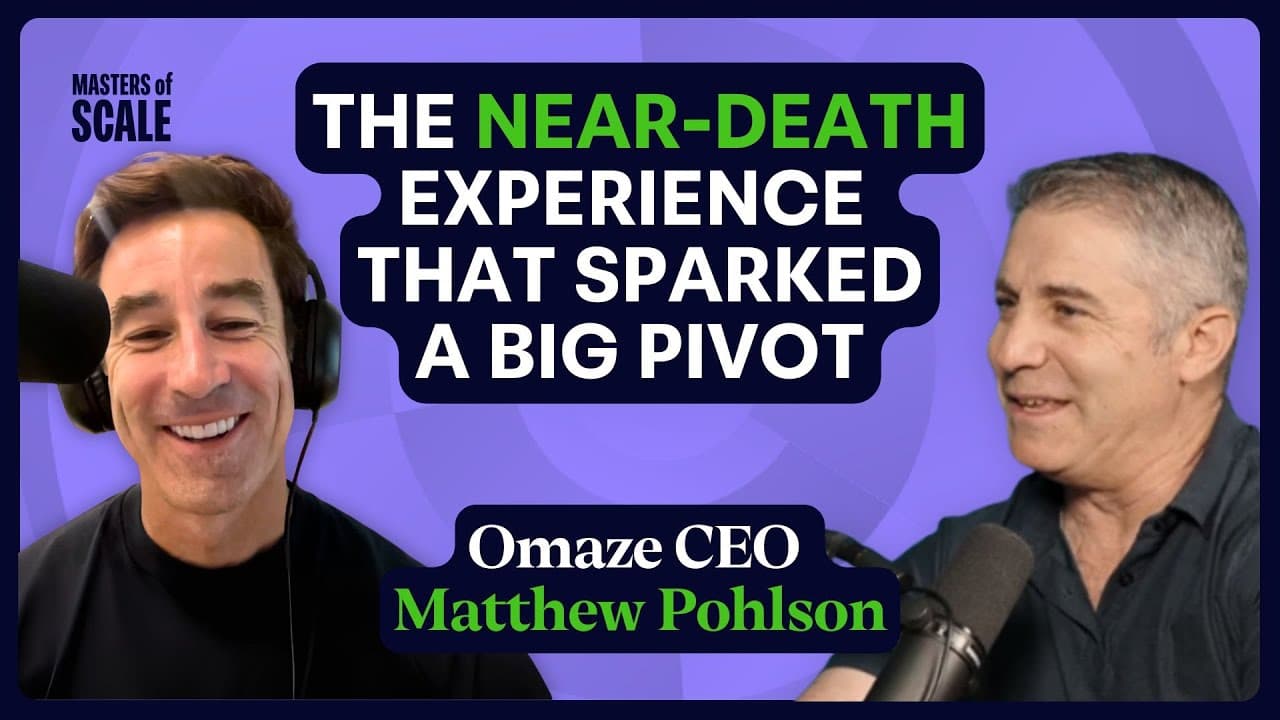
Omaze CEO's near-death experience reshapes business and life perspective.
Transcript
I used to make bold choices, but they were often driven by fear. Like fear of not being enough, fear of not comparing well to my friends, fear of never being loved. Um, and I really let that drive me. And you know, you realize that like nothing nothing is as bad as the fear of the thing. Our first experience was to be a guest judge on Cupcake Wars ... Read More
Key Insights
- Matthew Pohlson's near-death experience profoundly changed his mindset, leading to a more fearless and love-driven approach to life and business.
- Omaze shifted from celebrity-focused experiences to offering high-value prizes like houses, significantly increasing their fundraising capacity and impact.
- The company operates a unique for-profit model that fuels charitable giving, proving businesses can do well financially while doing good socially.
- Pohlson emphasizes the importance of storytelling in entrepreneurship, teaching it as a core skill to align teams and drive vision.
- Omaze's decision to focus on the UK market allowed them to streamline operations and capitalize on a dense population for their house giveaways.
- The company uses a rigorous RFP process to select charities, ensuring funds are directed towards tangible, impactful projects.
- Pohlson's experience highlights the power of empathy and compassion, suggesting these values are fundamental to human nature and business success.
- Omaze's model shows that integrating social impact into a business's core operations can lead to sustainable growth and profitability.
Install to Summarize YouTube Videos and Get Transcripts
Explore YouTube Video Summarizer or Get YouTube Transcript Extractor
Questions & Answers
Q: What inspired the founding of Omaze?
Omaze was inspired by a charity auction event hosted by Magic Johnson, where Pohlson realized that high-value experiences were only accessible to wealthy individuals. This led to the idea of democratizing charity fundraising by allowing anyone to donate for a chance to win unique experiences, significantly increasing potential donations and impact.
Q: How did Matthew Pohlson's near-death experience affect his leadership?
Pohlson's near-death experience drastically altered his view on fear and love, encouraging him to make decisions from a place of love rather than fear. This shift in perspective allowed him to make bold business decisions, such as pivoting Omaze's business model, without being swayed by criticism or fear of failure.
Q: Why did Omaze pivot from celebrity experiences to prize offerings?
The pivot was driven by scalability issues with celebrity experiences, as they were limited and unpredictable. By shifting to high-value prize offerings like houses, Omaze could reach a broader audience, increase fundraising potential, and create a more sustainable and controllable business model.
Q: What role does storytelling play in Omaze's business strategy?
Storytelling is central to Omaze's strategy, used to align teams and communicate the company's vision effectively. Pohlson believes it is the most underrated skill in entrepreneurship, essential for fundraising, marketing, and creating a compelling narrative that engages customers and stakeholders.
Q: How does Omaze select the charities it supports?
Omaze uses a Request for Proposal (RFP) process to select charities, focusing on tangible projects with clear impacts. This approach ensures that the funds raised are used effectively, providing transparency and accountability to both donors and beneficiaries.
Q: What was the impact of focusing Omaze's operations in the UK?
Focusing on the UK allowed Omaze to streamline operations and leverage the country's population density for their house giveaways. This strategic move enabled them to achieve higher efficiency and effectiveness in their fundraising efforts, setting a foundation for sustainable growth.
Q: How does Omaze's business model integrate social impact?
Omaze's model integrates social impact by channeling a significant portion of its proceeds to charitable causes. This approach not only supports meaningful projects but also demonstrates that businesses can achieve financial success while contributing positively to society.
Q: What keeps Matthew Pohlson optimistic about empathy and compassion in business?
Pohlson remains optimistic due to the numerous examples of empathy and compassion he observes daily. He believes these values are inherent to human nature and can be harnessed to drive positive change in business and society, countering the often negative narratives prevalent in media.
Summary & Key Takeaways
-
Matthew Pohlson, CEO of Omaze, shares how a near-death experience shifted his perspective, leading to a focus on love and fearlessness in business decisions. This change inspired Omaze's pivot from celebrity-driven experiences to high-value prize offerings, significantly enhancing their fundraising capabilities.
-
Omaze's innovative model combines for-profit strategies with charitable giving, demonstrating that businesses can achieve financial success while making a positive social impact. The company has successfully transitioned its operations to the UK, leveraging population density for their monthly house giveaways.
-
Pohlson stresses the importance of storytelling in business, using it to align teams and communicate vision. Omaze's structured approach to charity selection ensures impactful use of funds, reinforcing the company's commitment to tangible social benefits alongside robust business growth.
Read in Other Languages (beta)
Share This Summary 📚
Summarize YouTube Videos and Get Video Transcripts with 1-Click
Try YouTube Summary with ChatGPT & Claude or YouTube Transcript Generator
Explore More Summaries from Masters of Scale 📚

Summarize YouTube Videos and Get Video Transcripts with 1-Click
Try YouTube Summary with ChatGPT & Claude or YouTube Transcript Generator