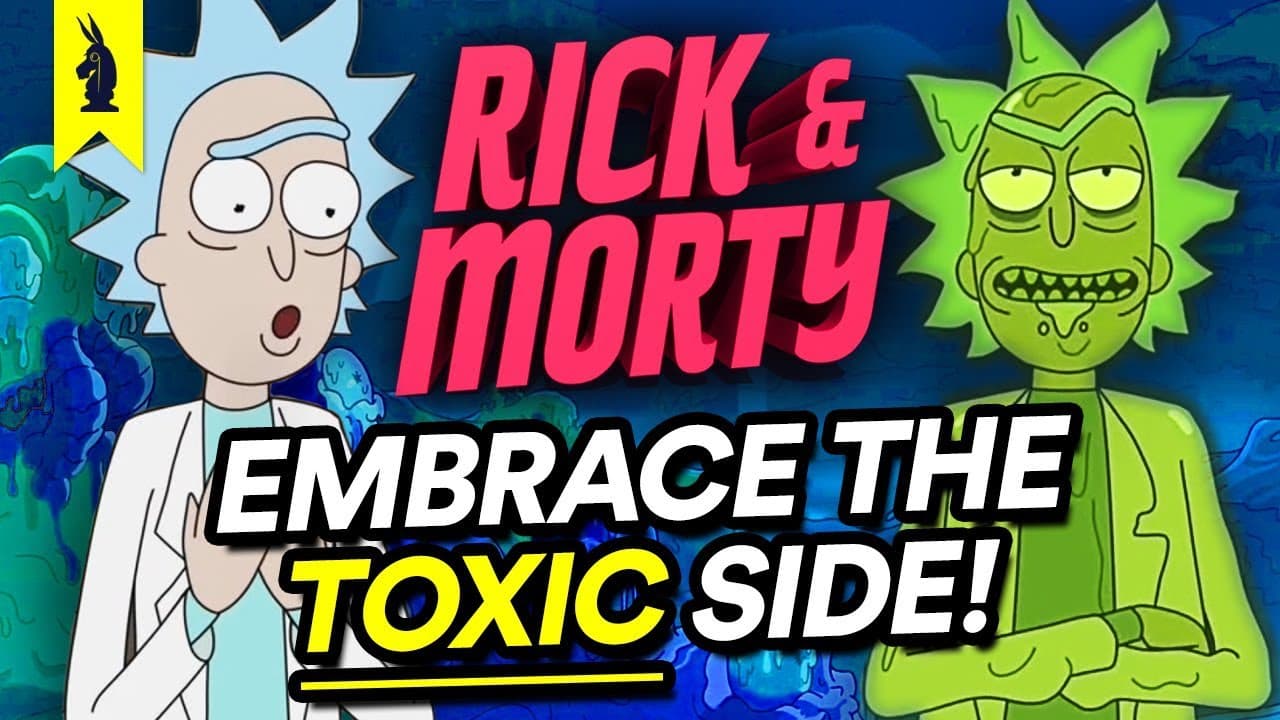
Why Is Toxic Rick Essential to Rick and Morty's Story?
TL;DR
Toxic Rick is crucial to the narrative as he represents the suppressed negative traits that, when purged, lead Rick and Morty to sociopathy. The episode critiques traditional character development by showcasing 'anti-character development,' arguing that true mental health requires embracing both positive and negative aspects of oneself. It ultimately questions the unrealistic standards set by self-help culture regarding emotional wellness.
Transcript
Hey Wisecrack! Flesh Jared again. Before we get into it, just a note: We didn’t do a quicktake last week because, well, while The Whirly Dirly Conspiracy was one of our favorite episodes of the season, we didn’t really have much to add to the discussion. But we’re back to take on Season 3 episode 6, where we’ll be looking at the toxic side of our f... Read More
Key Insights
- 👾 Rick and Morty undergo a mental detox at an alien spa, inadvertently addressing their negative traits.
- 🇦🇬 The episode employs "anti-character development," prioritizing truth over traditional conventions of personal growth.
- 🤳 It critiques self-help movements, advocating for a more nuanced understanding of emotions and mental health.
- 🤳 The portrayal of Morty’s sociopathy serves as a warning against unchecked self-esteem and misplaced positivity.
- 🧑⚕️ The narrative demonstrates how societal expectations surrounding mental health often favor escapism over authenticity.
- 🥰 Rick’s struggle with expressing love highlights the duality of attachment and emotional complexity in relationships.
- 🛟 The episode serves as a parody of compulsive happiness, reflecting societal pressures that dilute genuine emotional experience.
Install to Summarize YouTube Videos and Get Transcripts
Explore YouTube Video Summarizer or Get YouTube Transcript Extractor
Questions & Answers
Q: What is the central premise of Season 3 Episode 6?
The episode centers around Rick and Morty, who seek a vacation to alleviate their burnout from constant adventures. They undergo a mental detoxification process at an alien spa. This results in them purging their negative traits, which initially seems beneficial but leads to complications when their toxic alter egos escape and wreak havoc.
Q: How does the episode interpret the concept of 'character development'?
The episode challenges the traditional narrative convention of character development, instead opting for "anti-character development." Here, Rick and Morty must confront their toxic alternatives, suggesting that acknowledging and integrating one's flaws can lead to a more authentic sense of self, rather than simply eradication of undesirable traits.
Q: What commentary does this episode provide regarding mental health?
The episode critiques societal notions of mental health, particularly the pressure to eliminate negative emotions and thoughts as presented by self-help culture. It emphasizes that experiencing pain and self-doubt is integral to an authentic life, warning against the dangers of overly promoting "compulsory happiness."
Q: How does Morty's transformation in the episode relate to sociopathy?
After the detox, Morty becomes exceedingly self-confident and popular but also sociopathic. His transformation into a stockbroker who spouts hollow affirmations demonstrates how the desire to conform to idealized visions of happiness can lead to morally questionable behavior, highlighting the risks of losing authenticity.
Q: In what way does the episode address capitalist influences on mental health?
The episode references sociologist William Davies' concept of "compulsory happiness," wherein mental health ideals become a tool for capitalism. This notion is represented through Morty's superficial positivity, promoting self-improvement for consumer benefit, while the core emotions that define us are discarded.
Q: How does Rick's perception of toxicity complicate the narrative?
Rick's conflicting statements about his love for Morty raise questions regarding what constitutes a healthy versus toxic relationship. His attachment initially appears as affectionate, yet he later deems it irrational, creating a paradox that emphasizes the nuanced nature of relationships and self-identity.
Q: What societal critiques does the episode make through humor?
Utilizing humor, the episode satirizes self-help culture by showcasing characters embodying extreme interpretations of positive thinking. The absurdity of their circumstances highlights the absurdities in society's expectations for overtly optimistic attitudes, drawing attention to the more complex realities of mental health.
Q: What could be the implications of Morty and Rick's journey for viewers?
The journey invites viewers to self-reflect on their understanding of happiness and authenticity. It suggests that the eradication of negative traits may lead to a superficial existence, encouraging a balance between accepting flaws and striving for improvement in the pursuit of mental well-being.
Summary & Key Takeaways
-
In Season 3 Episode 6, Rick and Morty take a mental detoxifier at an alien spa, leading to an exploration of their toxic traits.
-
The episode cleverly critiques traditional character development by featuring "anti-character development," where the characters must reconnect with their undesirable traits.
-
It raises meaningful questions about mental health, suggesting that embracing negative aspects can be essential for genuine well-being instead of adhering to unrealistic self-help ideals.
Read in Other Languages (beta)
Share This Summary 📚
Summarize YouTube Videos and Get Video Transcripts with 1-Click
Try YouTube Summary with ChatGPT & Claude or YouTube Transcript Generator