Introduction to the Social Internet of Things
TL;DR
Social Internet of Things (Social IoT) refers to the network of intelligent objects based on social relationships among objects, allowing for separate levels of people and objects and the imposition of privacy rules.
Transcript
by now you might have already heard something about social internet of things but what does social IOT mean that actually sounds interesting let's figure it out but first let's start with definition of the Internet of Things in the broadest sense the term IOT encompasses everything connected to the Internet more precisely it describes the network o... Read More
Key Insights
- 📡 The Internet of Things (IoT) encompasses a vast network of physical objects embedded with sensors and software that exchange data with other devices and systems over the internet. It includes an array of objects, from smart microwaves to self-driving cars and wearable fitness devices.
- 💡 Social IoT is a concept that revolves around the idea of social relationships among intelligent objects. It aims to keep people and things separate, allowing objects to have their own social networks while humans impose rules to protect privacy and access the results of inter-object interactions.
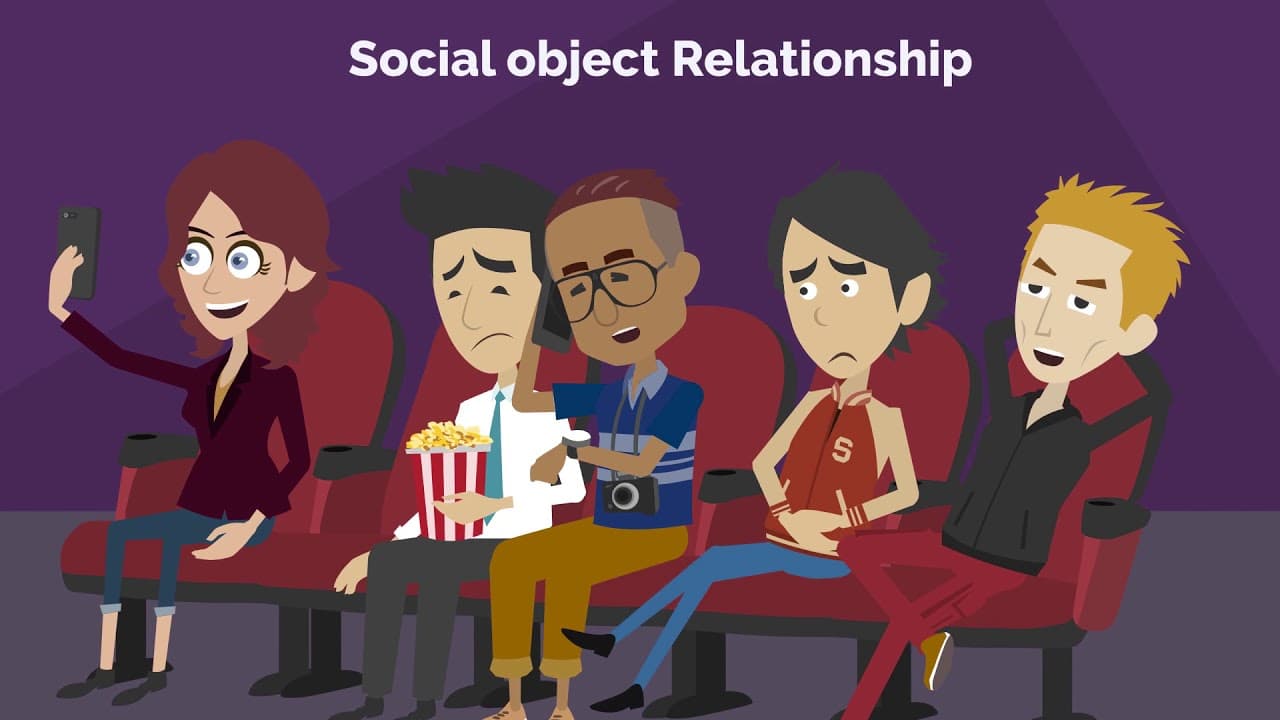
- 🔗 In a social IoT system, relationships between objects can be classified into different types: user-object, object-object, ownership-object, parental-object, collocation-object, social-object, sibling-object, guest-object, stranger-object, and service-object. Each relationship type plays a crucial role in facilitating communication and interaction.
- 🛠️ Social IoT faces numerous challenges in terms of architectural design, services management, interoperability, implementation, maintenance, scalability, navigability, application development, privacy, and interaction. However, efforts are being made to address these challenges and offer solutions through conventional and non-conventional approaches.
- 🧠 Intelligent techniques such as swarm intelligence, neural networks, artificial intelligence, fuzzy logic, genetic algorithms, deep learning, and machine learning can be incorporated into the design of social IoT solutions. These techniques can enhance the capabilities and functionality of social IoT systems.
- ⚙️ Despite the challenges and the need for technological advancements, social IoT aims to transcend current available technologies and identify technology gaps based on diverse requirements. It seeks to push the boundaries of what is possible in the realm of IoT and create innovative solutions for the future.
- 🌐 The social Internet of Things is still in its infancy, but it shows great potential for revolutionizing the way objects interact and communicate with each other. As the technology develops, social IoT can bring about significant advancements in various fields, including healthcare, transportation, and smart city planning.
- 📚 Literature and research efforts have already made considerable progress in exploring and presenting solutions for social IoT. The combination of matured technologies and intelligent techniques offers a wide range of possibilities for developing smart solutions that address the challenges and requirements of the social IoT paradigm.
Install to Summarize YouTube Videos and Get Transcripts
Explore YouTube Video Summarizer or Get YouTube Transcript Extractor
Questions & Answers
Q: What is the definition of the Internet of Things (IoT)?
The Internet of Things (IoT) refers to the network of physical objects embedded with sensors, software, and other technologies that connect and exchange data with other devices and systems over the internet.
Q: What is the main objective of the social Internet of Things (Social IoT) paradigm?
The main objective of Social IoT is to maintain separate levels for people and objects, allowing objects to have their own social networks and enabling humans to impose privacy rules while accessing the results of autonomous interactions between objects.
Q: What are some examples of relationships in a social IoT system?
Relationships in a social IoT system can include ownership relationships (objects belonging to the same person), collocation relationships (objects used in the same environment), social object relationships (objects that come into contact sporadically), and guest object relationships (objects owned by users in the guest role).
Q: What are the challenges involved in implementing social IoT?
Social IoT faces challenges in architectural design, services management, interoperability, implementation, scalability, privacy, and application development. Various technologies and techniques, such as swarm intelligence, neural networks, artificial intelligence, and machine learning, can be incorporated to address these challenges.
Q: How does social IoT differ from traditional IoT?
Social IoT focuses on the concept of social relationships among objects, whereas traditional IoT is more broadly about connecting and exchanging data between devices. Social IoT adds a layer of social networking and privacy considerations to the traditional IoT framework.
Summary & Key Takeaways
-
The Internet of Things (IoT) includes everything connected to the internet, describing the network of physical objects embedded with sensors and software to exchange data.
-
Social IoT focuses on the concept of social relationships among objects, allowing objects to have their own social networks and humans to protect their privacy.
-
Relationships in a social IoT system can be classified into various types, including ownership, collocation, social object, and guest object relationships.
Read in Other Languages (beta)
Share This Summary 📚
Summarize YouTube Videos and Get Video Transcripts with 1-Click
Try YouTube Summary with ChatGPT & Claude or YouTube Transcript Generator