Products
Features
YouTube Video Summarizer
Summarize YouTube videos
Web & PDF Highlighter
Highlight web pages & PDFs
Chat with PDF
Ask any PDF questions with AI
Ask AI Clone
Chat with your highlights & memories
Audio Transcriber
Transcribe audio files to text
Glasp Reader
Read and highlight articles
Kindle Highlight Export
Export your Kindle highlights
Idea Hatch
Hatch ideas from your highlights
Integrations
Obsidian Plugin
Notion Integration
Pocket Integration
Instapaper Integration
Medium Integration
Readwise Integration
Snipd Integration
Hypothesis Integration
Apps & Extensions
Chrome Extension
Safari Extension
Edge Add-ons
Firefox Add-ons
iOS App
Android App
Discover
Discover
Ideas
Discover new ideas and insights
Articles
Curated articles and insights
Books
Book recommendations by great minds
Posts
Essays and notes from readers
Quotes
Inspiring quotes collection
Videos
Curated videos and summaries
Explore Glasp
Glasp Newsletter
Weekly insights and updates
Glasp Talk
Interview series with great minds
Glasp Blog
Latest news and articles
Glasp Use Cases
Learn how others use Glasp
Build & Support
Glasp API
Access Glasp's API for developers
MCP Connector
Connect Glasp to Claude & ChatGPT
Community
Glasp Reddit Community
Students
Student discount and benefits
FAQs
Frequently Asked Questions
AboutPricing
DashboardLog inSign up

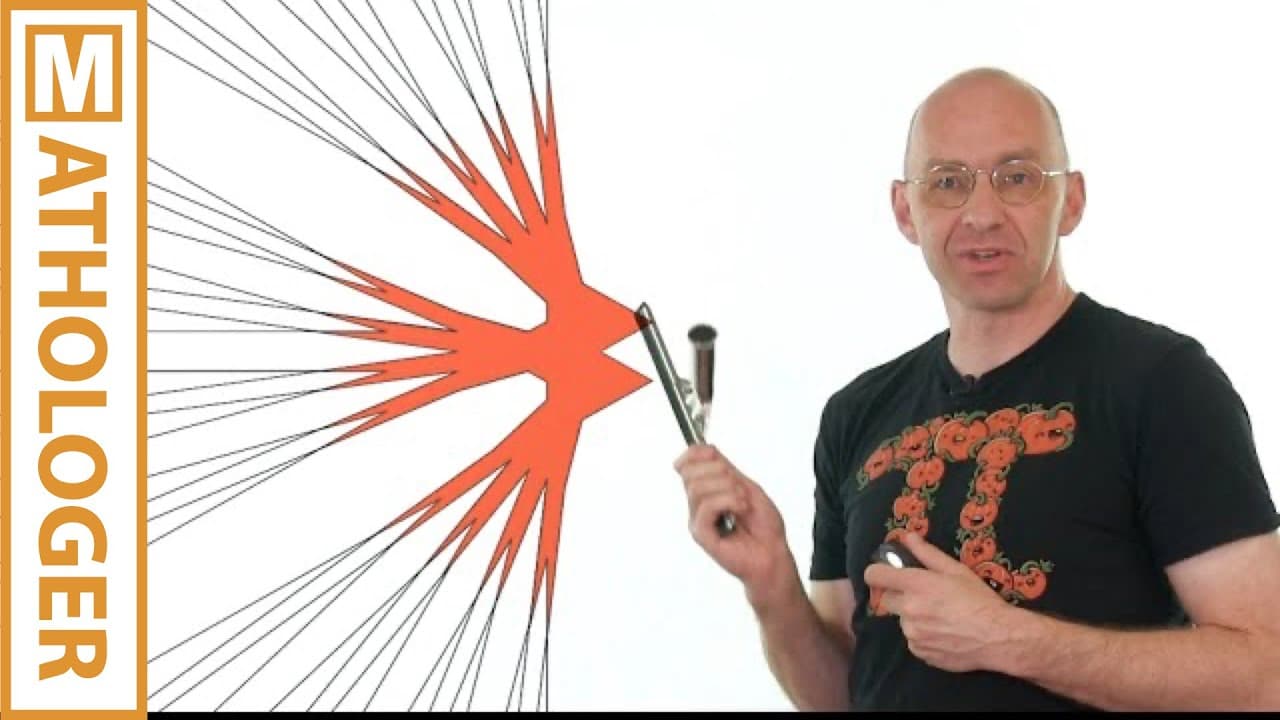
The Kakeya needle problem (the squeegee approach)
October 26, 2015
by
Mathologer
YouTube video player
The Kakeya needle problem (the squeegee approach)

TL;DR

This video provides a simplified explanation of the Kakeya needle problem, demonstrating how to minimize the surface area using a squeegee instead of a needle.

Transcript

I'm assuming everybody here also watches Numberphile Giuseppe, we're watching Numberphile. Oh yeah Numberphile is great. So just in case you don't watch numberphile You really should and we've got it was one of our recommended channels up there Now recently Numberphile posted a video just a couple of days ago about the very very famous Kakeya needl... Read More

Key Insights

  • 🪡 Using a squeegee instead of a needle simplifies the Kakeya needle problem while still achieving the same goal of minimizing the surface area.
  • 🫥 Parallel lines play a crucial role in minimizing the wiping area.
  • 🔺 By increasing the angle of the squeegee, the wiping area can be made smaller.
  • 🔺 Breaking down the area into smaller triangles and overlapping them allows for even further minimization of the surface area.

Install to Summarize YouTube Videos and Get Transcripts

Explore YouTube Video Summarizer or Get YouTube Transcript Extractor

Questions & Answers

Q: How does using a squeegee instead of a needle simplify the Kakeya needle problem?

Using a squeegee eliminates the need for complex mathematical calculations and allows for a visual demonstration of various wiping techniques to minimize surface area.

Q: What is the trick to minimizing the wiping area in the demonstration?

The trick is to extend the lines of the initial and final positions, making them parallel, and then swiping along those lines without creating any extra area. This significantly reduces the wiping area.

Q: How can the wiping area be further minimized?

By increasing the angle of the squeegee, the wiping area can be made smaller. The higher the angle, the smaller the wiping area, allowing for the creation of an area as small as desired.

Q: Why does the video use trees and triangles to visualize the problem?

The video uses trees and triangles as visual aids to demonstrate how the problem can be solved in smaller and smaller areas. Trees and triangles symbolize the movements and arrangements made to minimize the surface area.

Summary & Key Takeaways

  • The video presents an alternative solution to the Kakeya needle problem by using a squeegee instead of a needle to minimize the surface area.

  • Different wiping techniques with the squeegee are demonstrated to show the various areas that can be achieved.

  • The video explains how parallel lines and minimal swiping can be used to minimize the surface area.


Read in Other Languages (beta)

English

Share This Summary 📚

Summarize YouTube Videos and Get Video Transcripts with 1-Click

Download browser extensions on:

Try YouTube Summary with ChatGPT & Claude or YouTube Transcript Generator

Explore More Summaries from Mathologer 📚
What Is Vortex Math and Does It Unlock the Universe? thumbnail
What Is Vortex Math and Does It Unlock the Universe?
Mathologer
A simple trick to design your own solutions for Rubik's cubes thumbnail
A simple trick to design your own solutions for Rubik's cubes
Mathologer
Transcendental numbers powered by Cantor's infinities thumbnail
Transcendental numbers powered by Cantor's infinities
Mathologer
How not to Die Hard with Math thumbnail
How not to Die Hard with Math
Mathologer
Secrets of the NOTHING GRINDER thumbnail
Secrets of the NOTHING GRINDER
Mathologer
Hypertwist: 2-sided Möbius strips and mirror universes thumbnail
Hypertwist: 2-sided Möbius strips and mirror universes
Mathologer

Summarize YouTube Videos and Get Video Transcripts with 1-Click

Download browser extensions on:

Try YouTube Summary with ChatGPT & Claude or YouTube Transcript Generator

Apps & Extensions

  • Chrome Extension
  • Safari Extension
  • Edge Add-ons
  • Firefox Add-ons
  • iOS App
  • Android App

Key Features

  • YouTube Video Summarizer
  • Web & PDF Summarizer
  • Web & PDF Highlighter
  • Chat with PDF
  • Ask AI Clone
  • Audio Transcriber
  • Glasp Reader
  • Kindle Highlight Export
  • Idea Hatch

Integrations

  • Obsidian Plugin
  • Notion Integration
  • Pocket Integration
  • Instapaper Integration
  • Medium Integration
  • Readwise Integration
  • Snipd Integration
  • Hypothesis Integration

More Features

  • APIs
  • MCP Connector
  • Blog & Post
  • Embed Links
  • Image Highlight
  • Personality Test
  • Quote Shots

Company

  • About us
  • Blog
  • Community
  • FAQs
  • Job Board
  • Newsletter
  • Pricing
Terms

•

Privacy

•

Guidelines

© 2026 Glasp Inc. All rights reserved.