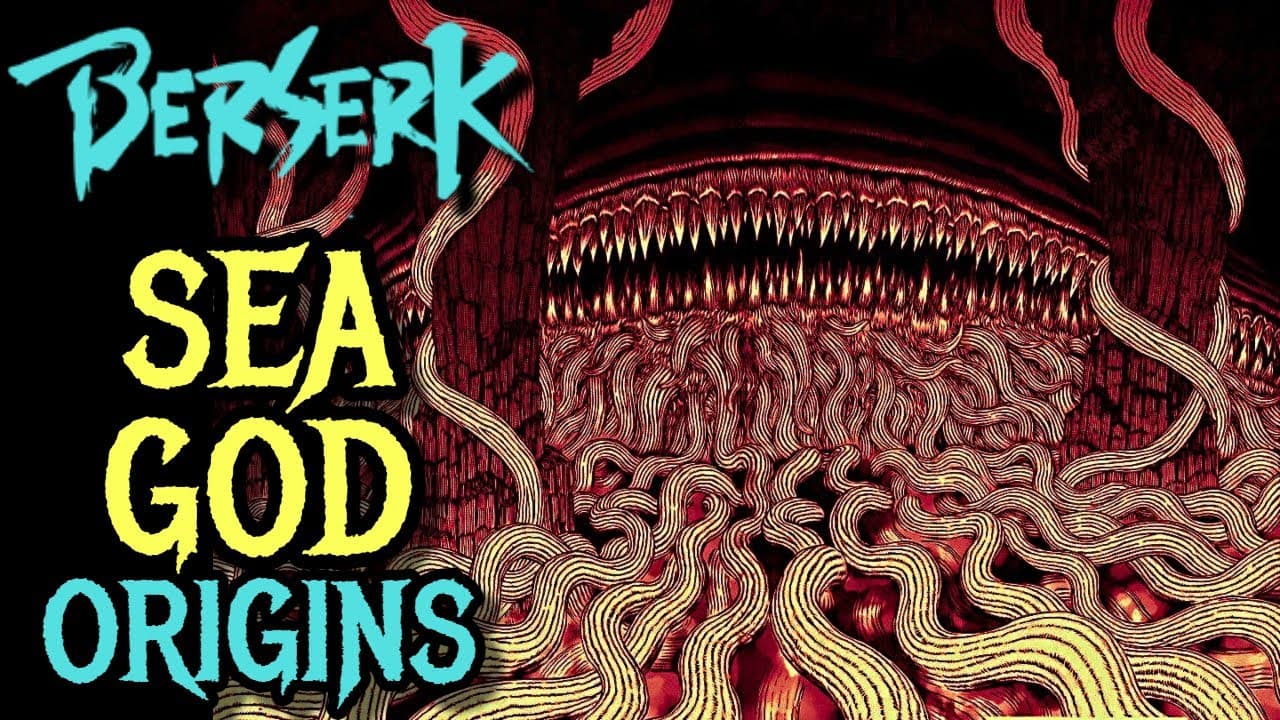
Sea God Origins – Lovecraftian Monster Who Turns Humans Into His Tentacle Thralls – Explored
TL;DR
The Sea God in Berserk embodies existential horror and explores humanity's relationship with belief and the astral world.
Transcript
sea guard Origins lovecraftian monster who turns humans into his tentacle thralls explored it is fascinating to see how can Taro miura's concept of the astral World plays out in berserk as his story progresses our introduction to this overlapping domain came in the very first chapter when we met pook an elf who is now guts's main healing agent and ... Read More
Key Insights
- 😨 The Sea God symbolizes the manifestation of humanity’s fears, illustrating the complex relationship between belief and reality in Berserk.
- 😨 The astral world serves as a crucial narrative tool to explore characters' fears and the existence of supernatural beings in their reality.
- 🙈 Faith influences perception and can blind characters from acknowledging threats, demonstrating the duality of belief and disbelief in the series.
- ❓ The conflict between Guts and the Sea God underscores the struggle against overwhelming forces, reflecting the broader themes of sacrifice and survival in Berserk.
- 🫚 Isma's character highlights themes of lineage and identity, emphasizing the value of accepting one's roots to confront existential threats.
- 🫠 Lovecraftian horror of the Sea God reflects the indifference of ancient beings towards humanity, illustrating the existential dread permeating the narrative.
- 💠 The collective subconscious concept reveals how shared beliefs shape the understanding of magical and supernatural entities in the Berserk universe.
Install to Summarize YouTube Videos and Get Transcripts
Explore YouTube Video Summarizer or Get YouTube Transcript Extractor
Questions & Answers
Q: What role does the Sea God play in the lore of Berserk?
The Sea God is depicted as a powerful and malevolent deity, serving as a personification of humanity's fears associated with the ocean and the unknown. Its origins and role illustrate the series' themes concerning belief, power, and the consequences of faith. Those who have fallen prey to its influence, like the villagers on Isma's Island, underscore the horror of being consumed by something greater.
Q: How does belief impact characters’ perceptions in Berserk?
In Berserk, belief shapes the characters' realities, facilitating encounters with mystical beings like elves and the Sea God. Characters like Isma are blinded by their faith and struggle to perceive the greater existential threats. This theme illustrates how belief determines reality, highlighting the dangers of both blind faith and skepticism.
Q: What is the significance of the astral world in the Sea God narrative?
The astral world serves as a domain where spiritual entities reside, blending the conscious and subconscious realities of humanity. Flora’s explanation of its layers reveals how magical creatures exist within belief, while evil beings are manifestations of humanity’s darkest fears. Experiencing the astral world is central to understanding the Sea God's chaotic essence.
Q: How does Guts approach battling the Sea God?
Guts adopts an aggressive strategy, attempting to penetrate the Sea God's innards as a means to defeat it. His reckless bravery demonstrates his desire to confront existential threats directly, reflecting the larger thematic battle against not just physical foes but also the chaos that ancient deities represent.
Q: Why are Isma's origins significant in understanding the Sea God?
Isma combines human and marrow traits, highlighting the intertwined fates of different beings in Berserk. Her lineage symbolizes hope against the Sea God’s evil, as her awakening to her marrow heritage signifies the latent power within those who can embrace their origins to stand against destructive forces.
Q: How does the portrayal of the Sea God reflect Lovecraftian themes?
The Sea God exemplifies Lovecraftian horror by being a vast, indifferent entity embodying existential dread and the insignificance of humanity. It assimilates humans and ships, emphasizing the cosmos' cruel and indifferent nature, starkly contrasting with the traditional depiction of benevolent deities in mythology.
Q: What is the outcome of the battle between Guts and the Sea God?
Guts ultimately slays the Sea God, becoming a true "God Killer" despite the odds stacked against him. The victory is bittersweet, illustrating the conflict between humanity and ancient powers, while marking a pivotal moment in his journey as he grapples with the philosophical implications of his actions.
Q: How does the narrative explore the concept of collective subconscious?
The narrative explains the collective subconscious as a shared space where archetypes and beliefs reside, shaping both individual perceptions and communal experiences. This concept is crucial in understanding why certain beings, including the Sea God, persist in human fear and imagination, reflective of humanity's shared traumas and beliefs.
Summary & Key Takeaways
-
The Sea God introduces Lovecraftian horror themes into "Berserk," showcasing a terrifying deity that reflects humanity's fear of the sea and the unknown.
-
The concept of belief plays a crucial role, where faith manifests both good and evil beings, influencing characters' interactions with the astral world.
-
A battle between Guts and the Sea God highlights the blend of physical and spiritual conflicts, illustrating the immense power of ancient deities in the narrative.
Read in Other Languages (beta)
Share This Summary 📚
Summarize YouTube Videos and Get Video Transcripts with 1-Click
Try YouTube Summary with ChatGPT & Claude or YouTube Transcript Generator
Explore More Summaries from Marvelous Videos 📚




Summarize YouTube Videos and Get Video Transcripts with 1-Click
Try YouTube Summary with ChatGPT & Claude or YouTube Transcript Generator