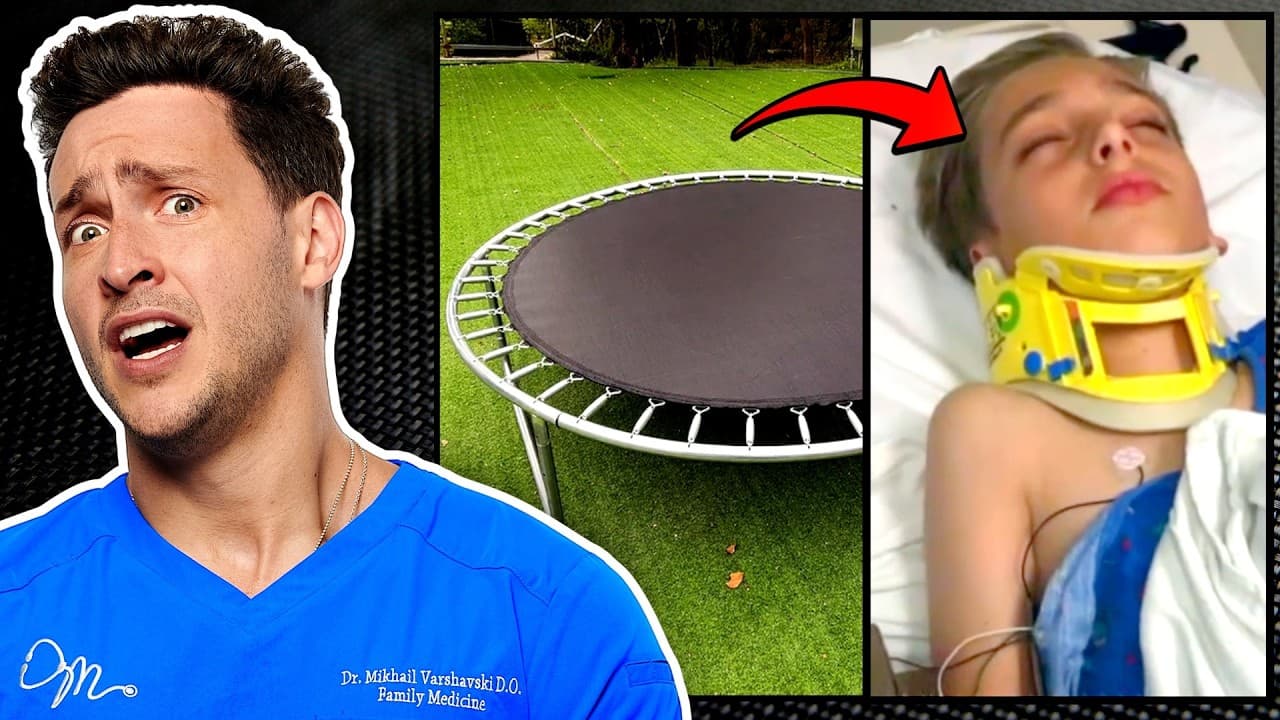
Why Doctors HATE Trampolines
TL;DR
Trampoline parks and home setups pose significant injury risks to children, demanding greater safety measures.
Transcript
- As the Mayo Clinic once said, when it's kids verse trampolines, kids often lose. It's time to diagnose some trampoline injuries and give you some stern warnings about trampoline safety at home and at trampoline parks. Let's get started. Pee whoop! - [Speaker] On most weekends, trampoline parks are packed with hundreds of kids bouncing, jumping in... Read More
Key Insights
- 😮 The rise in trampoline park popularity correlates with a startling increase in injuries, showing a need for better safety measures.
- 👤 Many trampoline injuries stem from a combination of poor design and the chaotic atmosphere of multiple users on a trampoline.
- 😣 Incidents can result in life-altering injuries, such as paralysis or severe fractures, emphasizing the critical need for safety awareness.
- 🚨 Emergency response professionals highlight the importance of immediate assessments after accidents to prevent further complications.
- 😒 Experts recommend a strict enforcement of safety rules during trampoline use, including the requirement of adult supervision.
- 💀 The overwhelming majority of trampoline injuries occur to children, who may not be aware of the dangers involved.
- ❓ The psychological effects of serious trampoline injuries can be substantial, affecting both the mental and physical state of the injured individuals.
Install to Summarize YouTube Videos and Get Transcripts
Explore YouTube Video Summarizer or Get YouTube Transcript Extractor
Questions & Answers
Q: What are common injuries associated with trampoline use?
Common injuries from trampoline use include fractures, sprains, and head injuries. For instance, a cracked femur, which is highly painful and serious, can occur from 'double bouncing' where one jumper's force impacts another. Spinal injuries can also happen, sometimes leading to paralysis or requiring reconstructive surgery, which underscores the risk involved.
Q: Why are trampoline parks considered particularly dangerous?
Trampoline parks create an environment where numerous children jump simultaneously, exponentially increasing the risk of collisions and injuries. The design often contributes to this danger; trampolines linked with chains or cables can lead to high-impact collisions as energy from one jump can affect nearby jumpers unpredictably.
Q: What are the recommended safety measures for home trampolines?
Experts recommend several safety measures for home trampoline use, including adult supervision at all times, installing safety nets, and ensuring that the trampoline has proper padding around the edges. It's also advised to establish rules about the number of users and their weight to prevent accidents, especially with size mismatches.
Q: How do trampoline injuries impact long-term health?
Injuries sustained from trampoline accidents can lead to long-term health issues, particularly if they involve the spine or major joints. For example, a torn ACL from jumping can predispose individuals to early onset osteoarthritis and may require surgery and rehabilitation, significantly impacting their mobility and quality of life.
Q: What immediate actions should be taken after a trampoline injury?
Following a trampoline injury, it’s crucial to assess the situation promptly. If there is neurovascular compromise or severe pain, medical assistance should be sought immediately. Emergency responders often perform assessments to check for fractures or dislocations and prepare the patient for potential surgical intervention if necessary.
Q: How can parents reduce the risk of trampoline injuries?
Parents can significantly reduce the risk of trampoline injuries by setting strict rules regarding how many children can jump at once, ensuring they supervise jumping sessions, and discussing safety practices beforehand. Encouraging children to use appropriate skills and jump within their limits can also help prevent accidents.
Q: What role do trampoline designs play in injury rates?
The designs of trampolines significantly contribute to injury rates, particularly when they lack proper structural integrity and safety features. Connective elements like chains and inadequate padding can lead to more injuries, while better designs could potentially minimize bounce-related accidents and enhance overall safety.
Summary & Key Takeaways
-
The video highlights alarming statistics surrounding trampoline injuries, particularly emphasizing the surge in emergency room visits as trampoline park popularity rises, with nearly 18,000 injuries reported in 2017.
-
Trampolines are fundamentally dangerous due to their design and the risks posed by multiple children bouncing simultaneously, leading to collisions and severe injuries such as cracked femurs and spinal injuries.
-
Experts stress the importance of implementing safety measures such as adult supervision and safety nets, while also warning that many home trampolines lack essential protocols, exacerbating the risk of injuries.
Read in Other Languages (beta)
Share This Summary 📚
Summarize YouTube Videos and Get Video Transcripts with 1-Click
Try YouTube Summary with ChatGPT & Claude or YouTube Transcript Generator
Explore More Summaries from Doctor Mike 📚





Summarize YouTube Videos and Get Video Transcripts with 1-Click
Try YouTube Summary with ChatGPT & Claude or YouTube Transcript Generator