Where Are We With Digital Asset Custody In Crypto?
TL;DR
Digital asset custody has matured from self-custody and verticalized exchanges into regulated infrastructure that institutions and corporations can use. BitGo combines multi-signature security with regulated entities in South Dakota, New York, Switzerland, and Germany, helping protect assets against both theft and loss. Read on to understand the technologies, safeguards, and market changes behind this institutional participation.
Transcript
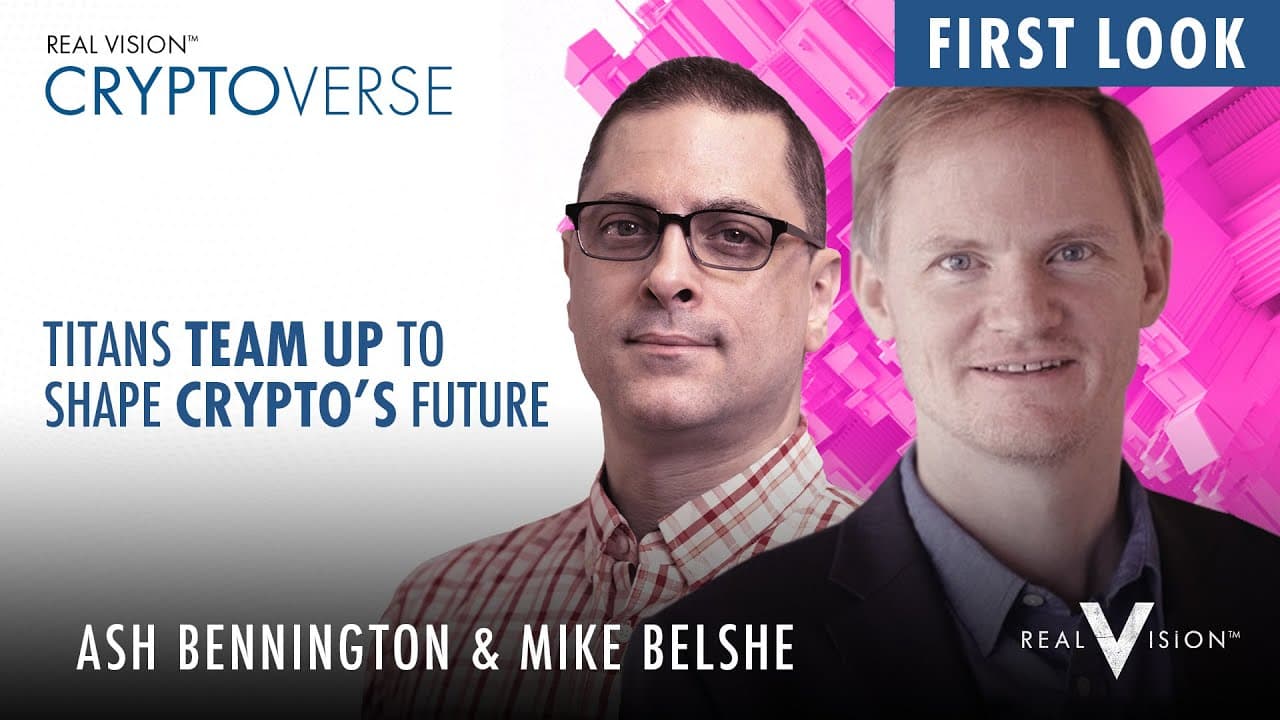
welcome to real vision crypto i'm ash bennington today i'm joined by mike belshe co-founder and ceo of bitco today we talk about digital asset custody infrastructure investing and trading and the future of the digital asset space mike welcome back to real vision great to see you again ash where are we today with the custody business sure well custo... Read More
Key Insights
- Digital asset custody has evolved significantly since 2013, with the emergence of self-custody and verticalized exchanges, allowing for a comprehensive market structure.
- BitGo has established regulated entities in several jurisdictions, including South Dakota, New York, Switzerland, and Germany, reflecting the growing regulatory oversight in the digital asset space.
- Multi-signature technology is crucial for eliminating single points of failure, enhancing security by distributing access across multiple keys, and preventing both theft and loss.
- BitGo offers a suite of services including trading, lending, and borrowing, while maintaining security by allowing clients to trade directly from cold storage without sacrificing safety.
- The digital asset industry is developing prime brokerage services, mirroring traditional finance but with increased transparency and participation opportunities.
- Traditional finance professionals are entering the digital asset space, bringing knowledge to develop mature products like derivatives and structured products.
- Decentralized finance (DeFi) allows for participation in financial services while holding one's own keys, presenting opportunities for increased transparency and automation.
- The future of digital assets involves maintaining transparency and enabling broader participation, with software and smart contracts ensuring consistent rule adherence.
Install to Summarize YouTube Videos and Get Transcripts
Explore YouTube Video Summarizer or Get YouTube Transcript Extractor
Questions & Answers
Q: How has digital asset custody evolved?
Digital asset custody began with self-custody because traditional banks and other incumbents were not participating. It later expanded into regulated custodial infrastructure with stronger security, checks and balances, and oversight, allowing institutions and corporations to participate.
Q: What is a verticalized exchange in digital assets?
A verticalized exchange combines the roles of broker, exchange, clearing house, and custodian within one organization. Mike Belshe says traditional equity, derivatives, and commodities markets are not typically structured this way.
Q: Where does BitGo have regulated entities?
BitGo has regulated entities in South Dakota, New York, Switzerland, and Germany. The transcript also notes that other custodians operate with regulatory oversight across various jurisdictions.
Q: Why are institutions participating in digital assets now?
Institutions previously saw an industry without sufficient safety, checks and balances, or regulatory oversight. Improved custody structures and security measures changed that assessment, while the coronavirus pandemic and its fiscal-policy effects also reinvigorated institutional interest.
Q: What is multi-signature technology?
Multi-signature technology distributes control across multiple people or digital asset keys to eliminate a single point of failure. BitGo pioneered this capability as part of its security approach.
Q: How does multi-signature technology protect digital assets?
Multi-signature technology helps protect assets against both theft and accidental loss. Distributing access and maintaining backups reduces risks such as stolen credentials, lost passwords, crashed hard disks, or destroyed buildings.
Q: What alternatives to multi-signature technology are developing?
Threshold signature schemes provide another cryptographic method for achieving protections similar to multi-signature technology. Multi-party computation is another variant, although the transcript raises concerns about early implementations lacking backup keys and related safeguards.
Q: How did smart contracts affect the digital asset market?
Smart contracts helped drive the ICO boom, followed by a period when practical use cases were built. DeFi applications and NFTs later began emerging as development platforms strengthened and both self-custodial and regulated security improved.
Summary & Key Takeaways
-
Definition: Digital asset custody includes self-custody and regulated services that secure assets for individuals, institutions, and corporations.
-
Definition: A verticalized exchange acts as broker, exchange, clearing house, and custodian within one organization.
-
Who: BitGo began as a technology and security company that pioneered multi-signature capabilities.
-
Who: BitGo operates regulated entities in South Dakota, New York, Switzerland, and Germany.
-
Definition: Multi-signature security divides access among several people or digital asset keys to remove single points of failure.
-
Compare: Multi-signature technology addresses both deliberate theft and accidental loss, including lost passwords, failed hard disks, missing backups, and building fires.
-
Tool: Threshold signature schemes offer a cryptographic approach similar to multi-signature security.
-
Tool: Multi-party computation is another security approach, but early versions raised concerns about backup keys.
-
When: Smart contracts fueled the ICO boom before attention shifted toward practical DeFi applications and emerging NFTs.
-
Compare: Institutional participation became possible after custody gained stronger security, checks and balances, and regulatory oversight.
Read in Other Languages (beta)
Share This Summary 📚
Summarize YouTube Videos and Get Video Transcripts with 1-Click
Try YouTube Summary with ChatGPT & Claude or YouTube Transcript Generator
Explore More Summaries from Real Vision 📚


Summarize YouTube Videos and Get Video Transcripts with 1-Click
Try YouTube Summary with ChatGPT & Claude or YouTube Transcript Generator