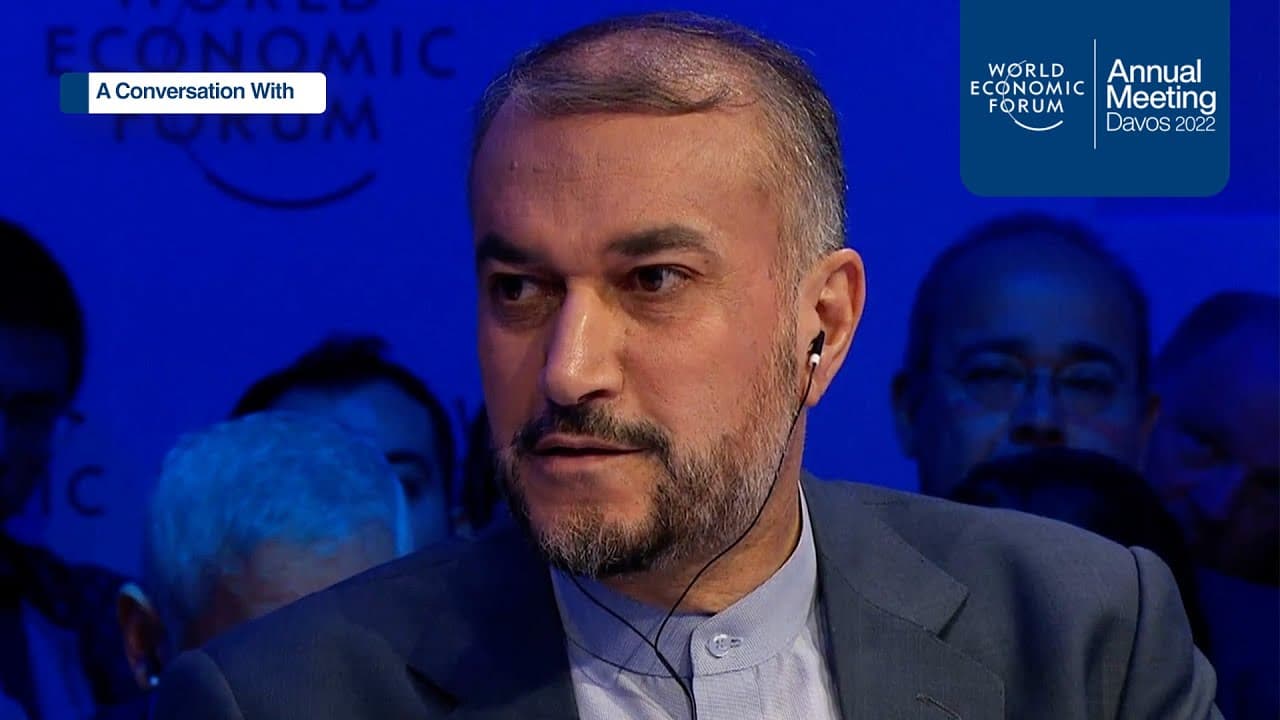
A Conversation with Hossein Amir-Abdollahian, Minister of Foreign Affairs of Iran | Davos | #WEF22
TL;DR
Iran's new foreign policy focuses on balanced diplomacy, prioritizing Asian relations, opposing war, seeking dialogue, wary of U.S. intentions, insisting on economic benefits from JCPOA.
Transcript
foreign minister welcome pleasure to have you on let me ask you you represent a new government uh in iran um in many ways uh seems different from the last one certainly watching the campaign you were very critical of the last government um what is this new government's foreign policy and how does it differ from the last one in the name of god the m... Read More
Key Insights
- 👶 Iran's foreign policy under the new administration stresses balanced diplomacy with a focus on Asian relations.
- 🫱 The government condemns war and advocates for dialogue, evident in its approach to conflicts like Ukraine and Yemen.
- 🤝 There is skepticism towards U.S. intentions in reviving the Iran nuclear deal, emphasizing economic guarantees and removal of sanctions.
- 🤩 Iran's stance on key issues like the Revolutionary Guards, Saudi-Iranian relations, and Syria reflects a strategic emphasis on regional stability and dialogue.
- ❓ The Iranian government perceives U.S. actions as influenced by Zionist interests, impacting the prospects for improved relations.
- 💢 Iran highlights the importance of economic benefits from the JCPOA and insists on the removal of Trump-era policies for a lasting deal.
- 🇮🇷 The focus on dialogue and political solutions in regional conflicts showcases Iran's commitment to stability and peaceful resolutions.
Install to Summarize YouTube Videos and Get Transcripts
Explore YouTube Video Summarizer or Get YouTube Transcript Extractor
Questions & Answers
Q: How does Iran's new foreign policy stance differ from the previous administration?
Iran's new foreign policy emphasizes balanced diplomacy, with a priority on Asian relations while maintaining ties with the West and Africa. It condemns war and advocates for dialogue in conflict resolution.
Q: Why is Iran hesitant to outright condemn Russia's invasion of Ukraine?
Iran opposes all wars, including the conflict in Ukraine, citing provocations by the U.S. and NATO. It advocates for dialogue and diplomacy to end the war, emphasizing opposition to human rights violations globally.
Q: What are the main obstacles in reviving the Iran nuclear deal, according to the Iranian Foreign Minister?
Economic guarantees and the removal of Trump-era maximum pressure policies are key hurdles. Iran seeks assurance of full economic benefits from JCPOA and expresses doubts about U.S. intentions in negotiations.
Q: How does the Iranian Foreign Minister view the potential for improved relations with the U.S.?
Establishing trust is crucial for better U.S.-Iran relations. Iran remains wary of past U.S. actions, including recent sanctions, which undermine the potential for normalized relations.
Summary & Key Takeaways
-
Iran's foreign policy under the new administration emphasizes balanced diplomacy, with a focus on developing ties with Asian neighbors while maintaining relationships with the West and Africa.
-
The government condemns war and advocates for dialogue as seen through its stance on various conflicts, including Ukraine and Yemen.
-
There is skepticism towards U.S. intentions in reviving the Iran nuclear deal due to concerns over economic sanctions and the removal of Trump-era policies.
Read in Other Languages (beta)
Share This Summary 📚
Summarize YouTube Videos and Get Video Transcripts with 1-Click
Try YouTube Summary with ChatGPT & Claude or YouTube Transcript Generator
Explore More Summaries from World Economic Forum 📚
Summarize YouTube Videos and Get Video Transcripts with 1-Click
Try YouTube Summary with ChatGPT & Claude or YouTube Transcript Generator