How to Build in Space — for Life on Earth | Ariel Ekblaw | TED
TL;DR
Space infrastructure can revolutionize life on Earth through self-assembling structures.
Transcript
I once had a professor ask me, "Why in the world do we spend so much money on space exploration in the face of so many pressing challenges here on Earth?" It's a good question and a tough one for me. Should we be building a future life in space? I want to argue yes, and tell you how. I do believe in the beauty of space exploration for the sake of n... Read More
Key Insights
- Space exploration is crucial for gaining new knowledge about our universe, despite challenges on Earth. It has historically inspired breakthrough innovations like modern computing and LASIK surgery.
- The cost of accessing space has dramatically decreased, making it more feasible to transport materials and technology into orbit, similar to global shipping services like FedEx.
- The International Space Station (ISS) is outdated and will be decommissioned soon, necessitating new space infrastructure to continue advancements.
- In-space construction is slow and dangerous, requiring innovative solutions like autonomous robotic self-assembly to build scalable space structures.
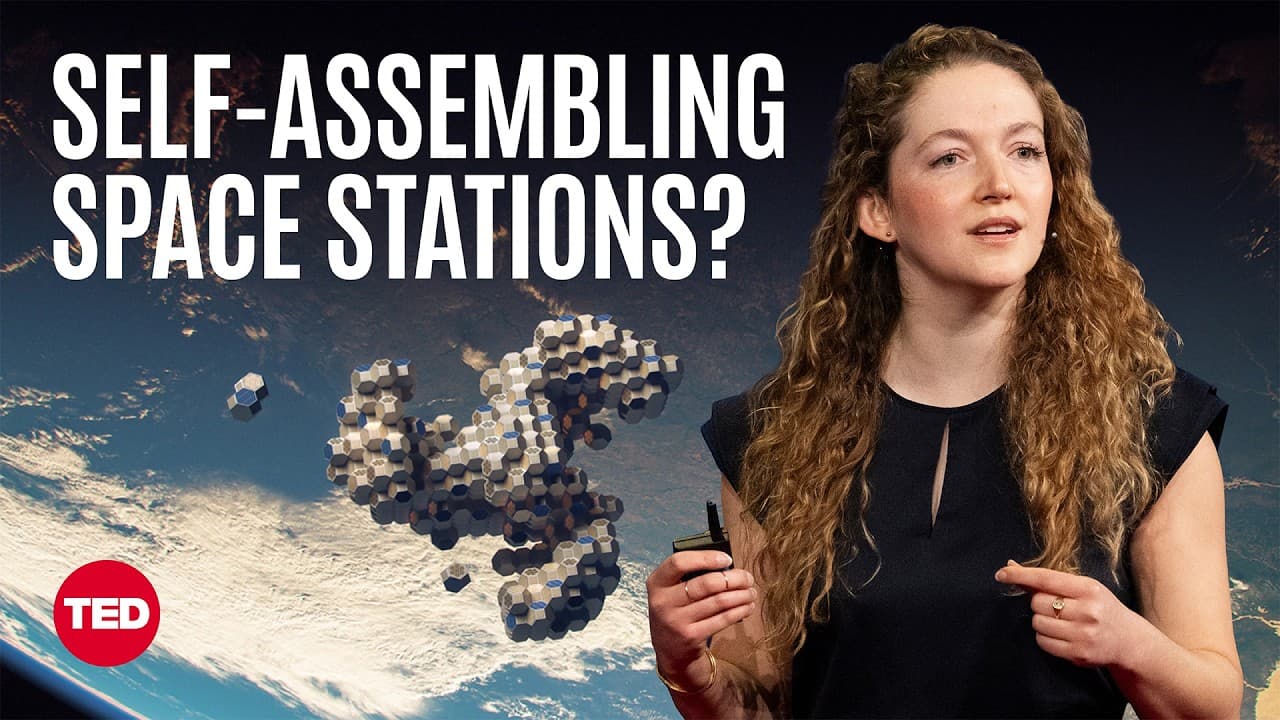
- The Tesserae project utilizes electropermanent magnets for self-assembling space habitats, allowing for larger space stations without risky astronaut maneuvers.
- Microgravity environments in space offer unique opportunities for manufacturing biotech products and conducting novel drug discovery, impossible under Earth's gravity.
- Space-based solar power could provide abundant green energy by capturing unfiltered sunlight and beaming it to Earth, solving solar power's storage problem.
- Investing in space infrastructure can expand human horizons and benefit Earth, supporting a trillion-dollar space economy while preserving the planet.
Install to Summarize YouTube Videos and Get Transcripts
Explore YouTube Video Summarizer or Get YouTube Transcript Extractor
Questions & Answers
Q: Why is space exploration considered important despite Earth's challenges?
Space exploration is vital for acquiring new knowledge about our universe, inspiring technological breakthroughs that benefit Earth. Historical examples include modern computing from the Apollo program and LASIK surgery from ISS research. These advancements demonstrate space's potential to address pressing Earth challenges through innovation.
Q: How has the cost of accessing space changed in recent years?
The cost of accessing space has significantly decreased, from over $50,000 per kilogram during the NASA Shuttle era to under $200 per kilogram with SpaceX's Starship. This reduction makes space transportation more feasible, akin to global shipping services, enabling broader access to space for various applications.
Q: What challenges does the International Space Station face?
The International Space Station is becoming outdated, cramped, and is scheduled for decommissioning by 2030-2031. This situation necessitates the development of new space infrastructure to continue scientific advancements and support the growing demand for space-based research and technology.
Q: What is the Tesserae project and its significance?
The Tesserae project involves using electropermanent magnets for self-assembling space habitats, allowing for the construction of larger space stations without risky astronaut maneuvers. This innovation is crucial for scaling up space infrastructure, facilitating biotech advancements, and enabling energy solutions like space-based solar power.
Q: How can microgravity environments benefit biotech advancements?
Microgravity environments in space allow for the unique growth of protein crystals and tissues, enhancing drug discovery and manufacturing processes. This setting can lead to exceptional quality organoids for testing drugs and developing therapies for conditions like Alzheimer's, cancer, and macular degeneration, benefiting Earth-based healthcare.
Q: What potential does space-based solar power hold for Earth?
Space-based solar power offers the potential to capture raw, unfiltered sunlight in orbit and beam it to Earth, even at night. This approach could solve the storage problem for solar power, providing abundant green energy and significantly contributing to sustainable energy solutions on Earth.
Q: What is the concept of offworlding and its impact on Earth?
Offworlding involves relocating heavy industry to space, allowing Earth to recover as a garden planet. By using space infrastructure for industrial activities, humanity can preserve Earth's environment while leveraging space's unique conditions for manufacturing and energy production, supporting sustainable development.
Q: How does space exploration benefit humanity's future?
Space exploration expands humanity's horizons by enabling technological advancements and addressing Earthly challenges. Investing in space infrastructure supports a trillion-dollar space economy, enhances life on Earth, and prepares for future interplanetary travel, demonstrating that space exploration is not about escaping but improving life on Earth.
Summary & Key Takeaways
-
Ariel Ekblaw argues for space exploration, emphasizing its potential to inspire and deliver technological breakthroughs. She highlights the low cost of space access and the need for new infrastructure as the ISS ages.
-
The Tesserae project aims to revolutionize space construction with robotic self-assembly, enabling larger structures without astronaut involvement. This innovation can facilitate biotech advancements and energy solutions in space.
-
Space exploration is not about escaping Earth but enhancing life on it. By investing in space infrastructure, humanity can expand its horizons while preserving Earth, laying the groundwork for future interplanetary travel.
Read in Other Languages (beta)
Share This Summary 📚
Summarize YouTube Videos and Get Video Transcripts with 1-Click
Try YouTube Summary with ChatGPT & Claude or YouTube Transcript Generator
Explore More Summaries from TED 📚






Summarize YouTube Videos and Get Video Transcripts with 1-Click
Try YouTube Summary with ChatGPT & Claude or YouTube Transcript Generator