1710 Making Methanol From Dry Distillation
TL;DR
Learn how to produce methanol at home using a simple distillation setup and specific wood types.
Transcript
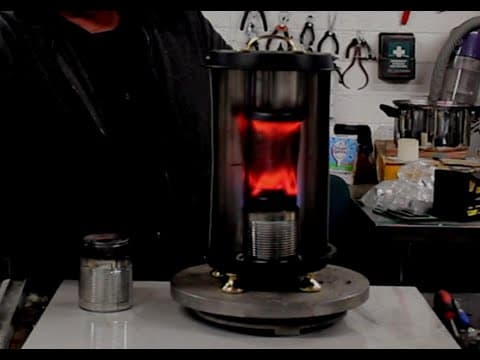
okay hi everybody so in video 1707 we meant this thing it's really simple it's just a paint can with some plumbing fittings going to this burner head which is made from an old can of beans and we heated that up using a primer stove and of course drove some gas off there now this is strongly related to um the act of making charcoal when you make cha... Read More
Key Insights
- 🔥 Making charcoal: The process of making charcoal involves burning wood and releasing smoke and particulate matter. This captured smoke can be used to create syn gas, which consists of methane, carbon dioxide, carbon monoxide, oxygen, and nitrogen. Different types of wood can produce different compounds, such as methanol from deciduous wood.
- 🌳 Methanol production: Methanol is a compound produced by plants, and they can produce significantly more than what is industrially manufactured. Methanol can be obtained through dry distillation or destructive distillation at temperatures ranging from 110 to 400 degrees Centigrade. By capturing and cooling the gas released during distillation, liquid methanol can be collected.
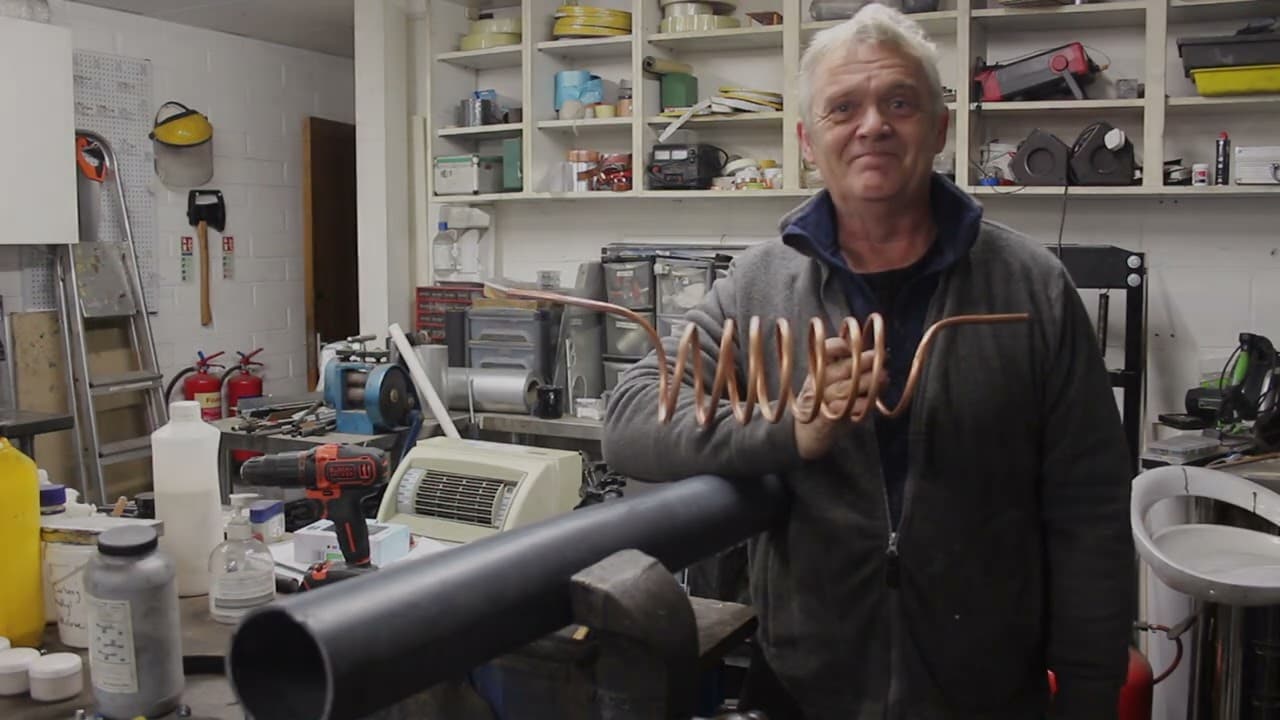
- 💡 Distillation setup: To capture and collect liquid methanol, a distillation setup can be used. This setup involves using a coil, such as Micro Bore underfloor heating tubing, to cool the gas and convert it into a liquid. The cooled gas can then be dripped into a container for collection.
- 🌀 Formation of the coil: To create the distillation coil, a suitable form, such as a 75mm diameter plastic pipe, is used. Copper tubing is then bent around the form to create the coil shape. Plumbing fittings can be used to secure the coil and connect it to the distillation setup.
- 💧 Cooling the coil: While the distillation coil can be cooled in the air, it is more effective to use a water jacket, such as running the coil through a bucket of water. Cooling the coil helps to convert the gas into liquid methanol more quickly. ⏳ Distillation process: Once the distillation setup is ready, a deciduous wood, like oak twigs, is added to the setup. Heat is then applied to the setup, causing the release of gas and syn gas. The initial gas produced is water, which is discarded. After reaching temperatures of 300-400 degrees Centigrade, the gas becomes methanol.
- 🛠️ Testing methanol: To check if methanol is being produced, a cotton bud can be dipped in the collected liquid methanol and ignited. Methanol will produce a characteristic blue flame, confirming its presence.
- 🌟 Simplified process: Making methanol through direct dry distillation is a relatively simple process. It requires setting up a distillation system, using the right wood, discarding the initial water produced, and collecting the resulting methanol. Despite its simplicity, there are opportunities for improvement to enhance the efficiency and yield of methanol production.
Install to Summarize YouTube Videos and Get Transcripts
Explore YouTube Video Summarizer or Get YouTube Transcript Extractor
Questions & Answers
Q: How does the setup for producing methanol through dry distillation work?
The setup involves using a paint can with plumbing fittings and a burner head made from an old can of beans. By heating the can and capturing the gas produced, it can be condensed using a distillation coil to obtain methanol.
Q: What wood types are suitable for producing methanol?
Deciduous wood such as Oak, Beech, Ash, or Birch is suitable for producing methanol through dry distillation. Different wood types yield different results in terms of the gas produced.
Q: How can you determine if the liquid produced is methanol?
To determine if the liquid produced is methanol, you can dip a cotton bud into the liquid and ignite it. If it produces a blue flame, it indicates the presence of methanol.
Q: Can methanol produced through this setup be used as a fuel?
Yes, the methanol produced through this setup can be used as a fuel, such as for a heater. However, it is important to follow safety precautions and handle methanol properly due to its flammable nature.
Q: Are there any variations or improvements to this setup?
Yes, there are various improvements and modifications that can be made to this setup to increase the efficiency and yield of methanol production. This basic setup serves as an introduction to the process, and more advanced setups can be found with additional research.
Summary & Key Takeaways
-
The video demonstrates a DIY setup for producing methanol through dry distillation using specific wood types.
-
By capturing and cooling the gas produced during distillation, it can be transformed into methanol.
-
The process involves setting up a distillation coil and collecting the liquid that forms after cooling.
Read in Other Languages (beta)
Share This Summary 📚
Summarize YouTube Videos and Get Video Transcripts with 1-Click
Try YouTube Summary with ChatGPT & Claude or YouTube Transcript Generator
Explore More Summaries from Robert Murray-Smith 📚
Summarize YouTube Videos and Get Video Transcripts with 1-Click
Try YouTube Summary with ChatGPT & Claude or YouTube Transcript Generator