Jordan Peterson - Why it's so Hard to Sit Down and Study/Work
TL;DR
Your unconscious mind influences your behavior and thoughts, causing distractions, habits, and creative ideas.
Transcript
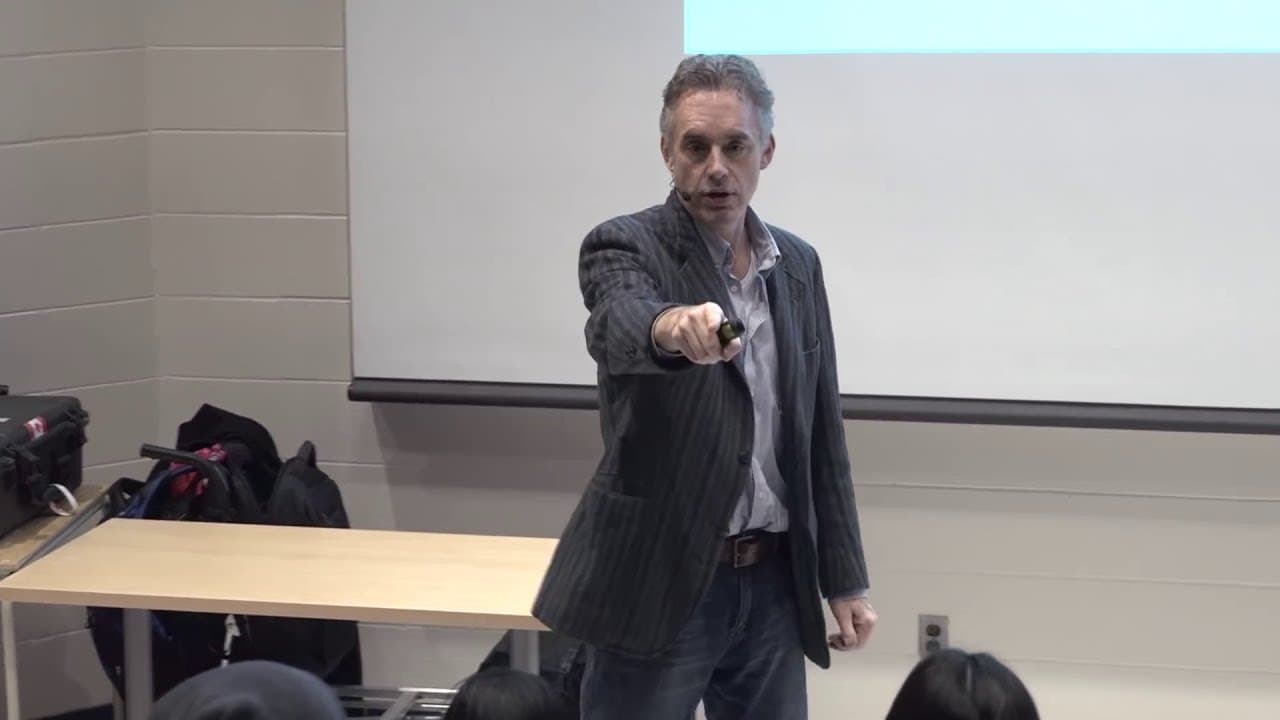
Your attention, for example, is mediated by unconscious forces -- and you know that, you know that perfectly well. And this is another Freudian observation. You know, if you're sitting down to study for example, your conscious intent is to study. But you know perfectly well that all sorts of distraction fantasies are going to enter the theatre of y... Read More
Key Insights
- 🔍 Our attention is influenced by unconscious forces, leading to distractions and the inability to focus on tasks. This lack of control over our own thoughts and actions can be frustrating.
- 🧠 The unconscious mind contains habitual and automatized behaviors that may persist despite our desire to change them. These habits become deeply ingrained in our being and are not easily controlled by conscious effort.
- 🎨 The unconscious mind also plays a role in creativity, generating unique ideas and dreams that seem to come from beyond our immediate consciousness. We can observe and experience these creations, but their origin lies in the depths of our unconscious mind.
- 💡 The ego, our conscious sense of self, is the part of us that we commonly identify with. Outside of the ego lies the unconscious mind, containing primal instincts and impulses related to survival, such as hunger, sex, and aggression. These instincts can overpower our conscious control.
- ⚙️ The less integrated we are with our unconscious mind, the less control we have over our primal instincts and impulses. Those who struggle with obsessive-compulsive disorder or Tourette's syndrome may find themselves under the grip of behaviors and impulses that they cannot control.
- 🔒 Our unconscious mind can override our conscious intentions, leading us to act in ways that contradict our conscious desires. This lack of control can be seen in situations where we cannot resist texting someone we are attracted to, even if we know we should be doing something else.
- 🌌 Freud proposed the idea of the collective unconscious, suggesting that some of our dreams and behaviors may stem from a deeper collective pool of shared experiences and archetypes.
- 🔬 Studying the unconscious mind can provide insights into our behavior, thoughts, and personal growth. By understanding and integrating our unconscious, we can gain more control over our lives and make conscious choices aligned with our true desires.
Install to Summarize YouTube Videos and Get Transcripts
Explore YouTube Video Summarizer or Get YouTube Transcript Extractor
Questions & Answers
Q: How do unconscious forces affect our attention and distract us from tasks?
Unconscious forces constantly interrupt our conscious intent, causing distractions and fantasies to enter our mind, making it challenging to focus on tasks at hand.
Q: How do habits form in the unconscious mind, and why are they difficult to control?
Habits form in the unconscious mind through repetition and practice, becoming automatic and separate from conscious control. It is challenging to control habits because they become neurologically wired into our being.
Q: How does the unconscious mind contribute to creativity and the production of ideas?
The unconscious mind plays a role in creativity, generating strange ideas and dreams. It may even act as an observer in dreams, creating a sense of detachment from the conscious self.
Q: Why is it challenging to control impulsive behaviors, such as those related to hunger, sex, and aggression?
Impulsive behaviors are governed by the unconscious mind and are deeply ingrained in our biological systems. As they are shared with animals and are deeply rooted in our instincts, they can overpower conscious control, especially when we are less integrated.
Q: What are some examples of how the unconscious mind can take control over behavior?
Examples include people with obsessive-compulsive disorder, who spend a significant amount of time engaging in uncontrollable rituals. Additionally, individuals with Tourette's syndrome may experience involuntary movements or actions that they cannot control, as if autonomous forces are influencing their behavior.
Summary & Key Takeaways
-
Unconscious forces constantly distract your attention from tasks, causing thoughts and desires to enter your mind.
-
The unconscious contains habits that have become automatic and separate from conscious control, leading to parasitic behavior.
-
The unconscious also plays a role in creativity, producing strange ideas and dreams that may not align with conscious desires.
Read in Other Languages (beta)
Share This Summary 📚
Summarize YouTube Videos and Get Video Transcripts with 1-Click
Try YouTube Summary with ChatGPT & Claude or YouTube Transcript Generator
Explore More Summaries from Bite-sized Philosophy 📚
Summarize YouTube Videos and Get Video Transcripts with 1-Click
Try YouTube Summary with ChatGPT & Claude or YouTube Transcript Generator