Releasing Invasive Species on Purpose
TL;DR
Using invasive animals as pest control, known as biological control, can be effective and self-sustaining, but it also carries risks and requires careful consideration and study.
Transcript
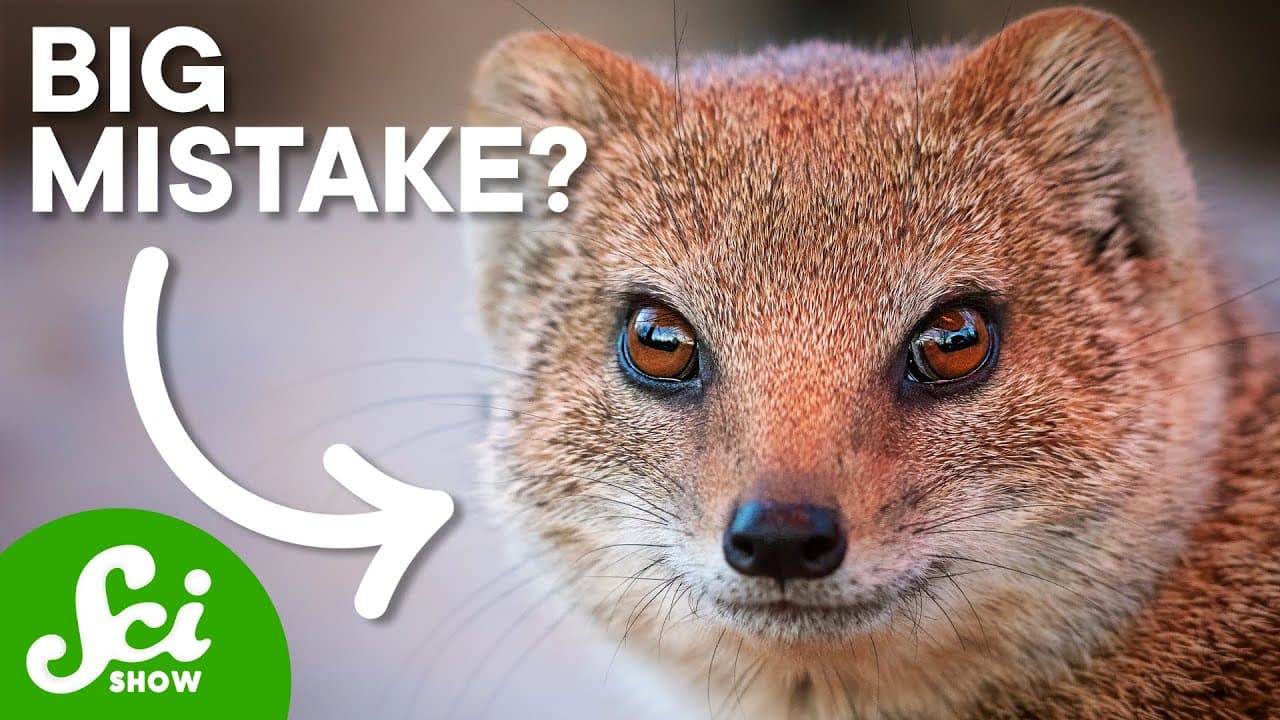
Thanks to Brilliant for supporting this SciShow video! As a SciShow viewer, you can keep building your STEM skills with a 30 day free trial and 20% off an annual premium subscription at Brilliant.org/SciShow. [♪ INTRO] Look at this cute, adorable, fuzzy little mongoose. It is a horrendous pest and a nuisance and anyone who lives in Hawai’... Read More
Key Insights
- 🎮 Biological control is a controversial method of pest control, with successes and failures.
- 🎮 Modern biological control practices are more regulated and thorough, requiring risk assessments and testing.
- 🎮 While biological control can be effective in certain cases, it should be approached with caution and careful consideration of potential risks.
Install to Summarize YouTube Videos and Get Transcripts
Explore YouTube Video Summarizer or Get YouTube Transcript Extractor
Questions & Answers
Q: What is biological control?
Biological control is a strategy that involves introducing predators or disease-causing pathogens to control invasive species populations.
Q: Why is biological control preferred over pesticides?
Biological control is often considered cost-effective and self-sustaining because the introduced predators can reproduce and maintain population levels without continuous human intervention.
Q: What are some examples of successful biological control?
Examples include the use of cactus moths to control prickly pear cactus, ladybugs and flies to save the California citrus industry, and the control of the cassava mealybug in sub-Saharan Africa.
Q: What are the risks of biological control?
Biological control can have negative consequences, such as the unintended predation on native species, the spread of control agents beyond the release area, and the potential for control agents themselves to become invasive species.
Summary & Key Takeaways
-
Introduction to the concept of biological control as a method to control invasive species by introducing new predators to an ecosystem.
-
Examples of successful biological control, such as the use of cactus moths to control the prickly pear cactus in Hawaii, and the use of ladybugs and flies to save the California citrus industry.
-
Examples of failed biological control, including the introduction of mongooses to Hawaii, which led to the decline of native species.
Read in Other Languages (beta)
Share This Summary 📚
Summarize YouTube Videos and Get Video Transcripts with 1-Click
Try YouTube Summary with ChatGPT & Claude or YouTube Transcript Generator
Explore More Summaries from SciShow 📚
Summarize YouTube Videos and Get Video Transcripts with 1-Click
Try YouTube Summary with ChatGPT & Claude or YouTube Transcript Generator