How Do Monopolies Maximize Profit?
TL;DR
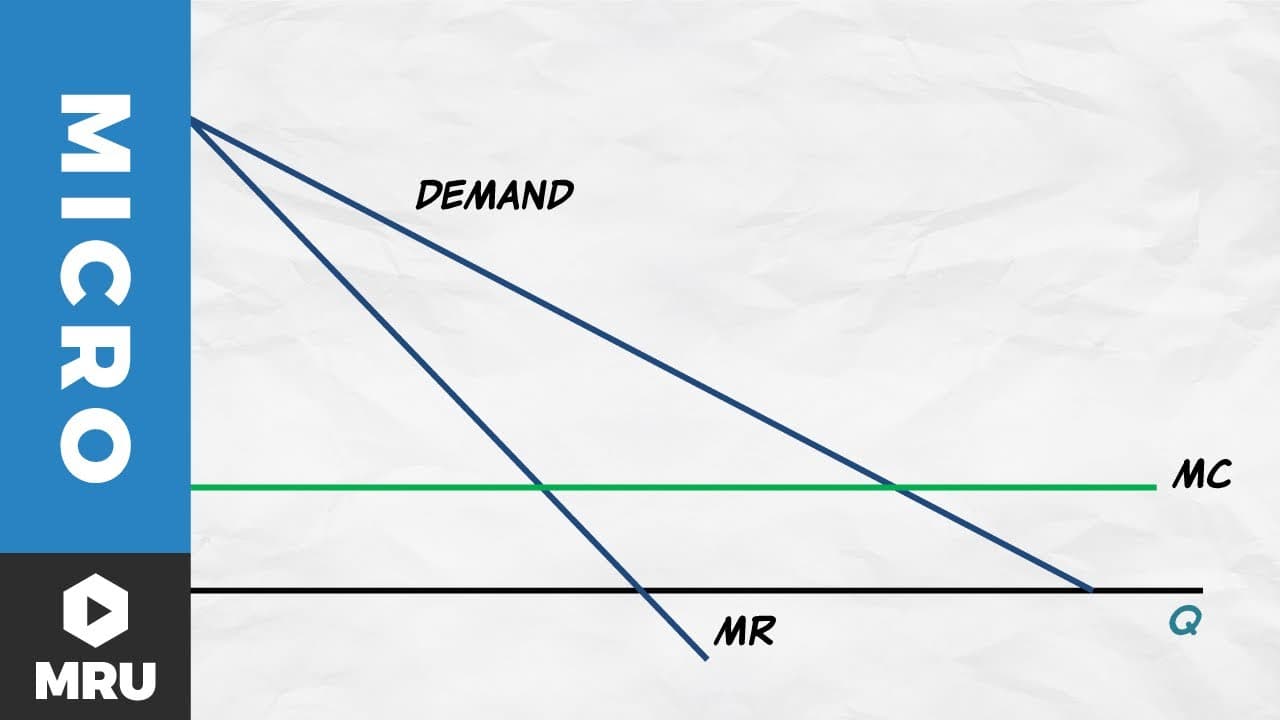
Monopolies maximize profit by setting output where marginal revenue equals marginal cost, allowing them to charge a higher price than in competitive markets. Market power, derived from unique goods and barriers to entry like patents, enables firms to raise prices above marginal cost, as seen with AIDS drugs in the U.S. versus India.
Transcript
♪ [music] ♪ - [Prof. Alex Tabarrok] Monopoly. It's not just a game. In this video we'll talk about how a firm uses market power to maximize profit. We'll begin with a controversial example. This is the AIDS virus. Worldwide, it has killed more than 36 million people. In the United States, however, AIDS is no longer the death sentence that it once w... Read More
Key Insights
- Monopolies have market power, allowing them to set prices above marginal cost.
- Patents create barriers to entry, granting firms like GSK exclusive rights to sell drugs like Combivir.
- In competitive markets, prices fall to marginal cost, unlike in monopolistic markets.
- Marginal revenue for a monopolist is less than the price due to the downward-sloping demand curve.
- The profit-maximizing output is where marginal revenue equals marginal cost.
- For linear demand curves, the marginal revenue curve is twice the slope of the demand curve.
- Monopolists determine the highest price consumers are willing to pay from the demand curve.
- Market power results from unique goods and barriers such as patents and economies of scale.
Install to Summarize YouTube Videos and Get Transcripts
Explore YouTube Video Summarizer or Get YouTube Transcript Extractor
Questions & Answers
Q: How do monopolies maximize profit?
Monopolies maximize profit by producing at the level of output where marginal revenue equals marginal cost. This allows them to set prices higher than in competitive markets, as they face a downward-sloping demand curve and can control market supply and price due to barriers like patents.
Q: What is market power in the context of monopolies?
Market power refers to a firm's ability to raise prices above marginal cost without losing customers to competitors. This power is often derived from barriers to entry, such as patents, exclusive access to resources, or economies of scale, allowing monopolies to dominate the market.
Q: Why are AIDS drugs like Combivir expensive in the U.S.?
AIDS drugs like Combivir are expensive in the U.S. due to patent protections that give companies like GSK monopoly power. This allows them to set prices significantly above marginal cost, unlike in countries like India, where patents are not recognized, and competitive markets drive prices down.
Q: What role do patents play in creating monopolies?
Patents create legal barriers to entry by granting exclusive rights to produce and sell a product, as seen with drugs like Combivir. This exclusivity prevents competitors from entering the market, allowing the patent holder to maintain monopoly power and set higher prices.
Q: How do monopolists determine the profit-maximizing price?
Monopolists determine the profit-maximizing price by finding the level of output where marginal revenue equals marginal cost, then using the demand curve to identify the highest price consumers are willing to pay for that output level, ensuring maximum profitability.
Q: What is the relationship between marginal revenue and price for monopolists?
For monopolists, marginal revenue is always less than the price due to the downward-sloping demand curve. This occurs because selling additional units requires lowering the price on all units sold, reducing the marginal revenue compared to the price.
Q: How does the demand curve affect monopolistic pricing?
The demand curve affects monopolistic pricing by determining the maximum price consumers are willing to pay for each quantity of output. Monopolists use this information to set prices at the profit-maximizing output level, where marginal revenue equals marginal cost.
Q: Why are prices lower in competitive markets compared to monopolistic ones?
Prices are lower in competitive markets because numerous firms compete, driving prices down to marginal cost. In monopolistic markets, barriers to entry prevent competition, allowing monopolists to set prices above marginal cost and maintain higher profitability.
Summary & Key Takeaways
-
Monopolies maximize profit by producing where marginal revenue equals marginal cost, allowing them to set prices higher than in competitive markets. This is evident in the U.S. market for AIDS drugs like Combivir, where patents grant exclusive selling rights and create market power.
-
Market power in monopolies arises from barriers to entry, such as patents and economies of scale, which prevent competitors from entering the market. This allows monopolists to set prices above marginal cost, as demonstrated by the price disparity of Combivir between the U.S. and India.
-
Linear demand curves help illustrate monopolistic pricing strategies, where the marginal revenue curve has twice the slope of the demand curve. Monopolists use this to determine the profit-maximizing output and price, ensuring marginal revenue equals marginal cost.
Read in Other Languages (beta)
Share This Summary 📚
Summarize YouTube Videos and Get Video Transcripts with 1-Click
Try YouTube Summary with ChatGPT & Claude or YouTube Transcript Generator
Explore More Summaries from Marginal Revolution University 📚

Summarize YouTube Videos and Get Video Transcripts with 1-Click
Try YouTube Summary with ChatGPT & Claude or YouTube Transcript Generator