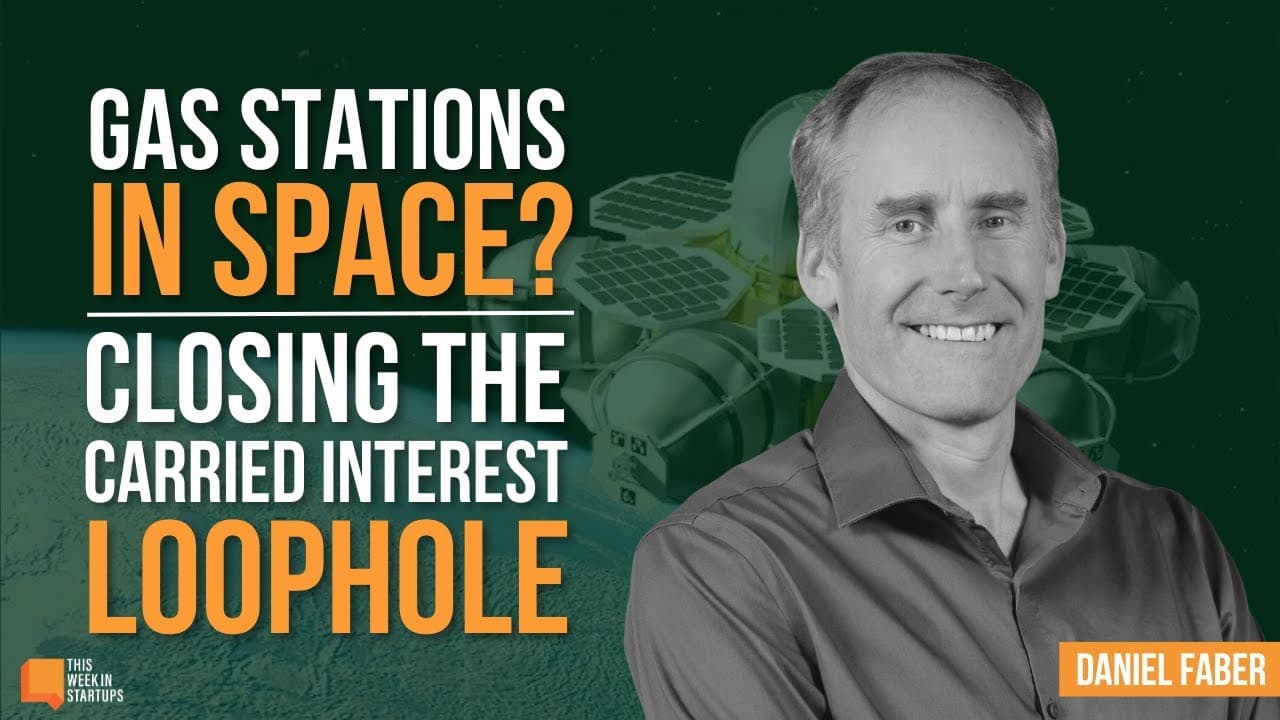
Gas Stations in Space and Carried Interest on the Chopping Block | 2082
TL;DR
The startup landscape is evolving rapidly with AI-driven growth and changes in tax regulations affecting venture capital.
Transcript
if they put $150 million check in mubadala and general Catalyst each let's say they split it sure that would be a very big check size you can't put that into series a that's 10 series A's you know or 20 series A's that's 50 seed rounds well you might be able to put into an AI series a but any other normal non- aai Foundation model company series a ... Read More
Key Insights
- 🍰 The integration of AI in startups is causing exponential growth, with companies rapidly scaling their operations and achieving significant revenue within shorter timeframes.
- 👶 Changes in tax policy surrounding carried interest could have lasting effects on the venture capital industry, discouraging new entrants and altering investment strategies.
- 👻 Secondary funding rounds are gaining prominence as a financing option, allowing startups to provide liquidity to early investors while avoiding IPO pressures.
- ☠️ Companies like Deal exemplify how startups can successfully attract substantial investment while maintaining impressive growth rates and profitability.
- 👾 The space industry is seeing robust hiring, with a high demand for engineers and technical professionals as innovations in space refueling and exploration advance.
- 😀 Tech employment is facing stagnation, with many firms laying off employees amidst a strategic shift towards automation and cost reduction driven by economic pressures.
- 💗 The collaboration between UAE and France on data centers reflects a growing recognition of the energy potential in nuclear power and its role in supporting technological infrastructure.
Install to Summarize YouTube Videos and Get Transcripts
Explore YouTube Video Summarizer or Get YouTube Transcript Extractor
Questions & Answers
Q: How has AI impacted startup growth recently?
AI technology has significantly increased the speed at which startups can scale. Traditional companies might take years to reach major revenue thresholds, whereas AI-centric companies can achieve similar milestones in a fraction of that time due to lower entry costs and rapid market adoption.
Q: What are the concerns regarding the carried interest exemption?
The potential removal of the carried interest exemption could result in venture capitalists paying income tax rates instead of capital gains, effectively lowering their profits. Such changes might deter individuals from pursuing careers in venture capital, leading to reduced investment in startups.
Q: What is the significance of secondary funding for startups?
Secondary funding allows early investors to sell their shares, providing liquidity and confirming the company’s valuation. The successful execution of such deals can indicate confidence in the startup's future growth and reduce pressure to go public prematurely.
Q: How are companies like Deal transforming the fundraising landscape?
Deal's recent secondary funding round demonstrates an evolving strategy where startups seek liquidity options without resorting to IPOs. By working with sovereign wealth funds and established investors, companies can secure needed capital while maintaining favorable valuations.
Q: What roles are currently available in the space startup industry?
The space startup sector is actively hiring mechanical engineers, software developers, and professionals in finance and HR. As this industry grows, opportunities are emerging, reflecting a burgeoning demand for talent to support new advancements in space technologies.
Q: How might the potential tax changes affect the venture capital landscape?
If the carried interest loophole is closed, venture capitalists may see reduced returns due to higher tax rates, leading some to reconsider their career choices and the viability of funding startups, which could ultimately slow investment levels.
Q: What is the future outlook for tech employment in the U.S.?
Recent trends indicate a plateau or decline in job growth within the tech sector, attributable to company layoffs and restructuring focused on efficiency. This narrative may persist as companies adapt to changing market demands and seek to integrate AI technologies.
Q: How does the shift in the startup ecosystem reflect broader economic trends?
The startup ecosystem is responding to macroeconomic factors, including inflation and investor expectations, that shape decisions regarding funding, employee retention, and market strategy, highlighting the adaptive nature of entrepreneurship in times of uncertainty.
Summary & Key Takeaways
-
The recent surge in AI technology has accelerated startup growth, enabling companies to achieve major revenue milestones much quicker than traditional businesses, marking a notable shift in the industry.
-
Changes in tax regulations, particularly the potential elimination of the carried interest exemption, may discourage new investments in startups and venture capital, leading to fewer entrepreneurs entering the space.
-
Companies like Deal are exploring secondary funding avenues, signaling investor confidence despite market fluctuations; however, the lack of IPOs may stifle new opportunities in the public market.
Read in Other Languages (beta)
Share This Summary 📚
Summarize YouTube Videos and Get Video Transcripts with 1-Click
Try YouTube Summary with ChatGPT & Claude or YouTube Transcript Generator
Explore More Summaries from This Week in Startups 📚






Summarize YouTube Videos and Get Video Transcripts with 1-Click
Try YouTube Summary with ChatGPT & Claude or YouTube Transcript Generator