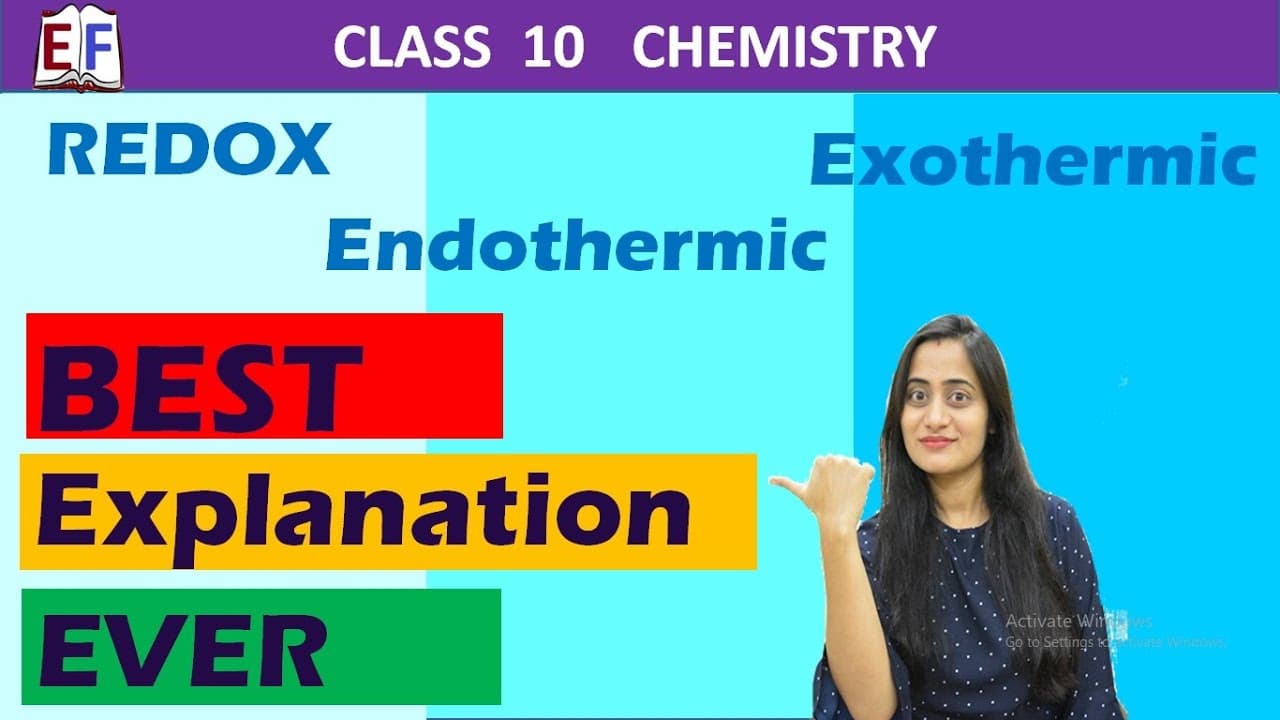
Redox Reaction | Endothermic Reactions | Exothermic Reaction #4
TL;DR
This video explains the different types of chemical reactions, such as endothermic, exothermic, and redox reactions, and their significance in our daily lives.
Transcript
not only the five types of reactions there are many different types of chemical reactions that keep taking place in and around our life in so many ways some of the reactions like endothermic reaction exothermic reaction redox reactions they play a very key role in our day-to-day life and that is why we will dedicate this video to some of these very... Read More
Key Insights
- 🖐️ Chemical reactions play a significant role in our daily lives.
- 🥵 Endothermic reactions absorb heat energy, while exothermic reactions release heat energy.
- 💁 Combustion reactions and reactions involving the formation of calcium carbonate are examples of exothermic reactions.
- 🥵 Endothermic reactions require heat as an input, such as the reaction of magnesium with oxygen.
- 😋 Respiration is an exothermic reaction that involves the oxidation of food to release energy and heat.
- ❓ Redox reactions involve both reduction and oxidation occurring simultaneously.
- 🛟 Examples of redox reactions in everyday life include the rusting of iron and preventing rancidification by using airtight containers.
Install to Summarize YouTube Videos and Get Transcripts
Explore YouTube Video Summarizer or Get YouTube Transcript Extractor
Questions & Answers
Q: What is the difference between endothermic and exothermic reactions?
Endothermic reactions absorb heat energy, while exothermic reactions release heat energy. In endothermic reactions, heat is taken in as an input for the reaction to occur, while exothermic reactions give out heat as a result of the reaction.
Q: Why is respiration considered an exothermic reaction?
Respiration is considered an exothermic reaction because it involves the oxidation of food, which releases energy and heat. Breathing is only a part of external respiration, while internal respiration involves the oxidation of food to release energy and heat.
Q: What is a redox reaction?
A redox reaction is a type of reaction where both reduction and oxidation occur simultaneously. Reduction involves the gain of oxygen or hydrogen, while oxidation involves the loss of oxygen or hydrogen. Redox reactions are also known as reduction-oxidation reactions.
Q: Can you give examples of redox reactions in everyday life?
Corrosion, such as the rusting of iron, is an example of a redox reaction. When iron articles are exposed to air or moisture, they undergo oxidation and combine with oxygen to form iron oxide (rust). Another example is preventing rancidification by using airtight containers to prevent oxidation of food items and the unpleasant smell associated with it.
Summary & Key Takeaways
-
The video discusses the meaning of endothermic and exothermic reactions, highlighting that endothermic reactions absorb heat while exothermic reactions release heat.
-
Examples of exothermic reactions include combustion reactions, where heat energy is given out, and reactions like calcium oxide combining with carbon dioxide to form calcium carbonate and heat energy.
-
Examples of endothermic reactions include magnesium combining with oxygen, which requires heat as input, and the process of respiration, which is an example of exothermic reaction as it releases energy and heat.
Read in Other Languages (beta)
Share This Summary 📚
Summarize YouTube Videos and Get Video Transcripts with 1-Click
Try YouTube Summary with ChatGPT & Claude or YouTube Transcript Generator
Explore More Summaries from LearnoHub - Class 11, 12 📚


Summarize YouTube Videos and Get Video Transcripts with 1-Click
Try YouTube Summary with ChatGPT & Claude or YouTube Transcript Generator