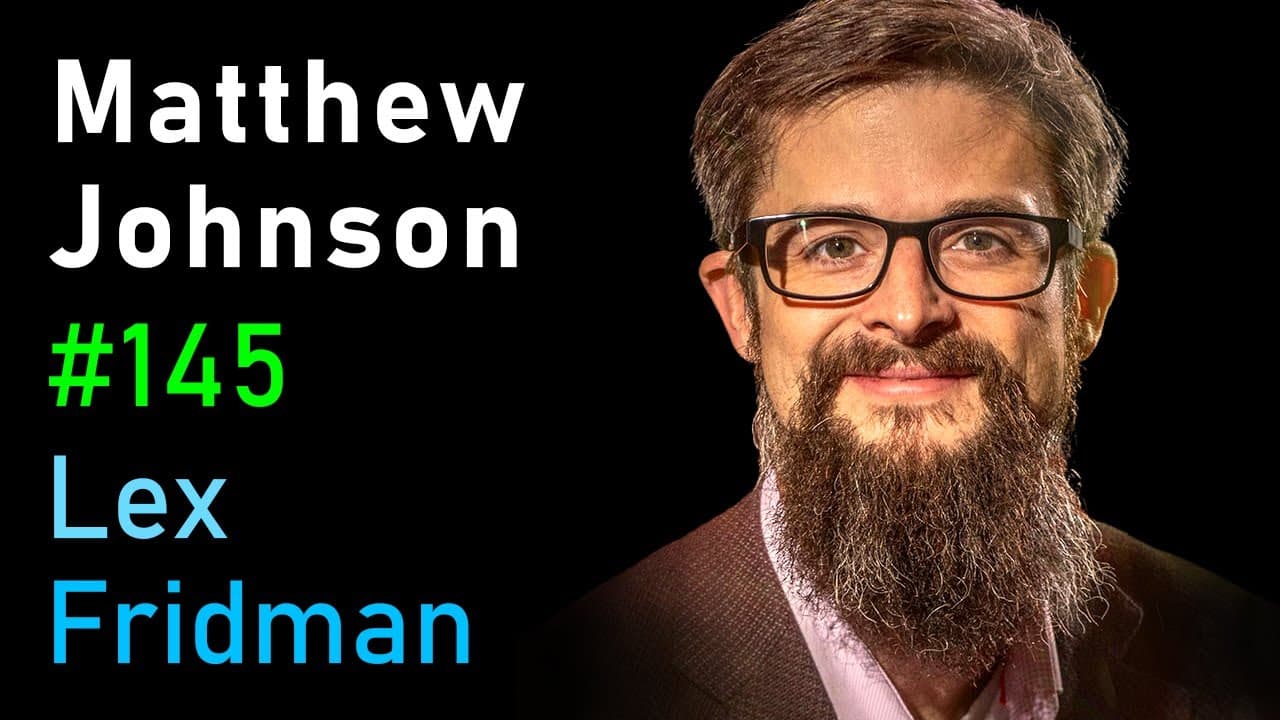
Matthew Johnson: Psychedelics | Lex Fridman Podcast #145
TL;DR
Psychedelics like psilocybin and LSD significantly alter perception and self-awareness by interacting with the brain's serotonin receptors. Research shows potential therapeutic uses for mental health issues, but further studies are necessary to understand both their benefits and risks.
Transcript
the following is a conversation with matthew johnson a professor of psychiatry and behavioral science at john hopkins and is one of the top scientists in the world conducting seminal research on psychedelics this was one of the most eye-opening and fascinating conversations i've ever had on this podcast i'm sure i'll talk with matt many more times ... Read More
Key Insights
- 🔬 Research on psychedelics: The conversation highlights the growing interest in studying psychedelics and their potential therapeutic applications. There is a need for more rigorous scientific research in this field.
- 🌌 Broad range of psychedelics: Psychedelics can be classified into different categories based on their chemical structure, such as phenethylamines, tryptamines, and ergolines. However, classification based on their receptor activity is considered more meaningful.
- 🍄 Classic psychedelics: Classic psychedelics, such as psilocybin, LSD, DMT, and mescaline, work by hitting the serotonin 2A receptor, leading to alterations in one's sense of reality and self. These compounds have strong effects and are considered relatively safe at physiological levels.
- 💊 MDMA as a psychedelic: MDMA, although considered a psychedelic, works differently pharmacologically compared to classic psychedelics. It is commonly used to enhance feelings of empathy and connection with others but can be physiologically riskier and potentially addictive.
- 🧠 Chemical interactions in the brain: The major effects of psychedelics are caused by receptor-level events and alterations in neurotransmission. These compounds mimic or interact with neurotransmitters in specific ways, leading to changes in perception and consciousness.
- 🌿 Natural vs. synthetic psychedelics: Classic psychedelics can be found in natural sources, such as mushrooms and cacti, but can also be synthesized in the lab. The safety and physiological effects may differ between natural and synthetic compounds.
- 🎢 Intense experiences with high-dose psychedelics: High doses of psychedelics, particularly DMT and 5-methoxy DMT, can lead to intense and profound experiences, including encounters with entities and altered perceptions of reality. These experiences can be difficult to describe and often leave a lasting impact on individuals.
- 🧠 Expansion of the mind: Psychedelics are believed to expand one's range of experiences and consciousness. They may allow individuals to challenge their preconceived notions and tap into different psychological mechanisms, leading to novel ways of thinking and problem-solving.
- 🚬 Addiction and behavioral economics: Addiction involves the competition between different rewards and consequences. Behavioral economic models, such as demand curve analysis and delay discounting, can help understand addictive behaviors and the decision-making processes involved.
- 🔒 Need for rigorous research: More scientific studies are required to explore the therapeutic potential of psychedelics, as well as their impact on problem-solving, creativity, and paradigm-shifting thinking. The integration of different research approaches, including psychological, neuroscientific, and economic perspectives, can help advance our understanding of these substances.
- 🎙️ More videos with Matthew Johnson:
Install to Summarize YouTube Videos and Get Transcripts
Explore YouTube Video Summarizer or Get YouTube Transcript Extractor
Questions & Answers
Q: What are some common categories of psychedelics?
Psychedelics can be classified into categories based on their chemical structure or their receptor activity. Phenethylamines, tryptamines, and ergolines are some common categories based on chemical structure. Serotonin 2A receptor agonists, such as psilocybin and LSD, are another category based on receptor activity.
Q: What sets classic psychedelics apart from other psychoactive substances?
Classic psychedelics, such as psilocybin and LSD, are unique in that they have strong effects on altering one's sense of reality and self. They work by activating serotonin 2A receptors in the brain, which leads to profound subjective experiences. Unlike many other psychoactive substances, classic psychedelics are not addictive and have a relatively high level of physiological safety.
Q: How do psychedelics alter perception and consciousness?
Psychedelics primarily act at the receptor level in the brain, impacting neurotransmission and signaling pathways. By activating serotonin receptors, they enhance communication between different brain regions and alter the filtering and processing of sensory information. This leads to profound changes in perception, including intensified sensory experiences, synesthesia, and altered states of consciousness.
Q: What potential therapeutic benefits do psychedelics offer?
Psychedelics, particularly psilocybin and LSD, have shown promising results in the treatment of mental health disorders. Studies suggest they can help reduce symptoms of depression, anxiety, addiction, and PTSD. The subjective experience induced by psychedelics may promote self-reflection, emotional processing, and the restructuring of neural pathways, leading to long-lasting positive changes in mental health.
Summary
In this conversation with Matthew Johnson, a professor of psychiatry and behavioral science at John Hopkins and a top scientist in psychedelic research, they discuss the different types of psychedelics, their effects on the brain, and the potential for therapeutic and creative use. They explore topics such as ego loss experiences, expanded perception of reality, and the relationship between psychedelic experiences and first principles thinking.
Questions & Answers
Q: What are psychedelics, and how can they be categorized?
Psychedelics can be categorized by their chemical structure, such as phenethylamines, tryptamines, and ergolines. However, a more meaningful way to classify them is based on their pharmacological activity and receptor activity.
Q: Which compounds are considered classic psychedelics?
Classic psychedelics include psilocybin and psilocin (found in mushrooms), LSD, DMT (also found in ayahuasca), and mescaline (found in peyote and San Pedro cactus). These substances primarily act as agonists at the serotonin 2A receptor, producing altered states of reality and self.
Q: Do psychedelics only interact with neurotransmitters in the brain?
Yes, as far as we know, the major psychedelic effects occur through receptor-level events involving neurotransmitters like serotonin. These compounds mimic or act on serotonin receptors in different ways, leading to altered neuronal signaling pathways.
Q: Are psychedelics mostly natural or artificially manufactured?
Classic psychedelics are found naturally in various plants and fungi. For example, psilocybin is found in mushrooms, while mescaline is found in cacti. However, compounds like LSD are considered semi-synthetic since they are derivatives of natural substances.
Q: Are psychedelics safe to use?
Classic psychedelics like psilocybin and LSD are considered remarkably safe at the physiological level. There is no known lethal overdose, and they do not cause organ damage or affect the brainstem's functions. However, there is a risk of behavioral toxicity, such as engaging in dangerous activities while under the influence.
Q: How do psychedelics differ from other psychoactive drugs?
One key difference is that classic psychedelics are not addictive, unlike substances like cocaine or alcohol. They do not typically lead to daily use patterns or self-control issues. Additionally, their effects extend beyond altering one's sense of reality to include profound experiences of self and enhanced perception.
Q: What role do psychedelics play in altering perception and self-awareness?
Psychedelics, particularly classic psychedelics, have strong effects on altering perception and self-awareness. They can induce ego loss experiences, where individuals feel a profound dissolution of their sense of self. These compounds expand one's range of experiences and challenge deep-seated assumptions and beliefs.
Q: How does language and prior knowledge influence psychedelic experiences?
Language and prior knowledge play a significant role in shaping one's psychedelic experiences. The language and concepts one brings to the experience can influence the interpretation of the journey. Prior knowledge in fields like physics can lead to metaphors and visualizations related to those concepts, altering one's perceptions during the experience.
Q: Can psychedelics facilitate first principles thinking or paradigm shifting?
Psychedelics have the potential to facilitate first principles thinking and paradigm shifting. They can temporarily reduce the influence of priors and entrenched ways of thinking, allowing for greater mental flexibility and openness. However, rigorous research is needed to understand and systematically harness this potential.
Q: Which psychedelics show promise for therapeutic use?
Psilocybin and LSD are the most widely studied psychedelics for therapeutic use. Current research focuses on their benefits for treating mental disorders like depression, addiction, and PTSD. More research is needed to understand the therapeutic effects comprehensively.
Q: What is the nature of a DMT experience, and how can it be understood?
DMT is a powerful psychedelic that can induce extraordinary experiences. It is typically smoked or vaporized in multiple hits, leading to an intense alteration of reality and perception. Many people report encounters with autonomous entities and receive information that seems impossible to grasp but feels self-validating. The experience is otherworldly and often defies concrete description.
Summary & Key Takeaways
-
Psychedelics, such as psilocybin and LSD, are chemical compounds that can drastically alter one's sense of reality and self.
-
These substances work by interacting with the brain's serotonin receptors and have effects on perception, cognition, and emotions.
-
Research suggests that psychedelics have potential therapeutic uses for mental health disorders such as addiction, depression, and PTSD.
Read in Other Languages (beta)
Share This Summary 📚
Summarize YouTube Videos and Get Video Transcripts with 1-Click
Try YouTube Summary with ChatGPT & Claude or YouTube Transcript Generator
Explore More Summaries from Lex Fridman Podcast 📚





Summarize YouTube Videos and Get Video Transcripts with 1-Click
Try YouTube Summary with ChatGPT & Claude or YouTube Transcript Generator