The Car Market Is About To IMPLODE
TL;DR
Technology disruptions are driven by declining costs and improved capabilities, leading to the outperformance of new technologies over older ones.
Transcript
let's start with how to understand how disruptions happen let's start with technology cost curves so back in 2014 I published a book called clean disruption of energy and transportation and they published this exact cost curve for Lithium-ion batteries out to 2030. you can't imagine how it was trolled for publishing that 125 dollars per kilowatt ho... Read More
Key Insights
- 🤑 Technology disruptions are driven by declining costs and improved capabilities, leading to the outperformance of new technologies over older ones.
- ⌛ Disruptions follow a predictable pattern, with cost declines being consistent and predictable over time.
- 🥺 Solar photovoltaics, wind turbines, electric chemical batteries, and artificial intelligence are all experiencing disruptions, leading to decreased costs and increased productivity.
- 😋 Disruptions in the energy, transportation, food, and labor sectors will result in significant changes and improvements in the global economy.
- 😀 Legacy automotive manufacturers and experts in the field are facing the risk of bankruptcy due to their late adoption of electric vehicles and failure to understand disruption patterns.
- ❓ Disruptions provide a great opportunity to address environmental challenges and accelerate sustainability efforts.
- 👻 Predictable cost improvements in new technologies allow for more accurate predictions and long-term planning.
Install to Summarize YouTube Videos and Get Transcripts
Explore YouTube Video Summarizer or Get YouTube Transcript Extractor
Questions & Answers
Q: What is the main driver of disruptions in technology?
Disruptions occur when new technologies offer the same or better capabilities as older technologies at a fraction of the cost, leading to their widespread adoption.
Q: Is disruption a linear process?
No, disruptions typically follow an S-curve adoption pattern, starting with exponential growth and eventually capturing the entire market within 15 years. This pattern is driven by feedback loops between cost improvements, demand, and investment.
Q: How do disruptions impact industries and technologies?
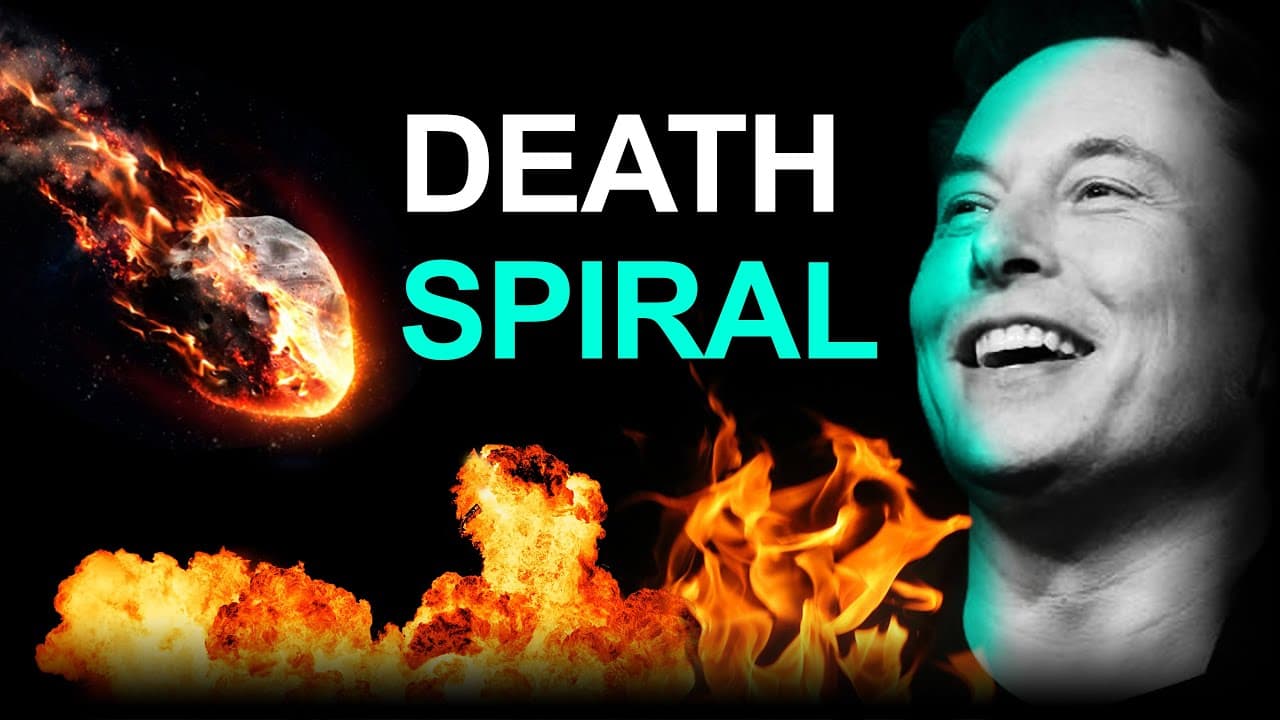
Disruptions lead to a virtuous cycle for the new technology, with decreasing costs, increasing demand, and support from the public and government. On the other hand, the old technologies experience a death spiral with declining demand, higher costs, and shrinking profits.
Q: What sectors are experiencing disruptions?
The energy, transportation, food, and labor sectors are all experiencing disruptions due to advancements in technologies such as solar photovoltaics, wind turbines, electric chemical batteries, and artificial intelligence.
Summary & Key Takeaways
-
Disruptions occur when new technologies offer better capabilities at a fraction of the cost compared to older technologies, leading to their outperformance.
-
Historical data shows that disruptions follow a predictable pattern, with cost declines being consistent and predictable over time.
-
Solar photovoltaics, wind turbines, electric chemical batteries, and artificial intelligence are all following textbook cost curves, indicating disruptions in the energy, transportation, and labor sectors.
-
Disruptions in these sectors will result in decreased costs, increased productivity, and improved environmental sustainability.
Read in Other Languages (beta)
Share This Summary 📚
Summarize YouTube Videos and Get Video Transcripts with 1-Click
Try YouTube Summary with ChatGPT & Claude or YouTube Transcript Generator
Explore More Summaries from Solving The Money Problem 📚



Summarize YouTube Videos and Get Video Transcripts with 1-Click
Try YouTube Summary with ChatGPT & Claude or YouTube Transcript Generator