What Everyone Gets Wrong About Global Debt | Economics Explained
TL;DR
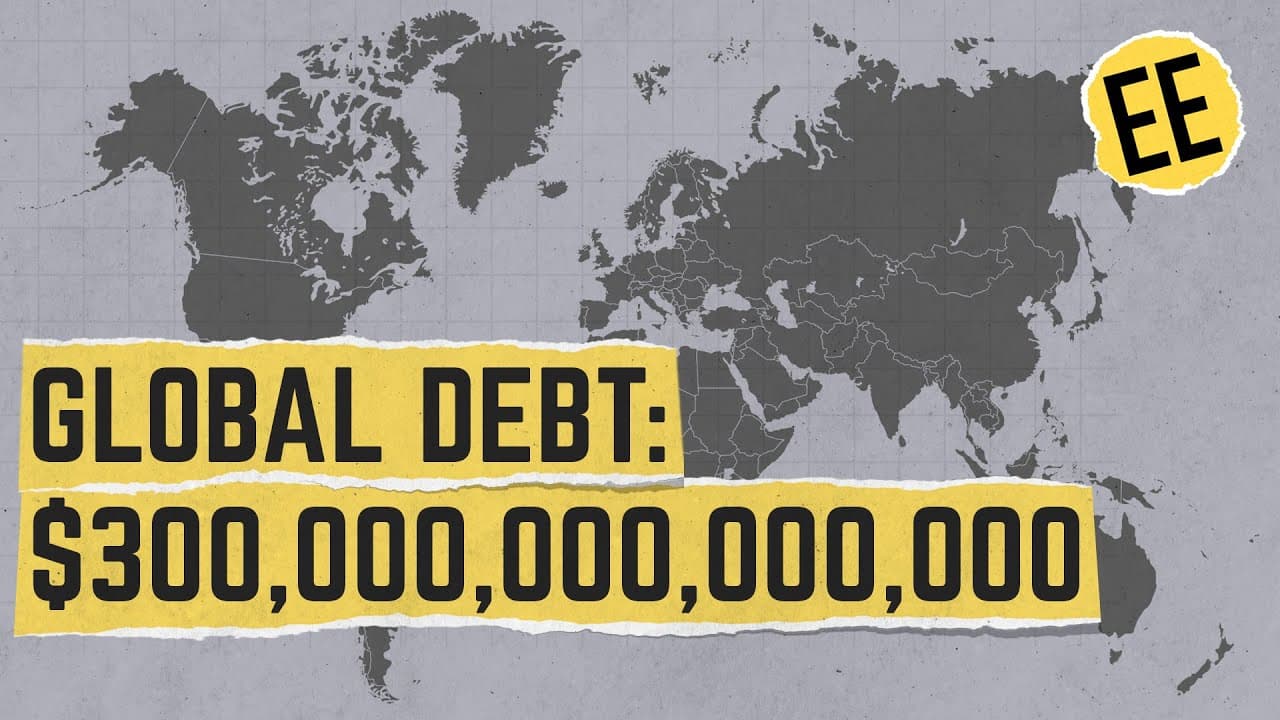
Global debt exceeds $300 trillion, with complex implications and sustainability concerns.
Transcript
the USA currently has 31.5 trillion dollars in public debt just held by the federal government alone which doesn't even include the roughly 3.2 trillion dollars in state debt or the 17.1 trillion dollars in household debt well the 24 trillion dollars in corporate debts that's also just the USA which is the world's largest and simultaneously most in... Read More
Key Insights
- Global debt is over $300 trillion, nearly three times the global GDP, raising concerns about sustainability and economic impact.
- Debt functions differently at global and individual levels, with global debt often viewed as borrowing from the future rather than external entities.
- Economists use GDP ratios to assess debt impact, but asset values and global net worth provide a broader perspective on economic health.
- Global assets were valued at around one quadrillion dollars in 2021, suggesting a net worth of approximately $700 trillion after debt.
- Governments, businesses, and households are the primary debt holders, with differing purposes for debt, affecting economic growth and stability.
- Debt cycles, influenced by confidence and economic conditions, create booms and busts, with governments playing a counter-cyclical role.
- Investments in infrastructure and education are crucial for leveraging debt to expand economic capacity and ensure future wealth.
- Real estate dominates global assets, raising concerns about non-productive investment and its impact on economic output and growth.
Install to Summarize YouTube Videos and Get Transcripts
Explore YouTube Video Summarizer or Get YouTube Transcript Extractor
Questions & Answers
Q: What is the current global debt level?
The current global debt level is over $300 trillion, which is nearly three times the global GDP. This figure includes various types of debt, such as government, corporate, household, and state debts, and raises concerns about its long-term sustainability and economic impact.
Q: How does global debt differ from individual debt?
Global debt differs from individual debt in that it is not borrowed from an external entity but rather seen as borrowing from the future. The global economy's debt is a balance of liabilities and assets within itself, unlike individual debt, which involves borrowing from another party and repaying over time.
Q: Why do economists use GDP ratios to assess debt?
Economists use GDP ratios to assess debt because it provides a relative measure of debt's impact on an economy's output. While GDP ratios are useful, they can be misleading without considering global asset values and net worth, which offer a more comprehensive view of economic health.
Q: What is the estimated value of global assets?
The estimated value of global assets in 2021 was around one quadrillion US dollars. This value includes a wide range of assets, from real estate to stocks and cryptocurrencies, suggesting a global net worth of approximately $700 trillion after accounting for global debt.
Q: Who are the primary holders of global debt?
The primary holders of global debt are governments, businesses, and households. These entities use debt for various purposes, such as consumption, investment, and infrastructure development, each affecting economic growth and stability in different ways.
Q: What role do governments play in the debt cycle?
Governments play a counter-cyclical role in the debt cycle, aiming to stabilize the economy by taxing more and spending less during booms and spending more and taxing less during busts. This approach helps manage economic fluctuations and maintain stability during different phases of the debt cycle.
Q: Why is investment in infrastructure and education important?
Investment in infrastructure and education is crucial because it expands a country's productive capacity, creating more value than the debt requires in repayments. Such investments boost economic growth, enhance future wealth, and ensure that debt contributes positively to long-term economic stability.
Q: What concerns arise from investment in real estate?
Investment in real estate raises concerns because it often involves non-productive assets that do not directly increase economic output. While real estate value has appreciated significantly, this investment can detract from more productive investments, potentially stalling economic growth and reducing the overall efficiency of the global economy.
Summary & Key Takeaways
-
The video explores the complexity of global debt, highlighting its magnitude, differences from individual debt, and its implications for the global economy. It emphasizes the importance of understanding debt functions at various levels to assess its sustainability.
-
Global debt exceeds $300 trillion, nearly three times the global GDP, raising concerns about its sustainability. However, global assets valued at one quadrillion dollars provide a broader perspective, suggesting a net worth of $700 trillion.
-
Governments, businesses, and households hold most global debt, using it for consumption, investment, and infrastructure. Debt cycles create economic booms and busts, with governments playing a counter-cyclical role to stabilize economies.
Read in Other Languages (beta)
Share This Summary 📚
Summarize YouTube Videos and Get Video Transcripts with 1-Click
Try YouTube Summary with ChatGPT & Claude or YouTube Transcript Generator
Explore More Summaries from Economics Explained 📚






Summarize YouTube Videos and Get Video Transcripts with 1-Click
Try YouTube Summary with ChatGPT & Claude or YouTube Transcript Generator