What is the Automation Pyramid?
TL;DR
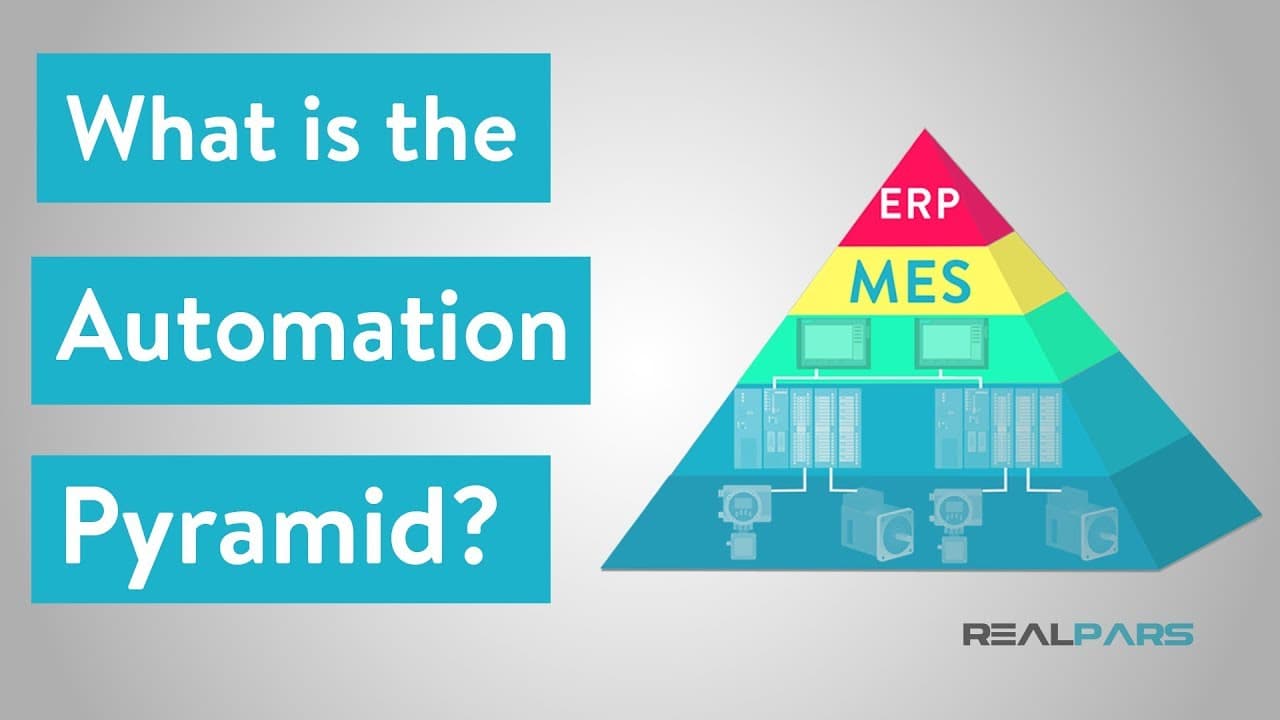
The automation pyramid visually represents the different levels of automation in a factory or industry, from field devices to management systems.
Transcript
Today, I will try to teach you about the Automation Pyramid. More specifically, the devices used to make up the automation pyramid. Before we get into today’s video, if you love our videos, be sure to click the like button below, and make sure to click subscribe and the bell to receive notifications of new RealPars videos. This way you never miss a... Read More
Key Insights
- 🔧 The automation pyramid is a visual representation of the different levels of automation in a factory or industry, and showcases how technology is integrated into industry.
- 🔌 The "field" level of the automation pyramid consists of devices, actuators, and sensors that are seen on the production floor and are responsible for physical work and monitoring.
- 🧰 The control level of the automation pyramid involves PLCs (Programmable Logic Controllers) and PIDs (Proportional-Integral-Derivative controllers) to control and run the devices in the field level.
- 🖥️ The supervisory level of the automation pyramid utilizes SCADA (Supervisory Control and Data Acquisition) systems, which allow for monitoring and control of multiple systems from a single location.
- 📊 The planning level of the automation pyramid involves the use of MES (Manufacturing Execution Systems) to monitor the entire manufacturing process and make decisions based on real-time data.
- 🏢 The management level of the automation pyramid utilizes ERP (Enterprise Resource Planning) systems, which integrate all levels of the business to promote efficiency and transparency.
- 💡 The utilization of the automation pyramid and technology in industry leads to increased automation, control, and efficiency in manufacturing processes.
- 📚 RealPars.com offers training material for individuals interested in learning PLC programming and entering the field of automation and controls engineering.
Install to Summarize YouTube Videos and Get Transcripts
Explore YouTube Video Summarizer or Get YouTube Transcript Extractor
Questions & Answers
Q: What is the purpose of the field level in the automation pyramid?
The field level in the automation pyramid consists of devices, actuators, and sensors on the production floor that perform the physical work and monitoring. These devices, such as electric motors and proximity switches, are responsible for moving machinery and detecting movement or certain materials. They are essential for the overall functioning of the automation system and play a crucial role in ensuring the smooth operation of the factory or industry.
Q: How do PLCs and PIDs contribute to the control level in the automation pyramid?
The control level in the automation pyramid relies on PLCs (Programmable Logic Controllers) and PIDs (Proportional-Integral-Derivative) to control and operate the devices at the field level. PLCs and PIDs take in information from sensors, switches, and other input devices, and make decisions on which outputs to activate based on the programmed task. PIDs help maintain variables within specific parameters, similar to how cruise control in a car maintains a set speed. These control devices ensure efficient and precise control of the automation system.
Q: What is the role of SCADA in the automation pyramid?
SCADA (Supervisory Control and Data Acquisition) is the technology utilized at the supervisory level of the automation pyramid. It combines the functionalities of the previous levels and enables centralized access to data and control of systems from a single location. SCADA often involves a graphical user interface (HMI) for remote control functions. It is commonly used in water plants to control remote water pumps, but it can also be utilized in other industries for efficient monitoring and control of multiple systems.
Q: How does the planning level contribute to manufacturing processes?
The planning level, which utilizes a computer management system called MES (Manufacturing Execution System), is responsible for monitoring the entire manufacturing process in a plant or factory. It provides a comprehensive view of the process, from raw materials to the finished product, and allows management to make decisions based on real-time data. MES enables adjustments to raw material orders or shipment plans based on the information gathered from the automation system. This level of oversight enhances efficiency and decision-making in manufacturing operations.
Q: What is the purpose of the management level in the automation pyramid?
The management level, represented by the company's integrated management system called ERP (Enterprise Resource Planning), allows top management to oversee and control all aspects of the company's operations. ERP is a suite of computer applications that provides a comprehensive view of various business functions, including manufacturing, sales, purchasing, finance, and payroll. It integrates the technology from the previous levels and provides transparency and efficiency by keeping all departments and levels of the business on the same page.
Summary & Key Takeaways
-
The automation pyramid is a visual representation of the levels of automation in a factory or industry, from the field level to the management level.
-
The field level consists of devices, actuators, and sensors on the production floor that do the physical work and monitoring.
-
The control level utilizes PLCs and PIDs to control and run the devices at the field level, making decisions based on input from sensors and switches.
-
The supervisory level uses SCADA to access data and control systems from a single location, and the planning level uses MES to monitor the entire manufacturing process.
-
The management level utilizes ERP to see and control operations across the company.
Read in Other Languages (beta)
Share This Summary 📚
Summarize YouTube Videos and Get Video Transcripts with 1-Click
Try YouTube Summary with ChatGPT & Claude or YouTube Transcript Generator
Explore More Summaries from RealPars 📚
Summarize YouTube Videos and Get Video Transcripts with 1-Click
Try YouTube Summary with ChatGPT & Claude or YouTube Transcript Generator