History 101: The Protestant Reformation | National Geographic
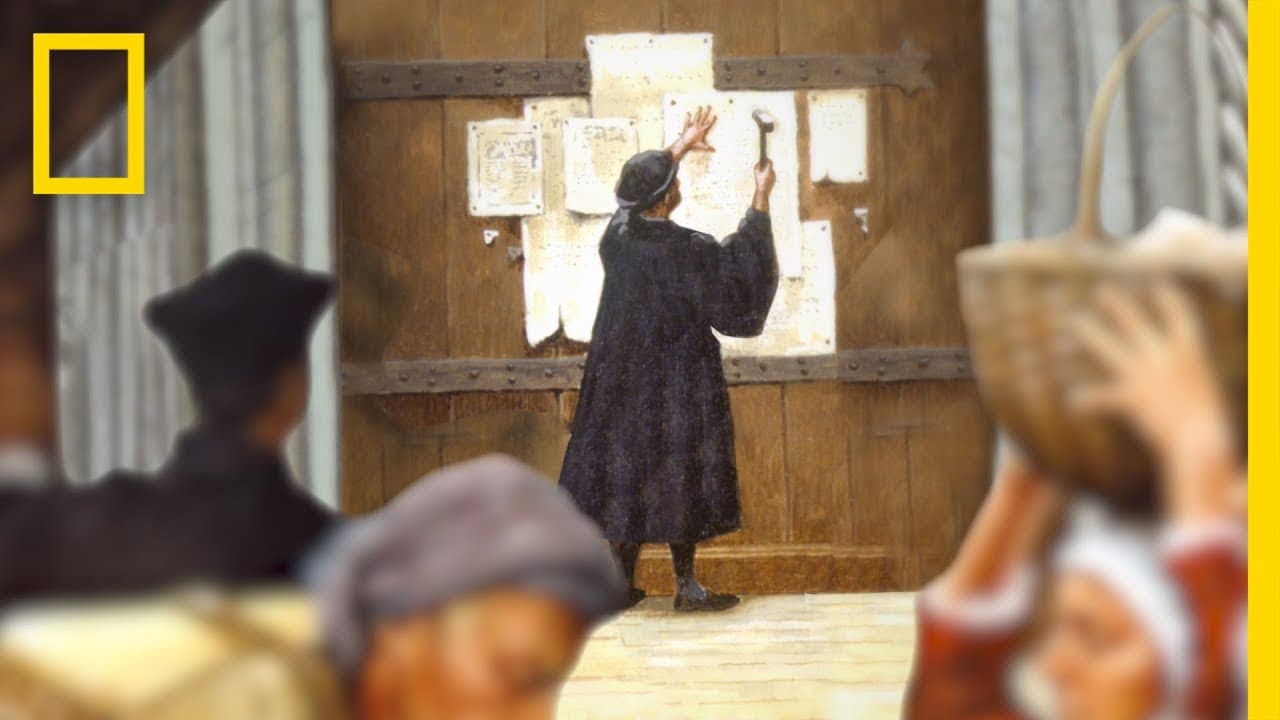
TL;DR
The Protestant Reformation in the 16th century challenged the powerful Christian Church, leading to a split and empowering the general public.
Transcript
- [Narrator] The Protestant Reformation of the 16th century shook the very foundation of Europe's cultural identity. The Reformation was a revolution of religion in western Europe. Essentially, it was the result of centuries worth of political and social grievances against the Christian Church as it existed. Christianity, which began as a fledgling... Read More
Key Insights
- 🚨 The Protestant Reformation emerged as a response to political, social, and religious grievances against the Christian Church.
- ⚾ Martin Luther was a central figure in challenging the Church's authority and advocating for reform based on the Bible's teachings.
- 😑 The printing press played a crucial role in spreading reformist ideas and inspiring others to challenge the Church's authority.
- 👯 The Reformation not only split Christianity into Catholic and Protestant denominations but also empowered the common people to question religious authority and make their own choices.
- 🧑🌾 The Protestant Reformation had far-reaching impacts beyond religion, empowering the general public to question societal norms and institutions.
- 🥺 The split within Christianity following the Reformation led to the emergence of two major denominations: Catholic and Protestant.
- ❓ The Reformation's focus on individual faith and autonomy challenged the traditional authority structures within the Christian Church.
Install to Summarize YouTube Videos and Get Transcripts
Explore YouTube Video Summarizer or Get YouTube Transcript Extractor
Questions & Answers
Q: What were the main reasons behind the Protestant Reformation?
The Protestant Reformation was primarily fueled by political and social grievances against the powerful Christian Church, as well as concerns about corruption and the abuse of power within the institution.
Q: How did Martin Luther contribute to the Protestant Reformation?
Martin Luther, a German priest, was a key figure in the Reformation, challenging the Church's teachings and practices, advocating for reform based on the Bible, and becoming a symbol of resistance against the Church's authority.
Q: What role did the printing press play in the Protestant Reformation?
The printing press enabled the rapid dissemination of ideas, allowing reformers like Luther to spread their arguments across Europe, inspire others to challenge the Church, and ultimately contribute to the split within Christianity.
Q: What were the broader societal impacts of the Protestant Reformation?
The Reformation not only revolutionized the Christian faith but also empowered the general public to question religion and other aspects of life, leading to greater freedom and autonomy among everyday Europeans.
Summary & Key Takeaways
-
The Protestant Reformation emerged in the 16th century as a response to political and social grievances against the powerful Christian Church.
-
Martin Luther, a German priest, played a significant role in challenging the Church's practices and doctrines, advocating for reform based on the Bible's teachings.
-
The Reformation not only split Christianity into Catholic and Protestant denominations but also empowered the common people to question religious authority and make their own choices.
Read in Other Languages (beta)
Share This Summary 📚
Summarize YouTube Videos and Get Video Transcripts with 1-Click
Try YouTube Summary with ChatGPT & Claude or YouTube Transcript Generator
Explore More Summaries from National Geographic 📚




Summarize YouTube Videos and Get Video Transcripts with 1-Click
Try YouTube Summary with ChatGPT & Claude or YouTube Transcript Generator