Obedience and Authority: Dehumanizing the Enemy
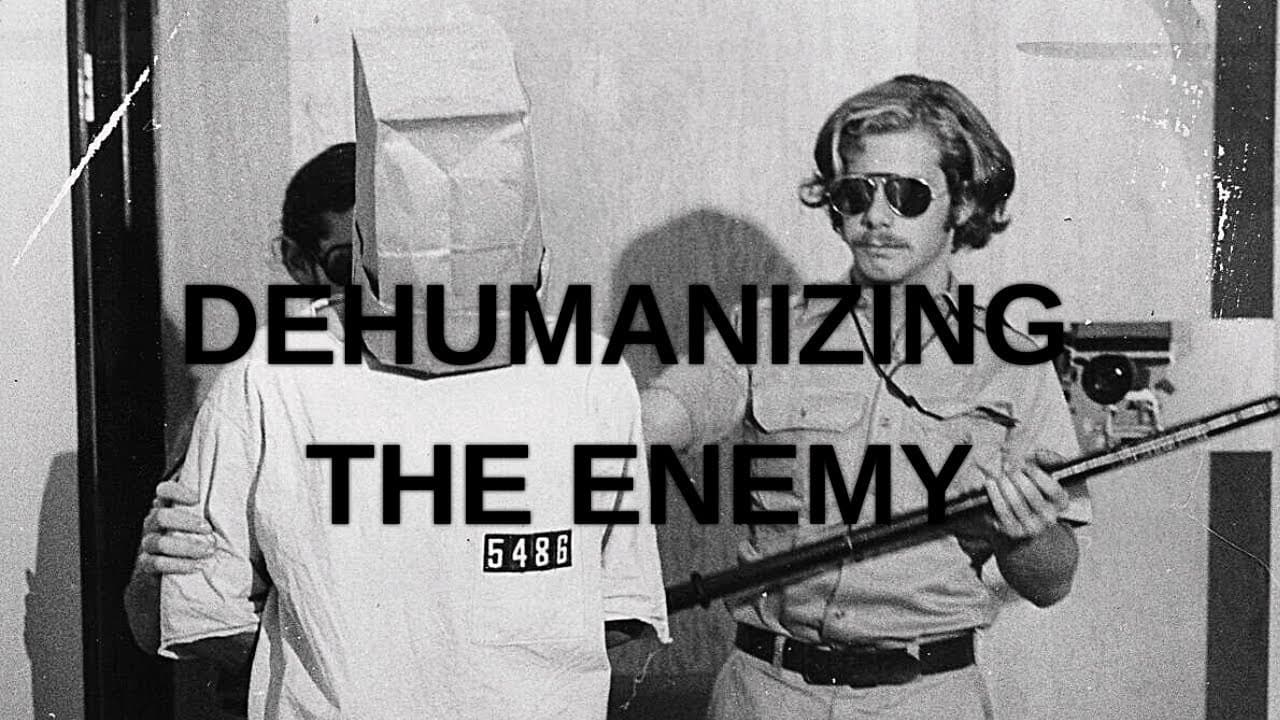
TL;DR
Stanley Milgram's controversial experiment shows that people are willing to obey even the most inhumane orders, which has implications for real-world situations such as the military.
Transcript
during the early 1960s Yale University psychologist Stanley Milgram conducted a series of social psychology experiments on obedience to authority figures his study measured the willingness of men from diverse backgrounds and levels of Education to obey an authority figure who instructed them to act in conflict with their moral convictions the parti... Read More
Key Insights
- 🧪 The Milgram Experiment showed that a significant percentage of participants were willing to obey authority figures, even if it meant acting against their moral convictions. This suggests that obedience to authority plays a significant role in human behavior.
- 😰 Soldiers in the military testify to committing personal atrocities during wartime, highlighting the influence of authority and hierarchy in war situations. The belief in unquestionable authority and the idea of "us versus them" contribute to soldiers' willingness to harm others.
- 🧠 The brain plays a crucial role in determining human behavior, and the decision-making process is influenced by various factors. The phenomenon of violent behavior and dehumanization is complex, and humans are not inherently violent animals.
- 🐾 Dehumanization of the enemy is a common psychological strategy used during war to legitimize violence. Treating the enemy as outsiders makes it easier to justify mistreatment and violence towards them.
- 💔 Dehumanization can lead to extreme behaviors like racism, discriminatory laws, and genocidal acts. Those in positions of power often exploit this phenomenon to maintain their own status and interests.
- 🏢 Authority figures and non-authority figures play a dynamic role in perpetuating social hierarchies. Obedience to authority, even when it goes against one's values, can allow the hierarchical structure to continue.
- 🔁 The cycle of abuse and trauma is perpetuated when authority figures suggest harmful actions as a solution to problematic behavior. This can result in a dehumanizing treatment of individuals and the continuation of violence.
- 🔫 The Vietnam War highlights the dehumanization of the enemy and the willingness of soldiers to commit war crimes. The influence of authority, competition between units, and the desire to prove oneself contribute to these actions.
Install to Summarize YouTube Videos and Get Transcripts
Explore YouTube Video Summarizer or Get YouTube Transcript Extractor
Questions & Answers
Q: How did Stanley Milgram's obedience experiment challenge ethical boundaries?
Stanley Milgram's obedience experiment pushed participants to administer potentially lethal electric shocks to another person, demonstrating that people are willing to harm others under the influence of authority, even against their own moral beliefs. The experiment raised ethical concerns about the psychological well-being of the participants and the manipulation involved in the study.
Q: What are the implications of Milgram's findings for real-world situations, like the military?
Milgram's findings suggest that authority and hierarchy play significant roles in influencing individuals to carry out harmful acts in situations such as the military. This raises concerns about the potential for soldiers to commit human rights violations and engage in warfare tactics that may be morally questionable. Understanding the power of authority can help us examine and address the occurrence of such behaviors and their consequences.
Q: How does dehumanization play a role in obedience to authority?
Dehumanization, the process of viewing others as less than human, is often linked to obedience to authority. By dehumanizing individuals or groups, it becomes easier to justify treating them unfairly or even perpetrating acts of violence against them. Dehumanization allows people to distance themselves from the moral implications of their actions, making it more likely for them to follow orders without hesitation.
Q: What drives people to obey authority figures, even when it conflicts with their moral convictions?
Obedience to authority is influenced by various factors, including a desire for approval or reinforcement, fear of punishment for non-compliance, and a sense of duty or loyalty towards the authority figure or the group they represent. People may also feel a need for conformity or a desire to maintain harmony within a group, overriding their own moral convictions in the process.
Answer: Obedience to authority is a complex phenomenon that can lead individuals to carry out acts they may find morally wrong. Milgram's experiment and real-world examples, such as the military, demonstrate the power of authority and its ability to influence behavior and decisions in ways that may disregard ethical considerations. Understanding this phenomenon is crucial for promoting ethical decision-making and preventing the abuse of power.
Summary & Key Takeaways
-
Stanley Milgram conducted a series of experiments in the 1960s to test obedience to authority figures, showing that people are willing to follow orders that conflict with their moral convictions.
-
The experiment demonstrated that obedience to authority is a powerful force, even in highly unethical situations.
-
The phenomenon of obedience to authority can be observed in real-world contexts, like the military, where soldiers may commit atrocities under the influence of authority and hierarchy.
Read in Other Languages (beta)
Share This Summary 📚
Summarize YouTube Videos and Get Video Transcripts with 1-Click
Try YouTube Summary with ChatGPT & Claude or YouTube Transcript Generator
Explore More Summaries from In Human Form - Psychology 📚

Summarize YouTube Videos and Get Video Transcripts with 1-Click
Try YouTube Summary with ChatGPT & Claude or YouTube Transcript Generator