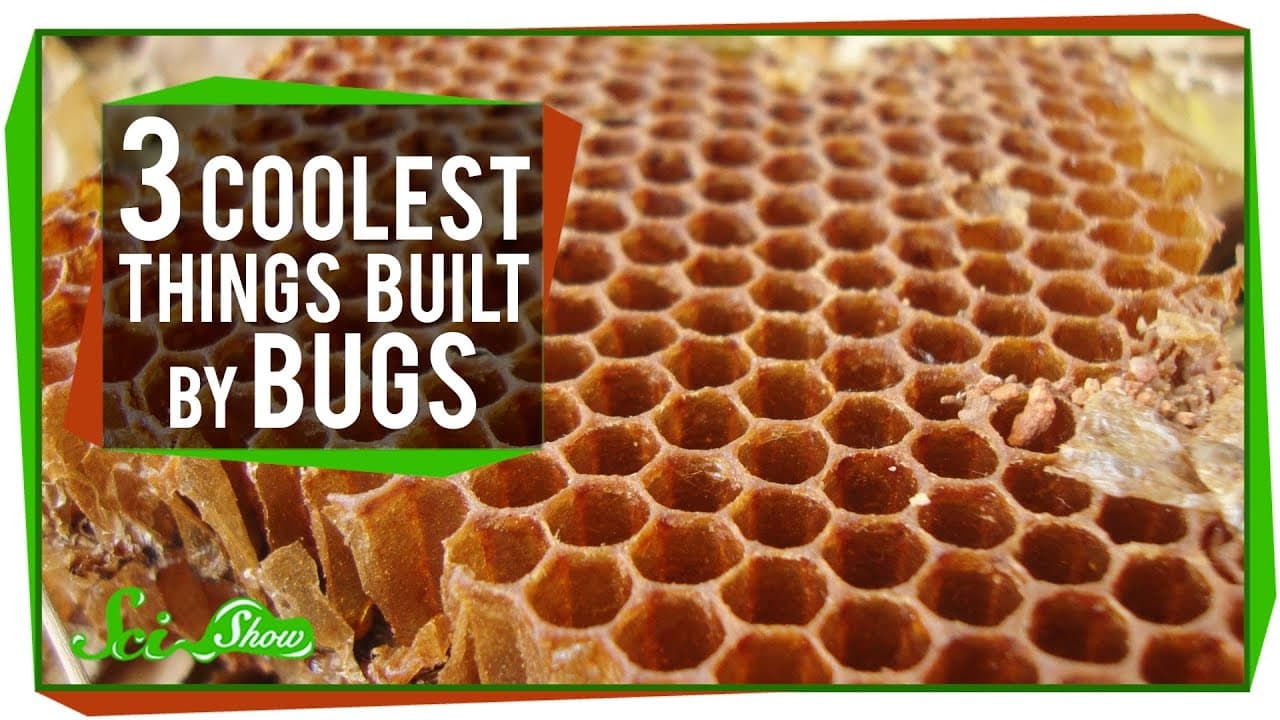
The 3 Coolest Things Built By Bugs
TL;DR
Insects, such as bees, termites, and spiders, create remarkable structures using efficient designs and collaborative efforts.
Transcript
long before there were skyscrapers and strip malls and combination pizza at Taco Bell's nature had its own architects all kinds of creatures create all kinds of structures for living raising kids or maybe just the occasional hookup but centimeter per centimeter some of the mightiest and most delightfully complex structures ever built have been erec... Read More
Key Insights
- 🐝 Bees use hexagons in their honeycomb structures to maximize efficiency in using wax and storing honey.
- 🏛️ Termites build mounds that can surpass skyscrapers in height and feature efficient ventilation systems.
- 🇿🇼 The efficient ventilation systems of termite mounds have been replicated in human architecture, such as the East Gate Center in Zimbabwe.
- 🕸️ Spiders, normally territorial, exhibited rare cooperative web building in response to an abundance of food.
- 😋 Insect architects demonstrate remarkable designs and collaborative efforts in creating structures for living and sourcing food.
- 🧑🔬 The hexagon's compactness was mathematically predicted by ancient Greek scientists and later confirmed by a mathematician in 1999.
- 🍄 Termites maintain a constant temperature inside their mounds for their fungus farming, despite varying external temperatures.
Install to Summarize YouTube Videos and Get Transcripts
Explore YouTube Video Summarizer or Get YouTube Transcript Extractor
Questions & Answers
Q: Why do bees choose hexagons for their honeycomb structures?
Bees choose hexagons because this shape maximizes efficiency in using wax and storing honey. The hexagon has a smaller total perimeter compared to triangles or squares, allowing more cells to be built in a given area.
Q: What makes termite mounds impressive?
Termite mounds can surpass the height of skyscrapers and feature efficient ventilation systems. This allows the termites to regulate the internal temperature of their homes, essential for their fungus farming, even when outside temperatures vary greatly.
Q: How do termites regulate the temperature inside their mounds?
Termites use a system of vents and channels to regulate the temperature inside their mounds. The air is sucked down through tunnels with muddy walls, lowering the temperature through evaporative cooling, while warmer air escapes through the opening at the top.
Q: What caused spiders to cooperatively build a massive web?
In 2007, a particularly wet summer resulted in a surplus of food for spiders, including mosquitoes, crickets, and caterpillar larvae. Instead of fighting over the abundance of food, millions of spiders from different species cooperatively built a sheet web to catch food collectively.
Summary & Key Takeaways
-
Bees use hexagons in their honeycomb structures because it maximizes efficiency in using wax and storing honey.
-
Termites build impressive mounds that can surpass skyscrapers in height and feature efficient ventilation systems for maintaining a constant temperature.
-
Spiders, normally territorial, cooperatively built a massive web to catch an abundance of food during a particularly wet summer.
Read in Other Languages (beta)
Share This Summary 📚
Summarize YouTube Videos and Get Video Transcripts with 1-Click
Try YouTube Summary with ChatGPT & Claude or YouTube Transcript Generator
Explore More Summaries from SciShow 📚


Summarize YouTube Videos and Get Video Transcripts with 1-Click
Try YouTube Summary with ChatGPT & Claude or YouTube Transcript Generator