Orbital ATK CRS-8 Prelaunch Science Briefing
TL;DR
Research experiments from various disciplines, including biology and biotechnology, are headed to the International Space Station on the Cardinal resupply mission.
Transcript
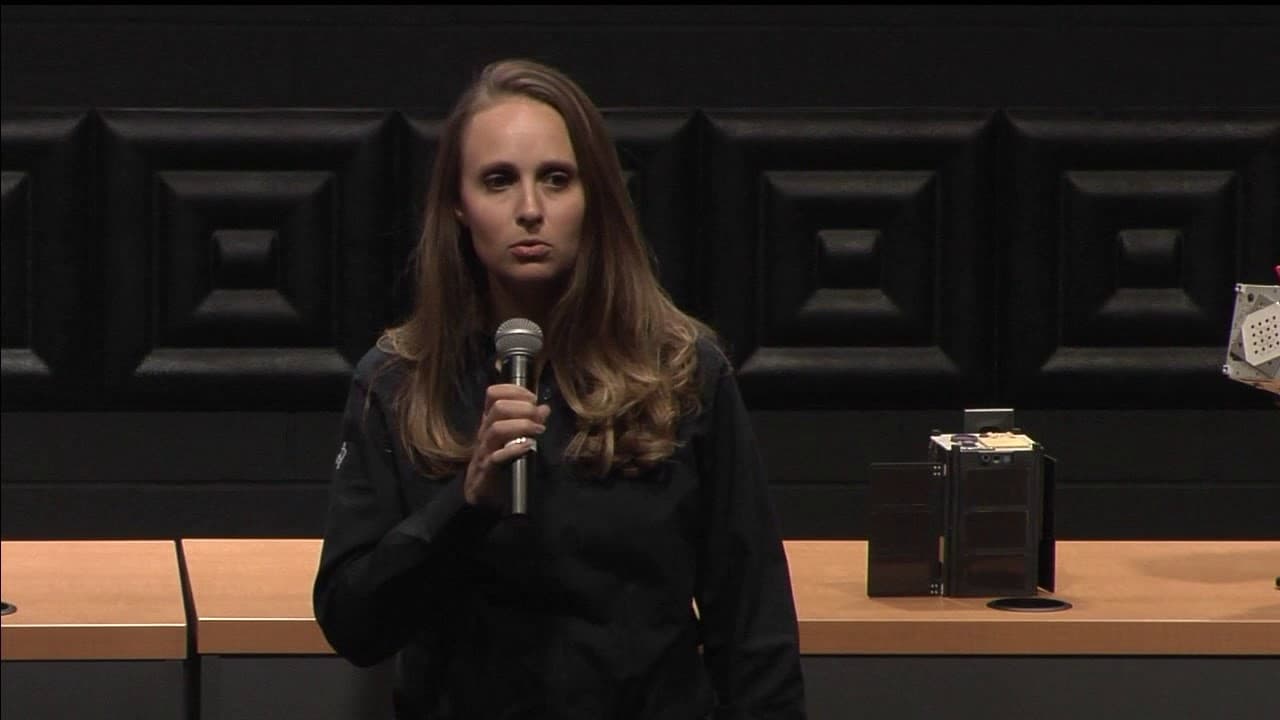
TO OUR FACILITY. WE'RE GOING TO HEAR ABOUT RESEARCH EXPERIMENTS HEADED UP TO THE INTERNATIONAL SPACE STATION ON THE CARDINAL RESUPPLY MISSION. WE HAVE A LOT OF GREAT INFORMATION TO SHARE WITH YOU. WE LOOK FORWARD TO YOUR QUESTIONS. I'M GOING START WITH CAMILLE ELAINE WITH THE PROGRAM SCIENCE OFFICE AND PATRICK O'NEIL WHO IS WITH THE CENTER FOR ADVA... Read More
Key Insights
- 👨🔬 The International Space Station facilitates research across various disciplines, including biology, biotechnology, and human research.
- 🎟️ CubeSats have varying lifespans depending on their altitude and mission objectives.
- 😘 STEM payloads on the ISS inspire students and engage them in science, technology, engineering, and math education.
Install to Summarize YouTube Videos and Get Transcripts
Explore YouTube Video Summarizer or Get YouTube Transcript Extractor
Questions & Answers
Q: How are the experiments chosen for the International Space Station?
Different sponsors, including NASA, international partners, and the U.S. National Lab, decide which research projects are important and beneficial for their specific goals.
Q: What is the lifespan of a CubeSat after it is deployed?
CubeSats typically have a lifespan of about three to five years if they are deployed at 500 kilometers in altitude. If they are deployed directly from the ISS, their lifespan is shorter, around nine months to a year.
Q: Does the International Space Station research extend to high school programs as well?
Yes, a significant portion of STEM payloads on the ISS are specifically designed for high school and middle school students. Efforts are focused on engaging students in STEM education and showing them the possibilities of space research.
Q: How are supplies loaded onto rockets for the ISS?
Supplies are loaded according to a priority determined by NASA. Items closer to the door are more accessible to the astronauts, and supplies with late load cargo are loaded later in the flow to ensure time-critical items are prioritized.
Summary & Key Takeaways
-
Investigations on Expedition 53 and 54 include experiments in biology, biotechnology, physical science research, human research, technology demonstration, earth and space science, and education.
-
The International Space Station provides a platform for scientific research, inspiring students and advancing scientific knowledge.
-
The U.S. National Lab on the ISS opens up research opportunities to non-NASA initiatives, promoting life on Earth.
Read in Other Languages (beta)
Share This Summary 📚
Summarize YouTube Videos and Get Video Transcripts with 1-Click
Try YouTube Summary with ChatGPT & Claude or YouTube Transcript Generator
Explore More Summaries from NASA 📚
Summarize YouTube Videos and Get Video Transcripts with 1-Click
Try YouTube Summary with ChatGPT & Claude or YouTube Transcript Generator